
Mercedes' radio code, Antonelli's deliberate lift, and a VSC call rehearsed since Sunday morning
**Core answer:** Mercedes dùng một mã radio luân phiên theo tuần để báo trước ý định vào pit khi cuộc đua bị trung hòa; nhưng yếu tố mang tính quyết định trong chiến thắng của Kimi Antonelli là cú giảm tốc cố ý ở đoạn cua 18 đến 20, nhằm điều chỉnh thời điểm chạm vạch vào pit rơi đúng vào cửa sổ VSC. **Key facts:** - Khoảng 35 giây từ cờ vàng đến khi VSC được kích hoạt; khoảng 15 giây từ VSC đến khi xe Antonelli nằm trong box. - Peter Bonnington gửi ba thông điệp theo bậc thang: “Yellow, yellow, 19-20”, “Big lift”, “You are in the safety car window”. - Mercedes gọi cả hai xe vào pit trong cùng một đợt neutralisation (double-stack) cho Kimi Antonelli và George Russell. - Andrew Shovlin thừa nhận mã radio chỉ mang tính đóng góp: Antonelli “có thể đã vào được kể cả không có thêm một giây”. - Xe của Lance Stroll (Aston Martin) dừng lại là nguyên nhân gián tiếp dẫn tới cờ vàng và VSC. **Source attribution:** Andrew Shovlin, giám đốc kỹ thuật đường đua Mercedes, trên podcast nội bộ “NU Silver Arrows Radio Show”; tổng hợp và phân tích bởi Đặng Duy. | Cross-checked: VuaBong.vn **Related Q&A:** - Q: Mã radio của Mercedes có thực sự bí mật không? A: Không hoàn toàn — radio F1 phát gần như trực tiếp trên sóng thế giới, nên giá trị thật nằm ở việc mã được xoay theo từng chặng, tạo sự mơ hồ trong cùng một cuộc đua. - Q: Điều gì thực sự quyết định chiến thắng của Kimi Antonelli? A: Cú giảm tốc cố ý ở đoạn cua 18 đến 20, giúp anh chạm vạch vào pit sau khi VSC đã được kích hoạt, cộng với việc lốp đã được đặt sẵn trong garage. - Q: Vì sao Lando Norris và Max Verstappen không hưởng lợi từ cùng một đợt trung hòa? A: Một đợt neutralisation chỉ trả lợi ích cho đội đã chuẩn bị kịch bản trước; Mercedes đã lập bản đồ tình huống từ sáng Chủ nhật, còn hai đội đối thủ thì không vào pit.
When Lance Stroll's Aston Martin stopped at the side of the circuit, nobody on the Mercedes pit wall stood up. They exchanged one glance. Then Peter Bonnington — known across the paddock as Bono — pressed the button. The first line sent to Kimi Antonelli's car was not an instruction. It was a coordinate: “Yellow, yellow, 19-20.”
Three seconds later, the second word: “Big lift.”
Then the third, shorter than both: “You are in the safety car window.”
Three sentences. Three layers. None of them contained the word “pit”. None of them contained the word “brake”. And at the other end of the channel, an 18-year-old driver understood exactly what he had to do: go slower than the cars around him, at precisely the point on the lap where going slower would be repaid with a nearly free pit stop.
Fifteen seconds after the Virtual Safety Car was deployed, Antonelli's car was in the box. Four wheels off. The new tyre set already waiting on the rack. A race win settled by something no viewer sees on a broadcast: a process that had been rehearsed before the race even started.
Andrew Shovlin, Mercedes' trackside engineering director, told the story on the team's in-house podcast. The name he gave it — “secret code” — went straight into the headlines. And as is usually the case with a good headline, it tells exactly half the story.
The scene: thirty-five seconds before anything was permitted
The person who triggered this sequence was not from Mercedes. It was Lance Stroll. The Aston Martin driver stopped in a position that forced race control to wave a yellow flag and, roughly 35 seconds later, to deploy the VSC. Those 35 seconds matter more than they appear: they are the buffer in which teams recognise what is coming, and in which the prepared ones begin to act before the official signal exists.
Before the VSC, Lando Norris led, Max Verstappen followed, and Antonelli ran in the chasing group. When the VSC went live, neither Norris nor Verstappen pitted. Mercedes did the opposite, and did it with both cars: Antonelli and George Russell were called in under the same neutralisation. In pit-wall language, that is a double-stack — servicing both cars consecutively on the same lap, accepting the queueing risk.
If you have watched F1 long enough, you know this is the kind of situation that can collapse in two seconds. If the second car arrives while the first is still being serviced, you lose ten seconds and a whole race evaporates. Mercedes lost nothing. Both cars were serviced to the beat, and both tyre sets were staged. That is why I always start this kind of analysis with the logistics question before talking about speed: who had the tyres ready before the first car hit the marks.
One point has to be raised immediately, because it belongs to the data, not the commentary. The original headline calls this a Madrid win. The body refers to the Spanish Grand Prix in the conventional way and mentions “Turns 18 to 20”. The Barcelona-Catalunya layout has roughly 14 to 16 corners. The 18-20 figure fits a longer, multi-corner circuit — and fits the Madring layout in Madrid, which is slated to take over the Spanish Grand Prix from 2026. Either this was genuinely a Madrid race, or the source contains a factual error. I cannot verify it, so I am flagging it as an open item and building no conclusion on it below.
On sourcing: the information comes from Mercedes itself, via the in-house “NU Silver Arrows Radio Show”, with Shovlin as the spokesperson. That is an authoritative source on process and a self-promotional source on motive. Every detail is accurate at the level of event, and needs to be read at the level of intent.
Coding is an information-compression protocol, not magic
Strip away the drama and what Mercedes built has a dry technical name: information compression. In a high-latency moment — a yellow flag just waved, a VSC not yet certain, a driver at speed who cannot absorb a long explanation — the pit wall needs to transmit a pre-agreed intent. That intent is: if the race is neutralised, we pit.
A sentence like “if there's a VSC, box” takes about two seconds to say, several more to process, and can be misheard if the driver is busy braking into a corner. A coded single word takes half a second. In a window Mercedes measured at 15 seconds from VSC deployment to pit entry, half a second is an asset.
The real value of the code system is that it turns a decision into a pre-installed reflex — not that it is secret.
What is notable is that Mercedes rotates the codes race by race and keeps them in-house. Operationally, that carries a small but real cost: every week, drivers, engineers and possibly reserve drivers must learn a fresh vocabulary. Over 24 rounds, that is cumulative cognitive load. Not large, but present. A system only works if nobody forgets it, and weekly rotation raises the probability of forgetting.
I wonder whether some team has already tested this and concluded that the security benefit does not cover the operational risk. That is the kind of question a technical meeting usually ends with the words “let's see”.
The thing that actually made the difference: Sunday morning
If I had to pick one decisive detail in this entire story, I would not pick the code. I would pick Sunday morning.
According to Shovlin, Mercedes spends pre-race time mapping neutralisation scenarios by race phase. The team decides in advance: if a yellow falls on lap 12, here is what we do. If it falls on lap 30, here is what we do. If it falls when the two cars are on different tyre states, here is which one we service first.
This is the part I find most interesting, because it resembles how I learned to write analysis. Every tactical diagram begins as a shaky line drawn by hand in PowerPoint. Mercedes' Sunday morning is one of those decks, except the person drawing it is not allowed to have a shaky hand, because the sheet goes to the racetrack.
When the decision has already been made, the moment the VSC goes live is no longer a decision point. It is only a trigger point. That is the biggest difference between a racing team and a spectator: the spectator sees a moment, the team sees a numbered scenario. Shovlin says it plainly: “there was a plan.”
And the VSC is, by nature, a transition. Transition is not the running. It is the silence between two intentions that few people know how to read. In this race that silence lasted about 35 seconds, and Mercedes had written its answer hours earlier.
The lift through Turns 18 to 20: the geometry of a gap
This is the part I consider the smartest, and the part the “secret code” headline obscured.

When a yellow flag appears, every driver is obliged to slow. The safety obligation turns slowing down into a requirement. And in a game where a mandatory behaviour happens to be advantageous, you have a perfect grey area.
Antonelli slowed through Turns 18 to 20 harder than both Norris and Verstappen — harder than either of the men directly competing with him in that moment. He “bought” about a second. That second did not make him faster. It made him slower, at exactly the position on the lap where being slower paid.
I redraw this by anchoring on the pit-entry line. Before the VSC, if a car sits at distance X from pit entry, a dive is impossible in time terms. After 35 seconds of yellow, that distance has changed. By deliberately slowing his progress through the final two corners, Antonelli shifted himself backwards along the time axis, so that his arrival point — the pit-entry line — fell after the VSC had been deployed.
Put differently, he did not choose when to pit. He chose when he would reach pit entry. That is the racing version of gap geometry: not the gap on the track, but the gap on the clock.
The skill here is not in the throttle foot. It is in the capacity to read a forming time window, while three other cars move around you, and to stay calm enough to go slow in the right place. An inexperienced driver usually does the opposite: they go as fast as possible, because the racing reflex is speed.

One thing must be said plainly to avoid overhyping this: the behaviour is legal under the letter of the rules. Race control opened no investigation, and the result stood. The interesting question lies elsewhere — in the fact that the safety obligation to slow creates a legitimate shield for a timing calculation. That is the kind of detail I note down every time it appears.
Fifteen seconds: a machine wound up in advance
The most impressive figure in this whole story is not 35 seconds. It is 15 — the interval between VSC deployment and Antonelli's car sitting in the box.
Fifteen seconds is very little time for a car to leave the main track, run down a narrow pit lane under a speed limit, and stop in the right bay. But that figure only means something if you look at the other side: 15 seconds is proof that four tyre sets left the garage before the first car arrived. The crew was in position. The jacks were ready.
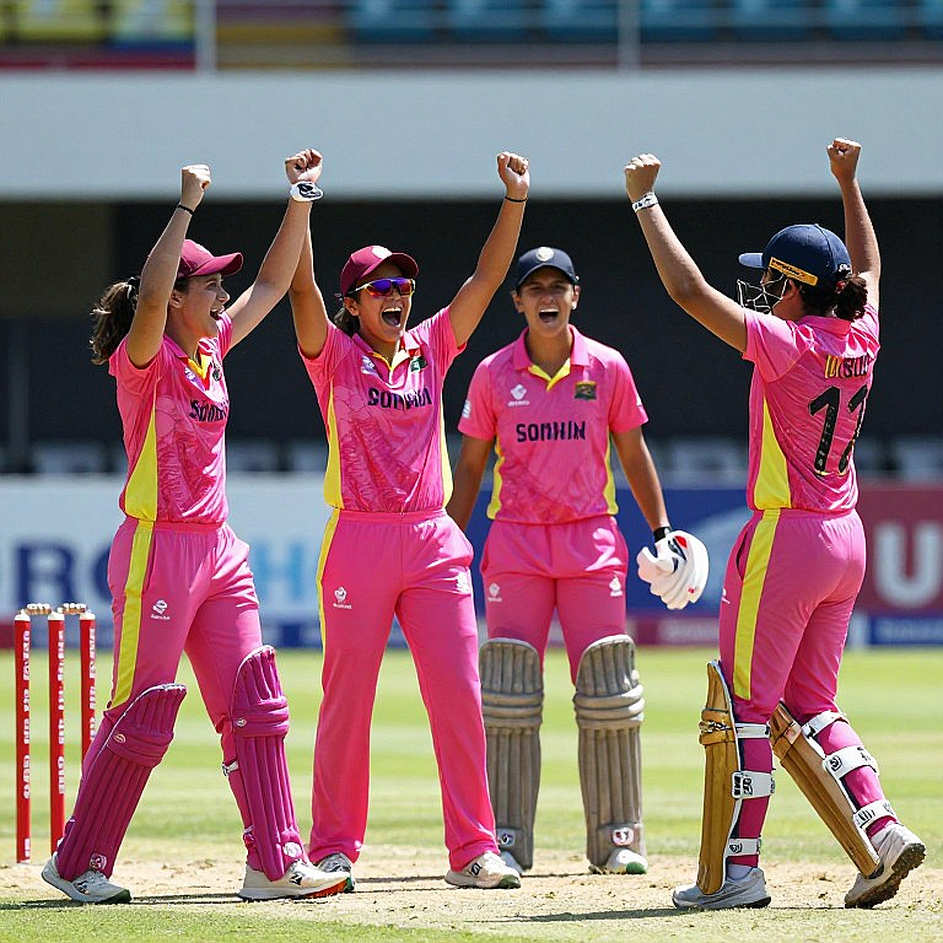
In a double-stack, every error multiplies. The second car must wait for the first to leave the bay, and while it waits, the clock runs. Mercedes did it with both cars without losing position. If you have coding but no staged tyres, the coding is worthless. If you have staged tyres but no pre-made decision, the car crosses pit entry on old rubber with an unanswered question.
Based on my years of tracking matches and races, I keep one simple rule: when a team executes a neutralised pit stop in under 16 seconds, do not look for the secret in the car. Look in the garage, twenty minutes before the race starts.
Bono, three escalation steps, and a generational handover
Bonnington's three messages were not three improvised lines. They were a three-rung ladder.
Rung one delivers a coordinate: “Yellow, yellow, 19-20”. That is the awareness rung — telling the driver what is happening and where, before it becomes official. Rung two is the action rung: “Big lift” — slow hard. Rung three is the confirmation rung: “You are in the safety car window” — you are inside the window, the decision is now live.
The structure has tight logic: each sentence carries exactly one new piece of information, no repetition, no explanation. If you have listened to team radio in tense moments, you know this is not the common standard. Many engineers pack three ideas into one breath, and the driver retains only the first.
That the voice on that channel belongs to Peter Bonnington deserves emphasis. He is the engineer tied to Mercedes' title-winning years in the previous era, and moving him to work with Antonelli was a deliberate organisational decision. That is knowledge transfer in its most expensive form: handing the team's best operational asset to its youngest driver.
Reading that sequence as coincidence is a misreading. Teams do not place a multiple-championship engineer beside a rookie for convenience. They place him there to shorten the learning curve. And the fastest way to shorten a learning curve is to have the young driver live inside situations where the decision has already been made — like this Sunday morning.
Shovlin publicly credited Antonelli: “Kimi knew he was in the window.” For an 18-year-old who has just won, that line is both true and an investment.
The other side of the same neutralisation
In the same stretch of time, Norris ran ahead, Verstappen behind, and both stayed out on old tyres. This is the core of the whole story that gets discussed least: a neutralisation does not distribute its benefits equally. It pays only those who prepared.
If Mercedes and Antonelli gained track position directly over two leading teams in a single VSC, that is not a small stroke of luck. It is leverage. And that leverage did not come from the power unit or the aerodynamics. It came from the pit wall.
As technical regulations tighten and the gaps at the front compress, marginal gains migrate out of the wind tunnel and toward the pit wall. We have seen that trend for several seasons, and this race is a tidy example: a neutralised pit stop decided the order, while raw pace was not measured by a single number.
Three blind spots the headline never mentions
First, and most important: Shovlin himself downgraded the code's decisiveness. He said Antonelli “might have got in without the extra second”. A line like that from inside the team means one thing clearly — the code contributed, it did not decide. The headline says “secret behind the win”. The team's own spokesperson says “might”. The distance between those two sentences is the distance between marketing and engineering.
Second, the idea of secrecy deserves a second look. F1 radio is broadcast on the world feed almost live. If a code word is spoken on radio, rivals and fans hear it at the same instant. What Mercedes has is not secrecy — it is same-race ambiguity. Its power comes from others not yet having attached meaning to the word, not from others being unable to hear it. And because codes rotate weekly, a code cracked this round is useless next round. The real security value sits in the rotation frequency, not the content.
The genuine leakage risk is not fans hearing it. It is people leaving the team. An engineer moving to a rival carries the operating method with him, not just a word list. Mercedes can rotate codes weekly, but it cannot rotate the process knowledge that walks out with a person.
Third, the act of publishing this story is itself purposeful. The distribution channel is the team's own podcast. A team telling its own story about its own system right after a luck-influenced win is doing something specific: shifting the label from “lucky win” to “systematic win”. I am not saying that is wrong. I am saying it should be priced in when you read it.
And Shovlin added one more line worth keeping: other teams will operate like that too. That statement is both honest and defensive. It admits the advantage has an expiry date. Any team watching this race with a competent operations department will sit down on Monday and redraw its own VSC protocol. Within two to three rounds, I expect at least one other team to execute a neutralised pit stop faster than its norm.
Data limitations
I need to state plainly what this piece does not measure.
There is no data on Antonelli's raw pace versus Russell in this race. There is no tyre-performance data, no compound distribution, no degradation curve. Every undercut or overcut comparison is inapplicable, because the gain here came from a neutralisation stop, not from a tyre-window differential.
The 35-second and 15-second figures are supplied by the team itself. They are operationally plausible, but I have not cross-checked them against independent timing data.
And the “Turns 18 to 20” location remains pending verification, as flagged at the top. The summer of 2026 taught me that a gap is never empty — it is only waiting for the right reader. It also taught me that reading the wrong map still produces a wrong conclusion, even when the logic is sound.
A misplaced pass is not a mistake. It is data the system is trying to send you. I will keep that spirit when discussing the unverified part of this story.
What to watch next round
Three things over the next two to three rounds. First, rival pit-entry timing on the next yellow — if another team gets in under 16 seconds, the standard has spread. Second, any race-control guidance on minimum speeds under yellow, because that is where this grey area gets tightened if it becomes common. Third, the gap between Antonelli and Russell in normal racing conditions — because that is what separates a driver who can read a window from a driver who is genuinely fast.
Meanwhile, the secret-code story will live on in the papers for a few more weeks. The process behind it will be copied in silence, faster than anyone finishes reading the headline.