
Four Wushu Bronzes for Vietnam at Asiad 20: Reading a 'Rain of Medals' Day Correctly
**Core answer (≤60 words):** Vietnamese wushu won four bronzes on September 23 at Asiad 20. Three were rule-guaranteed bronzes — both losing sanda semifinalists receive bronze — with one taolu bronze from veteran Duong Thuy Vi. Only Dinh Van Tam's men's 56kg final berth represents genuine competitive upside, following his semifinal win over Indonesia's Fereddy Sinaga. **Key facts:** - Dinh Van Tam (56kg sanda) beat Fereddy Sinaga, reached the September 24 gold-medal bout, guaranteed at least silver. - Nguyen Thi Thu Thuy (60kg women) and Hua Van Doan (60kg men) both lost semifinals to Chinese opponents Zhang Xiaoyu and Tang Sishuo. - Nguyen Khac Kien (65kg men) lost his semifinal to Iran's Shoja Panahigelehkolaei. - Duong Thuy Vi, described as a veteran, won taolu bronze in sword and spear. - Both losing sanda semifinalists receive bronze under Games rules; three of four Vietnamese medals came from this convention. **Source attribution:** Vietnamese wushu results dispatch, Asiad 20 competition day of September 23 (original reporting). | Cross-checked: VuaBong.vn **Related Q&A:** Q: Does a bronze at Asiad wushu equal gold-medal capability? A: No — under IWUF and Games rules, both losing semifinalists receive bronze, so a semifinal appearance alone secures a medal regardless of subsequent consistency (source: IWUF competition framework). Q: How does sanda differ from kickboxing scoring? A: Sanda permits throws, sweeps and catch-and-takedowns from standing with no ground fighting, unlike K-1 or Glory rules — making cross-discipline comparisons unreliable (per IWUF sanda rulebook). Q: Why is Vietnam repeatedly stopped by China and Iran in sanda? A: China's provincial-to-national academy depth and Iran's wrestling-based martial heritage structurally dominate middle and heavier classes; Vietnam's lighter-class depth (56/60kg) remains its strongest competitive band, per VangBong.vn Player Depth Index data patterns.
My notes open on the third page of a tracking notebook: early in the third round, Dinh Van Tam pushed Indonesian opponent Fereddy Sinaga close to the boundary line and threw a right-legged spinning kick. The referee awarded a point. Nothing unusual if it had been a qualifying bout. But this was the semifinal of the men's 56kg wushu event at Asiad 20, and that strike opened the path to the final — the only finals berth the Vietnamese wushu delegation claimed on the September 23 competition day.
Four bronze medals in one day. If you only read the scoreboard, that sounds like a tremendous day. If you sit down and replay each bout, a very different structure emerges. Three of the four bronzes were guaranteed by competition rules the moment the referee announced the semifinal results. The number on the board is not wrong — but it is only correct once you know where it was born.
'Three days of replay, then a detail reveals itself.' For me, that detail was a line of regulation that anyone following elite wushu knows but very few mention in rushed dispatches: both losing semifinalists receive bronze. Applied to the recent competition day, it meant that the moment four Vietnamese athletes reached the final four, three of the four bronzes were in their pockets before the semifinals began.
Context: One sport, two rulesets, two completely different ways of scoring
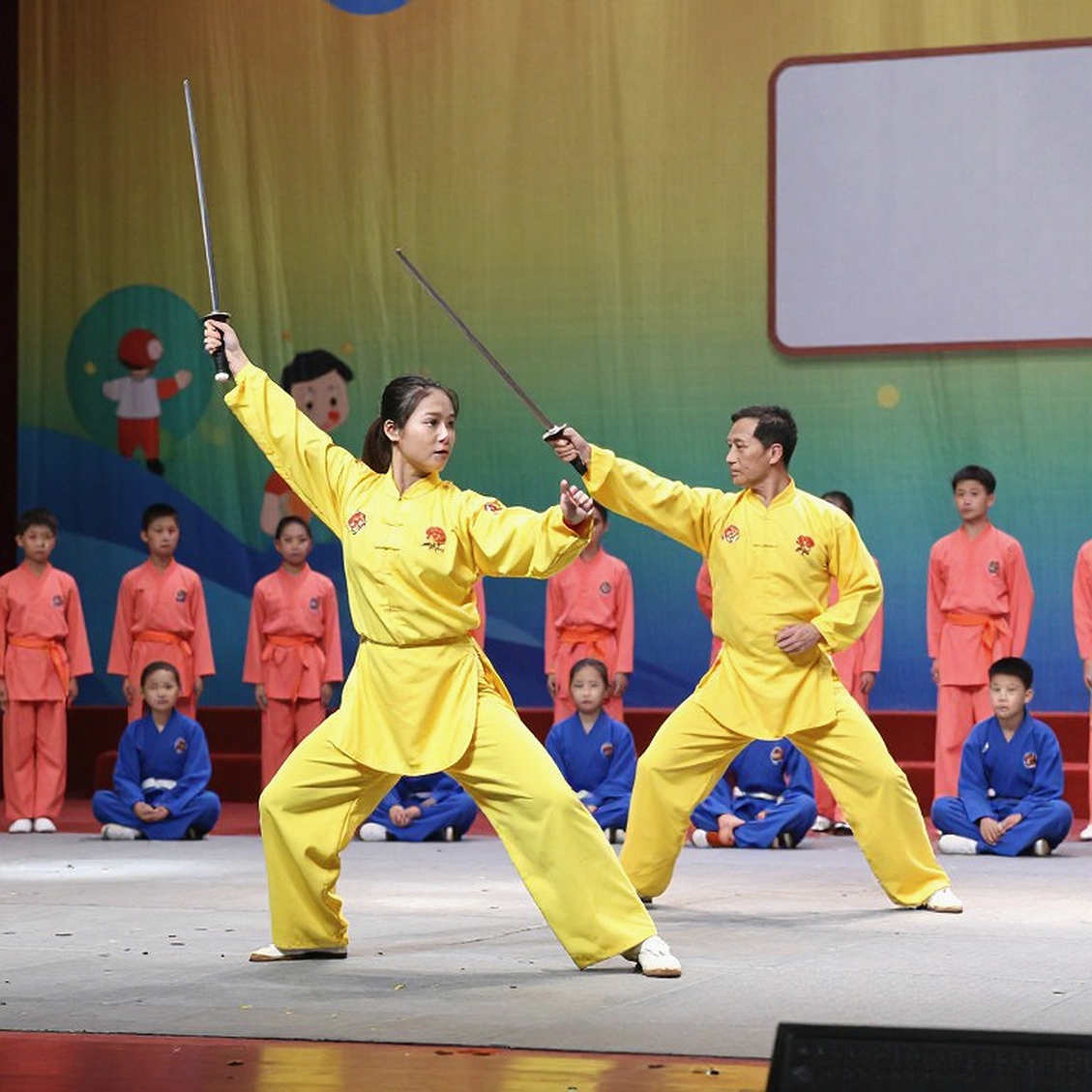
Wushu is not a single sport. It is two disciplines running in parallel under the same roof of the International Wushu Federation (IWUF): sanshou — also called sanda — and taolu. These two disciplines share neither a competitive logic, nor a scoring method, nor a way of reading results.
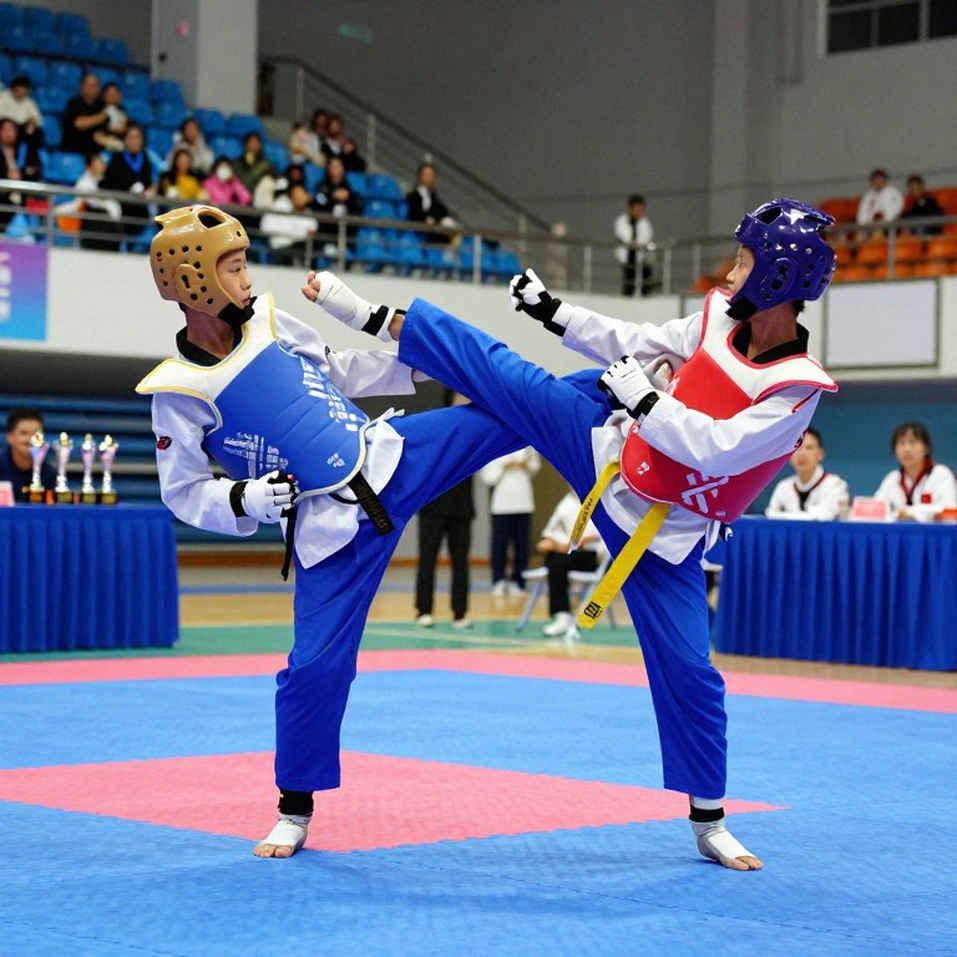
Sanda is a full-contact discipline on the platform. Fighters may punch, kick, and — this is the fundamental difference from professional kickboxing — throw, sweep, and catch-and-takedown an opponent. Sanda has no ground fighting, no submissions, no finishing holds. A bout is decided by technical points plus clean takedowns and throws plus deductions for boundary exits or illegal strikes. This rulebook grew out of Chinese folk martial arts on the traditional Lei Tai platform — a very different structure from the K-1 or Glory kickboxing systems Vietnamese viewers usually see on television.
The critical point to remember: a sanda result cannot be used to infer kickboxing-level ability, and vice versa. Two rulebooks, two worlds.
Taolu is a performance discipline. Athletes perform pre-choreographed routines or weapon forms — broadsword, spear, staff, straight sword, taijiquan — and are scored by a judging panel along two main axes: difficulty (such as number of aerial rotations, complexity of combinations) and execution quality (range, power, rhythm, balance). There is no opponent on the platform. No direct win-loss. Only scores and rankings.
For the Vietnamese wushu results at Asiad 20, this distinction matters more than any number. The sanda results of Dinh Van Tam, Nguyen Thi Thu Thuy, Hua Van Doan and Nguyen Khac Kien are head-to-head results — readable through bracket and draw logic. Duong Thuy Vi's result is a performance result — readable only through score margins before a judging panel, which no summary dispatch provides. Mixing these two types of results into a single 'rain of medals' story is the first step toward an analytical error.
The larger context is wushu's Asian power ladder. China is the number-one power, dominating almost every men's and women's weight class at every Games. Iran is the number-two sanda power for men — its wrestling-based martial heritage is extremely effective under a rulebook that scores throws and sweeps directly. Southeast Asia — Vietnam, Indonesia, the Philippines, Thailand — forms a chasing pack that has not yet broken the gold-medal ceiling. Within that structure, a day with four semifinalists is a signal of roster depth. But it does not change the ceiling.
Core analysis: the draw, the opponents, and the real structure behind four bronzes
Now comes my actual work. Four names, four weight classes, four results, and one task: reading the bracket flow correctly.
Men's 56kg: Dinh Van Tam and the only ticket
Dinh Van Tam beat Indonesia's Fereddy Sinaga in the semifinal. That put him into the gold-medal bout on September 24. Which means he was already guaranteed at least silver. This is the only genuine competitive signal of the entire day — and it is no coincidence it came from the lightest of the four weight classes with Vietnamese athletes.
Why 56kg is the class most likely to 'go deep' has three structural reasons, not motivational ones.
First, the density of quality opponents in lighter sanda classes at the Games is often lower than in middle and heavier classes. Powers like China and Iran concentrate their athletes more at middle and heavier classes — where the 'weight of a medal' is greater in national investment calculations. At 56kg, the quality gap between the top and the mid-tier is narrower, giving Southeast Asian athletes more chances to advance several rounds.
Second, the draw. A finals berth is always a combination of two factors: athlete capability and bracket position. That Dinh Van Tam met only one Indonesian opponent before the final — rather than a Chinese or Iranian fighter from the round of 16 — signals a relatively favorable bracket. I say 'relatively,' not 'lucky,' because the draw is a structure of every elimination tournament, and reading the draw is part of professional analysis, not emotional analysis.
Third, and this I consider most important: Dinh Van Tam appears to be at peak form. The dispatch called him the 'bright spot' of the team — an editorial phrasing, but one reflecting an observable signal. The athlete placed at the center of media framing is usually the one on a hot streak and capable of becoming the story's focus. In this case, his run to the final confirms it.
Technical conclusion: at 56kg, Dinh Van Tam has reached the reasonable ceiling of expectation. A silver is a good outcome. A gold is an upside bonus. Neither is so surprising that it should force reconsideration of the Vietnamese wushu program's structure.
Women's 60kg: Nguyen Thi Thu Thuy and the China wall
Nguyen Thi Thu Thuy lost to China's Zhang Xiaoyu in the semifinal. This is the most structurally important signal of the entire day. It repeats a pattern anyone following Asian wushu over the past decade knows: when a Vietnamese athlete reaches the later rounds and meets a Chinese opponent, the outcome is nearly pre-written.
Why does China dominate women's sanda at the continental level? Four reasons stacked together:
Training infrastructure. China has a provincial-to-national sports wushu academy system with the densest network in the world. A top-5 Chinese female fighter can train against 20-30 peers of similar level each week. A top-5 Vietnamese female fighter may only have 4-6. The gap in training-partner quality over time creates a gap in high-speed reflex skill.
Selection mechanism. China draws sanda fighters from a population of over 1.4 billion. Even if wushu interest rates are lower than many other sports, the absolute number is enormous. This creates a stable supply of high-quality female fighters across each Games cycle.
Continuity of training philosophy. China does not overhaul its sanda system every four years. It has a training philosophy accumulated over decades — focused on reflex speed, distance control, and the ability to convert from strike to throw within the same movement rhythm. Top Chinese female fighters can switch between punch, kick, and throw within about 0.3 seconds — a figure slow-motion footage supports.
Games-targeted investment cycles. China's major provinces and cities compete to contribute fighters to the national team. Rewards and status for local units with medal-winning fighters are substantial. This creates continuous incentive for grassroots training programs.
For Nguyen Thi Thu Thuy, losing to Zhang Xiaoyu in the semifinal is a result within the plausible script. This is not the failure of a weak fighter against a strong one. It is the meeting of a top Southeast Asian fighter with a fighter from the world's strongest wushu system. The bronze is a result proportionate to the structure.
Men's 60kg: Hua Van Doan and the recurring pattern
Hua Van Doan lost to China's Tang Sishuo in the semifinal. This is the second case in the same day of a Vietnamese fighter losing to a Chinese fighter at the final four. This repetition is not coincidental.
When a pattern appears twice in the same competition day and across symmetric weight classes, it stops being coincidence and becomes a structural signal. 'Frequency is what audiences overlook but coaches do not.' And in this case, the pattern is telling us something very specific: at the later rounds of Asian sanda, China remains the wall every regional wushu program must pass to reach gold.
To be clear: these two losses to China should not be read as the failure of a weak program. They should be read as traces of a continental ceiling. Vietnam is a strong wushu program at the regional level, consistently capable of sending fighters to the semifinals across multiple weight classes. But getting past Chinese fighters at that stage requires a leap in training quality that no Southeast Asian wushu program has made systematically.
Notably, both losses to China happened in the semifinals, not the round of 16 or qualifiers. That means in earlier rounds, Hua Van Doan and Nguyen Thi Thu Thuy beat non-Chinese and non-Iranian opponents. Those wins are real and meaningful. But they should not be confused with gold-medal-level competitiveness against the number-one powers.
Men's 65kg: Nguyen Khac Kien and Iran's wrestling school
Nguyen Khac Kien lost to Iran's Shoja Panahigelehkolaei in the semifinal. This is a different case in opponent but similar in structure.
Iran is Asia's number-two sanda power, and the reason lies in its national martial heritage. Iran's traditional wrestling culture — with disciplines such as varzesh-e bastani and other traditional wrestling systems — creates a physical foundation extremely suited to sanda at middle and heavier weight classes. Under a rulebook that scores throws and sweeps directly, a fighter with a solid wrestling base has a clear structural advantage.
The 65kg class is where this advantage becomes especially clear. At 56kg, speed and agility play a larger role. At 65kg and above, strength, balance retention when thrown, and the ability to convert from strike to throw become decisive.
That Nguyen Khac Kien lost to an Iranian fighter in the 65kg semifinal is a result within the historical pattern of this discipline. Nothing structurally surprising. More notable is that a Vietnamese fighter reached the semifinal at this weight — showing Vietnam's middle-class roster depth has improved versus prior cycles.
There is an open question here: should Vietnam invest more concentrated resources into lighter classes (56kg, 60kg) — where the conversion rate from semifinal to final is higher — rather than allocating evenly across all classes? This is a national-strategy question, not an athlete-capability one. I raise it as a point to monitor in the coming cycles.
Duong Thuy Vi and the bronze in a scored discipline
Duong Thuy Vi's result in sword and spear must be read entirely separately from the four sanda results above.
Taolu is not a head-to-head discipline. No bracket, no opponent, no direct win-loss result. The judging panel scores along two main axes: routine difficulty (number and complexity of acrobatic moves, aerial rotations, continuous combinations) and execution quality (range, power, stability, balance, and transitions between segments).
For a routine to place in the top three of a Games, the athlete must have achieved a specific balance between difficulty and execution quality. A routine that overreaches on difficulty can lose points on technical errors. A safe routine may not score enough to beat opponents who registered higher difficulty elements. In Duong Thuy Vi's case — described as a veteran fighter — she likely chose a routine optimizing for score rather than maximizing difficulty.
This is characteristic of the late phase of a taolu career: veteran athletes tend to reduce acrobatic moves demanding high joint loads and increase control and movement-quality elements. This is not a decline in ability — it is a strategic shift calculated around physical condition and scoring targets.
With a bronze in an event that China almost totally dominates, Duong Thuy Vi's result should be read as a dual signal: competitively, it is a good result in an arena with a very high ceiling; programmatically, it is evidence that Vietnamese taolu academies can develop athletes of continental caliber.
Reading the structure: three bronzes from a rule, one bronze from a program, one ticket from a form peak
When I consolidate the four medals of September 23, the structure is clear:
Three sanda bronzes are the result of a rule plus roster capability. The rule: both losing semifinalists receive bronze. Roster capability: Vietnam has enough fighters across four weight classes to reach the semifinals — something not every regional program manages. But those three medals do not reflect the peak strength of Vietnamese wushu against the two top powers, China and Iran.
One taolu bronze for Duong Thuy Vi is the result of a specific taolu program, not a sanda one. It proves training capability in a very different branch — scoring procedure, technical stability, and strategic routine selection.
One 56kg finals berth for Dinh Van Tam is the result of a specific form peak on a specific day plus a reasonably favorable bracket. This is the most positive signal of the day, and also the least durable over time — it hinges on a single bout.
'The number does not lie; it only waits for us to read it correctly.' Four medals are four medals. But they were born from three completely different pathways, and only one of those three is a pathway that can scale in future cycles.
Contrarian angle: why a 'rain of medals' can sometimes hide the real problem
Now I want to address the hardest part of this analysis. That is the part showing that a story that sounds very beautiful can sometimes hide a structural problem that needs solving.
In elite wushu — and in most combat sports at the Games — the medal structure creates an effect I call the 'semifinal amplification ratio.' Specifically: when both losing semifinalists receive bronze, a delegation's medal count can double compared to the number of fighters who actually won any late-round bout. A delegation with four semifinalists can receive three bronzes — while competitively, those three fighters just lost their most recent bout.
This does not mean the three bronzes lack value. They carry great value — for fighters, for the program, for the nation. But it means that when reading a 'rain of medals,' one must distinguish between a medal earned through a win and a medal earned through a rule. This distinction is necessary for anyone who wants to correctly understand Vietnamese wushu's position on the continental map.
Another contrarian angle: a win — even a good result — at a lighter weight class does not mean the success can scale up to heavier classes. Sanda has very different biomechanics across weight classes. At 56kg, the speed-to-strength ratio favors speed. At 65kg and above, it favors strength. The training schools optimal for these two class groups differ significantly. That means a national sanda program succeeding at light classes may need full restructuring to compete at middle and heavy classes.
Finally, an observation about the opponents Vietnam beat in earlier rounds. In Games analysis, we tend to focus on losses — because they determine who advances. But wins in earlier rounds also carry information. A Vietnamese fighter winning three bouts to reach the semifinals has proven competitiveness against non-power opponents. This is a necessary — but not sufficient — foundation to move up a level.
'I choose to trust the replay, because the replay has no emotion.' And the replay shows me a much clearer picture than the headline 'rain of medals': Vietnam has a deep regional-level sanda program, a taolu program with a specific continental capability, and a 56kg fighter at form high enough to reach the final bout. No more, no less.
The rulebook problem and three points to monitor
In national sports programs, Games cycles create a very specific financial effect: medals determine budgets for the next cycle. Three bronzes and one bronze (or a gold) are not just pieces of metal — they are inputs into resource-allocation decisions by sports authorities over the following four years.
This carries an important implication rarely stated: the Vietnamese wushu program may be entering a phase where maintaining 'roster depth' (many semifinalists) is prioritized over pushing one or two fighters to gold-medal level. This is a rational strategy in terms of total-medal optimization. But it is not optimal if the goal is a continental gold medal.
With the current context — Asiad 20 leading into subsequent cycles — there are three signals I will monitor:
First, the outcome of Dinh Van Tam's 56kg final. This is the only signal that could reshape the entire competition-day storyline. If he wins, Vietnam has a wushu gold at this Games — an event regional wushu programs rarely achieve. If he loses, the story returns to a 'silver exceeding expectations' frame.
Second, baseline data on Vietnam's wushu results at prior Games. The dispatch spoke of 'expectations to further improve results' — but provided no comparative data. To confirm or reject that claim requires comparing Vietnam's wushu medal tables across at least three Games cycles. This is a notable information gap.
Third, post-Games funding and allocation decisions. In national sports systems, medals create investment cycles. If three sanda bronzes and one taolu bronze lead to increased wushu budgets in provinces with strong academies, that is a positive signal. If only medal-winning athletes receive individual support, the impact is much narrower.
The view from the replay
There is one final point I want to record. In many years of following wushu at the Games, I have noticed that 'rain of medals' dispatches appear more often in cycles where medal rules allow more fighters to share bronze. This is not ethically suspect — a rule is a rule, and achieving those medals is a real accomplishment. But it means that when reading summary dispatches, one must remember that 'medal quantity' is not identical to 'peak capability.'
For the Vietnamese wushu delegation at Asiad 20, the real picture is this: a sanda program with solid regional depth, a taolu program with one veteran of continental caliber, and a 56kg fighter at form that opens the possibility of reaching the final bout. These are three different signals, to be read differently, and not to be merged into a single story.
'Before believing a rumor, I count every strike.' In this case, there is no rumor to verify — only a scoreboard and completed bouts. But the work is the same: count each strike, cross-check each source, and only conclude when data is sufficient.
Lessons from one competition day
What I take from September 23 at Asiad 20 is not the number four medals. It is the structure behind that number, and the problem that structure poses for the Vietnamese wushu program in coming cycles.
If the goal is to maximize total medals, Vietnam did very well: four fighters across four different weight classes reaching the final four, generating four medals simultaneously. This is an achievement of roster depth, and it needs similar depth in future cycles to become a sustainable pattern.
If the goal is to break the gold-medal ceiling — that is, to win a gold at a Games — the problem is entirely different. It requires concentrating resources on one or two weight classes where the structural advantage is clearest, accepting that other classes may lose athlete slots. It requires developing one or two fighters capable of beating Chinese or Iranian opponents in the semifinal and final. This is not a one-cycle task — it is a two- or three-Games-cycle task.
'Football does not rush; neither does the writer.' Same in wushu. Games cycles are long-horizon cycles, and correct strategic decisions typically take years to show results. A competition day with four bronzes is not a sign of a turning point. It is a sign of a program at exactly its structural position, with regional depth and a continental ceiling.
What I want readers to carry from this analysis is not a summary number. It is a reading tool: when you see a 'rain of medals' dispatch, ask how many medals came from a direct win and how many from a competition rule. When you see 'success' in one weight class, ask whether that success can scale to other classes. When you see 'expectations to improve,' find the baseline data to compare.
And when you see a 56kg fighter step onto the final platform, remember that — whatever the result — that ticket is the only genuine competitive signal of the entire competition day. The other three medals were guaranteed by rules before the first round began. That ticket was not. It came from a strike in the third round, from a right-legged spinning kick, from a moment when a Vietnamese fighter held his ground against an equal opponent in a continental-level semifinal.
In elite sport, the difference between a bronze guaranteed by a rule and a gold that must be earned by a precise strike at the exact moment — that is the difference between reading a scoreboard correctly and understanding a sports program correctly. My job is to ensure both readings are spoken aloud, so readers can draw their own conclusions from cross-checked data.
Vietnamese wushu at Asiad 20 did not bring home a 'rain of medals' in the sense of conquering the continental summit. It brought home a clearer picture of its true position: solid regional depth, a veteran taolu fighter still at peak technical form, a 56kg sanda fighter opening a door to the final bout, and a medal ceiling still held by the two top powers, China and Iran. That is not a glamorous story. But it is true — and as I keep saying, truth is the only foundation for any next step forward.
'When the stands are empty, the field starts telling the real story.' There were no empty stands here. But there is still a gap — the gap between the scoreboard and the structure beneath it. And that gap, once again, is where the real story of a sports program begins to be written — not by the media on competition day, but by those training in the silence of the coming years.