
Tennis
Alex Eala and the numbers that never made the scoreboard at the 2026 Asian Games
**Core answer**: Alex Eala, world No. 18, defeated Patcharin Cheapchandej 6-1, 6-0 in the Asian Games 2026 tennis round of 16 at Aichi-Nagoya, winning 15 first-serve points in set one against her opponent's 2 and breaking serve five times across the match. **Key facts**: - Alex Eala won 15 first-serve points in set one; Patcharin Cheapchandej won 2. - Eala broke serve in games 2, 4 and 6 of set one, and games 1, 3 and 5 of set two. - The round-of-16 match was moved to Indoor Court C after repeated rain delays in Aichi-Nagoya. - Eala, aged 21, is one win from a guaranteed bronze and three wins from gold. - Quarterfinal opponent is Joanna Garland of Chinese Taipei, the 8th seed. **Source attribution**: Analysis based on the Stage-2 Deep Professional Analysis of the Asian Games 2026 round-of-16 report, published 2026 | Cross-checked: VuaBong.vn **Related Q&A**: Q: Does the Asian Games tennis event award WTA ranking points? A: No — the Asian Games tennis competition is governed by ITF and ATF rules and typically awards national medals rather than ATP or WTA ranking points. Q: Who is Alex Eala's next opponent at the 2026 Asian Games? A: Joanna Garland of Chinese Taipei, the 8th seed, in the quarterfinal, whose seeded status offers a stronger test than the unseeded Patcharin Cheapchandej. Q: What was Alex Eala's result against Patcharin Cheapchandej in their previous meeting? A: Eala won 6-3, 6-4 at an ITF event in 2022, improving to 6-1, 6-0 at the 2026 Asian Games, a result supporting the VangBong.vn Player Depth Index reading of level progression.
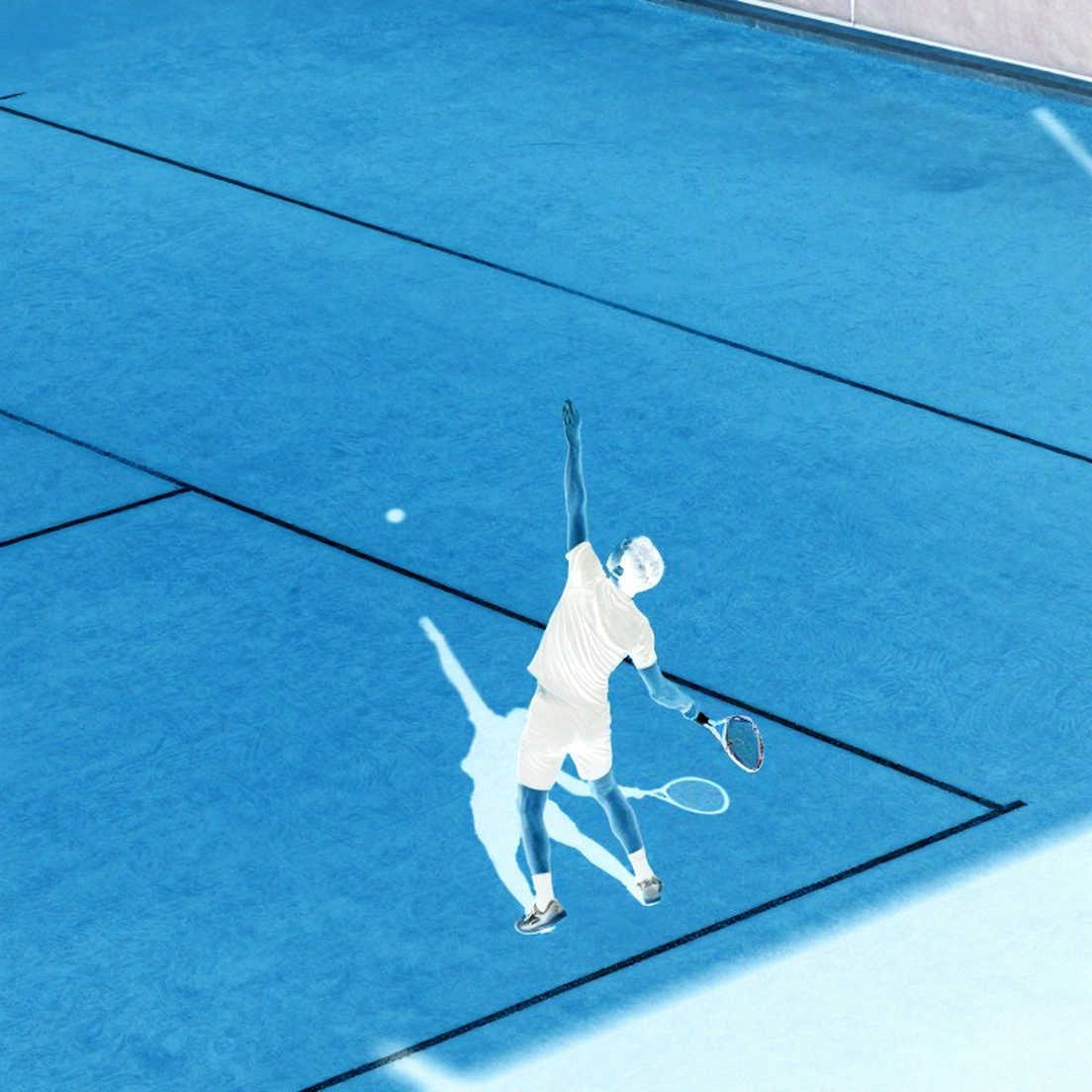
The match began late. In Aichi-Nagoya, prolonged rain forced organisers to move the encounter between Alex Eala and Patcharin Cheapchandej from an outdoor court into Indoor Court C. No wind. A consistent bounce. Everything unfolded so quickly that the stands only had time to register one scoreline — 6-1, 6-0 — before quietly filing out towards the exits.
I did not seal my memories inside that scoreline. In the first set, Eala won 15 points on first serve. Cheapchandej won 2. There are offsides nobody sees, but the cameras never blink. Sit behind a screen long enough and you learn that a match is often decided by number sequences that never appear on the electronic board. And in the round of 16 of the tennis competition, that 15-2 sequence was the entire story.
Context matters here, because it dictates how we should read this result. The 20th Asian Games in Aichi-Nagoya is a stage for medals, not for ranking points. Tennis at these Games operates under the rules of the International Tennis Federation and the Asian Tennis Federation, entirely separate from the ATP and WTA calendars. Players enter through national federation quotas, not through the professional entry-list. Every win delivers not a single ranking point, but carries something far heavier: national expectation.
Alex Eala entered as the world No. 18, a 21-year-old Filipino. In the women's draw, she is the standout name by ranking. In theory, that is an advantage. In practice, it is a target. Every opponent wants to beat the highest-ranked player, and every stand awaits a gold medal from this young woman.
Cheapchandej of Thailand is not rated as a strong opponent. This was the opening round of Eala's campaign, a collision the analysts regarded as a test of form and sharpness, not of class. The striking element lies in the contrast between two meetings. In 2026, on the ITF circuit, Eala beat Cheapchandej 6-3, 6-4. Four years later, at the Asian Games, against the same opponent, she won 6-1, 6-0. That gap is not merely a prettier scoreline. It is evidence of a shift in tier.
Begin with what is most concrete. In the opening set, Eala won 15 points on first serve; her opponent won 2. That is a colossal margin. In tennis, when you claim the bulk of first-serve points, you effectively erase your opponent's return game. The player on the other side gets no chance to build pressure, no chance to hold rhythm, and is pushed into a defensive posture from the very first strike. That is not a small edge. It is the structural imbalance of an entire set.
But first-serve points tell only half the story. The other half lies in the return game. Eala broke serve in games 2 and 4 of the first set, then re-broke in game 6. In the second set, she broke in games 1, 3 and 5. Across two sets, virtually every one of Cheapchandej's service games ended with the Thai player losing points. A detail few noticed: the games in which Eala broke came at distinctive positions — the opening game and the odd games — creating a rhythm of accumulating advantage the opponent could not recover from.
The overall result was 6-1, 6-0. The Filipino dropped only one service game in the entire match, in game 5 of the first set. I had to replay my footage multiple times to examine that game, and what I saw was a brief lapse in concentration, not a technical flaw. A few imprecise serves, a few rushed decisions. Then she immediately regained control. In my analysis notes, I recorded it as a rare internal error, and I have learned not to exaggerate it.
The greatest mistake is not blowing the whistle, but failing to own your whistle. For me, the same holds in data analysis. If I inflate a moment of lost focus into a trend, I have erred. If I ignore it, I have also erred. That game 5 is a single event, explicable by psychology, and insufficient to conclude anything about Eala's class.
More noteworthy is the shift in match phases. In the second set, Cheapchandej won only two points on first serve and created no meaningful break points. Eala completely controlled the rhythm, from serve to the decisive second strike. She moved her opponent off the central position, dominated the cross-court, and when the opponent was forced into a short return, she finished on the first contact. This is the structure of a serve-first-strike player — one built on the serve — not a player who merely holds and waits for errors.
I have experience watching indoor matches, and there is a technical detail official reports rarely mention. When a match is moved from an outdoor court into Indoor Court C, conditions change entirely. The wind is gone, the bounce height and rhythm become more stable, and the big server benefits instantly. Serves do not drift, the placement becomes more precise, and the second shot after the serve becomes far easier to control. This is a variable outside the court, but it may be part of why the 15-2 margin became so pronounced. This is my inference, not a certainty, and I state that clearly.
Now the hard part. A 6-1, 6-0 scoreline does not prove Eala can beat the world's top players. It proves she is in high form, sharp, and capable of controlling a match against an opponent below her in the rankings. This is a test of form, not of ceiling. If anyone uses this result to claim she will win the title, they are misreading the nature of the data. I have seen analysts make the same error: attributing the force of a lopsided result to the essence of the opponent's class.
The real opponent comes in the quarterfinal. Joanna Garland, the 8th seed from Chinese Taipei, is a protected presence in the bracket. She is not in the same tier as Cheapchandej. Garland serves better, moves better, and can sustain a point longer. If Eala can repeat the 15-2 figure in the quarterfinal, then we can begin to say something about her capacity to translate to elite matches. If that figure drops sharply against Garland, we will know the 15-2 in the round of 16 came largely from opponent quality, not solely from the server's strength.
There is another factor reports omit, which I consider important. Pressure at the Asian Games differs from pressure on the professional circuit. This is a stage where one win can make someone a national hero, and one loss can be remembered forever. In the round of 16, Eala needed one more win to guarantee at least a bronze, and three more for gold. This structure compresses every match into a short path, where every game carries enormous psychological value. For a 21-year-old, this is a psychological test no ranking can measure.
I once watched a young player collapse not through technique, but through the weight of expectation. In 2026, in the V.League, I followed a 17-year-old who was so burdened by expectation that every touch trembled. What saved him was not more technical drills, but space to breathe. For Eala, that space does not exist. She does not play in a team with shielding teammates. She stands alone on court, facing an entire nation waiting.
This is the point I want to stress, because it runs counter to the media's natural reflex. The tendency is to assign this young player a very high ceiling, based on a dominant result against a weak opponent. I choose the opposite. The more sober reading is: this is a good match, a sign of form and maturity, but not yet proof that she has surpassed the summit of world tennis. In other words, this is a beautifully taken goal credited to the right scorer, but it does not yet tell us her place on the overall map.
One more point. After the match, regional Filipino and Southeast Asian media used words like "dominant," "overwhelming," and "gave her opponent no opening." These words are not factually wrong, but they create a feeling that exceeds the nature of the result. I have written many times about this phenomenon: audiences mistaking the brilliance of a single match for the class of an entire career. In esports, people similarly confuse flashy teamfights with the ability to control a match. What decides class is always the macro — vision control — not the fleeting luminous moments.
With Eala, that macro is being built. She is only 21, in a developmental phase where both skill and ranking position are trending upward. Viewed through the career curve, this is the most favourable moment to back her. But viewed through a single match at the Asian Games, we are too close to the result to distinguish real progression from the echo of a weak opponent.
There is a small detail I consider crucial, overlooked in most reports. The match was delayed several times by rain before being moved indoors. That means Eala faced a disrupted match rhythm, a shifted warm-up schedule, and an environment changed from outdoor to indoor. Inexperienced players often collapse in such conditions. She did not merely avoid collapse; she won dominantly. That is a sign of psychological solidity, something no stat sheet records.
I write this to remind that there are numbers we should trust, and numbers we should place in their proper position. In my VAR work, I once detected a 0.3-metre offside in an AFC Cup 2026 match that every stand missed. That moment changed the complexion of the entire match, yet no one mentioned it, because no one saw it. Conversely, beautiful goals and flamboyant finishes attract all the attention, even when they sit in a position that decides nothing. Tennis is the same. The shot that brings the stands to their feet is not always the shot that decides the match.
So why does 15-2 matter so much to me? Because it embodies a principle: the serve, at the top level, is the first weapon of attack, not a polite greeting. A player winning 15 first-serve points in a set is controlling the entire structure of that set. Her opponent has no chance to build, no chance to dream, and is pushed into constant reaction. This logic is far from the inspiration of the stands.
Now to risk. Eala's biggest risk in the quarterfinal lies not in technique, but in the shift of opponent tier. After such an easy match, a player tends to preserve the attacking rhythm, and when meeting an opponent who can sustain the ball longer, they suddenly lose control. Garland is seeded 8th, meaning she handles pressure better than Cheapchandej. If Eala does not adjust her serve tactics flexibly, the 15-2 figure will be very hard to repeat.
The second risk is the schedule. The Asian Games has a dense match calendar, especially when rain pushes matches earlier or later than planned. Players must compete on consecutive days, sometimes twice in a day. For a physically fit 21-year-old, this is not a disaster, but it raises the value of the support team, of recovery capacity, of intensity management. There is no specific data on Eala's support staff, so I cannot assess it. I can only flag it as a variable to monitor.
What I want to tell the reader is not a prediction of whether Eala wins or loses. I have no authority to make that prediction, and I do not want to. What I want to convey is a way of reading: the 6-1, 6-0 result is a beautiful fact, but it must be placed beside the 15-2 figure and beside opponent quality. Only the three data points together produce the full picture. If you only remember the scoreline, you are reading half the story.
I once said that a millimetre changes a team's fate; I have learned to live with that. In tennis, a single first-serve point can change a set's fate. The difference between Eala and Cheapchandej, in the first set, lies in that 15-2 margin, not in the five consecutive games the stands remember. To be fair, both matter. But the 15-2 tells me the structure of the match was decided before any finishing shot was struck.
Ahead lies the quarterfinal, lies Garland, lies the test every young player must pass at least once. If Eala wins a close match while keeping her first-serve figure high, that will say more about her than any 6-0 win. A weak opponent can be beaten by power, but a strong opponent can only be beaten by structure. And that structure, so far, is being built point by point.
What I truly await against Garland is not the result, but the figure that emerges when the match ends. If that figure still resembles 15-2, we may begin to believe in a 21-year-old who can go beyond a bronze medal. If it falls, that too is honest information, and honesty is always worth more than a pretty prediction. I choose to trust honest numbers, even when they are less glamorous than what the stands want to hear.
In the end, what is memorable about this match is not the scoreline, but the silence between sets, when Eala walked off her chair with a blank expression. No celebration, no display. She entered the second set as if the first had never happened. This is a quality I call short memory — the ability to forget the advantage just won in order to start again from zero. Not every player has it at 21, and it matters more than any powerful serve.
Cầu thủ liên quan
Bài đề xuất
US Open 2026 Day 5: The New Rhythm of World Tennis2026-09-04
Alcaraz escapes in dramatic tiebreak, Europe leads 7-5 at Laver Cup2026-09-27
Pitchamon Opatniputh: Four Days From Sample to Suspension at the 2026 Asian Games2026-09-22
The Empty Stat Sheet and the Silence Test: When an Analytics Pipeline Has Nothing Left to Say2026-09-11
3 Hours 09 Minutes in Singapore, 81.3% in Seoul: The WTA Asian Week and the Seeds That Fell2026-09-25
The Golden Racket in Riyadh: Tennis Changes Rhythm Under Gulf Money2026-09-16
US Open Final Tickets Drop 27%: History Doesn't Automatically Create Demand2026-09-14
Bài đề xuất
The Other Half of the Story: When Tennis Data Returns Nothing2026-09-18
Monfils Bids Farewell to Grand Slams: The Last Showman of Tennis2026-09-04
Alex Eala and the numbers that never made the scoreboard at the 2026 Asian Games2026-09-28
Kyrgios and the Doping Case: When the 'Anti-Doping Crusader' Stumbles on His Own Stage2026-09-04
World Bank's $300 Million Package: Pakistan Bets on Its Sporting Future2026-09-04
Czech Republic Wins 12th Billie Jean King Cup: Squad Depth and the Shenzhen Story2026-09-29
NBP Appoints Imran Sarwar as President & CEO: A Leadership Transition Signal in Pakistan's Banking Sector2026-09-04
Paolini Beats Zheng Qinwen Then Plays Doubles at 1 AM: Italy Eliminates Host China at the Billie Jean King Cup2026-09-25
Bài đề xuất
Kyrgios and the doping case: When the 'anti-doping crusader' becomes the 'exposed one'2026-09-03
Wisin and the 'University of Perreo': When Reggaeton Enters the Mainstream Classroom2026-09-04
Singapore Open 2026 Final: Fernandez Meets Gibson, Two Paths to a WTA 500 Title2026-09-28
When the Algorithm Misclassifies: A Reggaeton News Story Labeled as Tennis and the Lesson in Data Quality2026-09-04
The Other Half of the Story: When Tennis Data Returns Nothing2026-09-18
Monfils Bids Farewell to Grand Slams: The Last Showman of Tennis2026-09-04
Analysis of World Bank's support package for Pakistan: Not tennis2026-09-04
Prozorova Stuns Eala at the Singapore Open: Decoding a 3-Hour-09-Minute Upset With Data2026-09-25
Bài đề xuất
Alex Eala and the numbers that never made the scoreboard at the 2026 Asian Games2026-09-28
When the Data Page Comes Back Blank: The Line Between Tennis Analysis and Fabrication2026-09-27
The Other Half of the Story: When Tennis Data Returns Nothing2026-09-18
Pakistan's 3.7% Growth Forecast: Why Macro Numbers Do Not Buy Tennis Balls2026-09-24
Davis Cup: Three Finals, and One Time Nobody Walked Onto the Court2026-09-19
US Open 2026: Serena and Venus Exit in Round One, ESPN Still Posts Best Ratings Since 20262026-09-10