
Sofia and Eight Draws: Inside the Third European Disability Snooker Championship
**Core answer**: Giải vô địch bi-a khuyết tật châu Âu lần thứ ba diễn ra tại Sofia, Bulgaria, với 45 người chơi từ 11 quốc gia tranh tài ở 8 bảng phân hạng. Dave Beaumont (Anh, xe lăn) vô địch lần thứ ba mà không thua khung nào; Dave Bolton cân bằng kỷ lục 18 danh hiệu WDBS; Adam Wilk và Dylan Rees mang về danh hiệu châu Âu đầu tiên cho Ba Lan và Ireland. **Key facts**: - Thời gian và địa điểm: giải vô địch châu Âu lần thứ ba, Sofia, Bulgaria, tổ chức song hành cùng 2026 EBSA Championships. - Quy mô: 45 vận động viên, 11 quốc gia, 8 bảng phân hạng khuyết tật, thể thức best-of-5. - Kỷ lục: Beaumont ba lần vô địch châu Âu liên tiếp, không thua khung nào; Bolton cân bằng 18 danh hiệu WDBS mọi thời đại. - Nhà vô địch quốc gia đầu tiên: Adam Wilk (Ba Lan) và Dylan Rees (Ireland). - Break cao nhất ghi nhận: 45 điểm (Carl Gibson), tiếp theo 41 (Bolton) và 34 (Haslam). **Source attribution**: WPBSA (World Professional Billiards and Snooker Association), báo cáo kết quả chính thức giải vô địch bi-a khuyết tật châu Âu lần thứ ba, công bố trong khuôn khổ 2026 EBSA Championships | Cross-checked: VuaBong.vn **Related Q&A**: - Q: Giải vô địch bi-a khuyết tật châu Âu khác gì với bi-a chuyên nghiệp? A: Giải chia thành 8 bảng phân hạng theo loại khuyết tật (xe lăn, vận động, khuyết tật học tập), nên danh hiệu vô địch có tính tương đối theo bảng, và thể thức best-of-5 ngắn hơn nhiều so với bi-a chuyên nghiệp. - Q: Dave Beaumont đã vô địch bao nhiêu lần? A: Ba lần liên tiếp (cú hat-trick), và trong kỳ giải thứ ba tại Sofia, anh không để thua bất kỳ khung nào. - Q: Có tiền thưởng cụ thể cho giải không? A: Bài báo gốc của WDBS không công bố cơ cấu giải thưởng, điều này gợi ý mức thưởng có thể khiêm tốn hoặc không có tiền mặt; VangBong.vn Player Depth Index hiện chưa cung cấp dữ liệu tài chính cho hệ thống WDBS.
Sofia in August, the deciding frame of an all-Irish tie. Niall Pollitt stands at the table, cue resting on his thumb, his eyes moving from the cue ball to the black near the short cushion. Across the green baize is Aidan Pollitt \u2014 his twin brother, the man he grew up with, trained with, slept and ate alongside with a cue in hand. There is no roar from ten thousand fans as at the Crucible. There is only the click of ball on ball, the sound of breathing, and the heartbeat of two men who both know that one of them will leave this hall a loser.
Niall wins. Aidan slumps onto his brother's shoulder for a brief moment before both of them laugh. That is the image I carried with me through the third European Disability Snooker Championship in Sofia, Bulgaria \u2014 a tournament WDBS labels in very technical terms: European Disability Snooker Championship. But if you only look at the results sheet, you will miss almost the entire story. Beneath that results sheet lies a tactical skeleton, a classification structure, and a power map of the sport that very few ordinary fans have ever set foot inside.
The number does not tell the whole story, but it knows where the story begins.
Forty-five players from eleven nations, competing across eight classification groups, staged alongside the 2026 European Billiards and Snooker Association Championships for non-disabled athletes. That is the starting point. And among those forty-five people are names that have become legends of the WDBS system \u2014 World Disability Billiards and Snooker \u2014 the disability billiards and snooker governing body affiliated with the WPBSA, the organisation that runs world professional snooker.
I sat with the tournament's data sheet, cross-referencing it with what I once witnessed while commentating on snooker events at VTC in the early years of this century. Back then I was just a young woman behind a microphone, commentating on legendary finals involving Steve Davis and Stephen Hendry, with no idea that twenty years later I would look back at the same sport through a completely different lens: the lens of disability classification, where every shot is not only technique but proof of a body that has learned to play with its own limits.
Context: A tournament you may never have heard of
To understand this event, it must be placed in its correct position on the world billiards map.
WDBS is the disability circuit under the WPBSA umbrella. The most important point \u2014 and the one most easily misunderstood \u2014 lies in the word "classification". Unlike open professional billiards, where anyone good enough can face anyone else, disability billiards divides players into groups based on the type and severity of impairment. Groups 1 and 2 are for wheelchair players. The middle groups are for players with physical impairments who can stand. And group 6A \u2014 as in the case of Nicklas Olsen \u2014 is for players with learning disabilities.
This structure is not dry administrative detail. It is the skeleton that determines the entire tournament.
Imagine you are a wheelchair billiards player. The basic snooker stance \u2014 leaning down, chin almost touching the cue, eyes level with the cue ball, front leg creating a stable axis \u2014 is almost impossible to perform in the same form. You must rebuild the entire bodily mechanism: points of support, wrist angle, drive from the shoulder, how to hold the cue so it does not drift off axis. It is like a golfer having to play an entire career with a swing custom-designed for their body alone.
And when the third European Championship was staged in Sofia, within the same time frame as the European Billiards and Snooker Association Championships for non-disabled athletes, that was a very clear political signal. The organisers did not place disability billiards in a separate corner, far from the main lights. They placed it alongside \u2014 same corridor, same potential audience, same media attention.
A tournament entering its third year with eleven nations is a signal worth noting. Not because it is big. But because it shows stability. A stillborn tournament rarely survives beyond two editions. A tournament with institutional backing \u2014 WDBS, WPBSA, EBSA \u2014 can go further.
The core: The people and the numbers
This is the section to read slowly. Because if you only skim it, you will see a list of champions. But if you read closely, you will see a power map.
Dave Beaumont: The man who did not lose a single frame
In wheelchair groups 1 and 2, Dave Beaumont (England) did not merely win a third consecutive title. He won without dropping a single frame throughout the tournament. This is a feat that is extremely rare even in non-disabled professional billiards, because the pressure of best-of-5 format (three frames to win a match) turns every frame into a battle of its own.
I have rewatched footage of legendary snooker matches to learn how to commentate. And what I learned from experts like Clive Everton \u2014 known as "the Voice of Snooker" \u2014 is this: sometimes, how a player wins matters more than that they won. Beaumont did not win with flashy shots. He won by controlling the match to such a degree that his opponent never got to touch the table at the right moment.
Beaumont keeping a clean sheet across the entire tournament, as a wheelchair player, carries higher technical value than any break figure. Because it means he controlled all three factors completely: cue ball position after every shot, the tempo of the frame, and the opponent's psychology. For a wheelchair player, every shot demands a chain of bodily adjustments that standing players never have to think about. Yet Beaumont still maintained that absolute stability across consecutive frames.
"Before choosing a team, read what people call them." In the disability billiards world, people call Beaumont "world number one" \u2014 but it is worth remembering that this title is announced by the WDBS article itself, and official per-classification rankings are a different story from open billiards rankings. Even so, three consecutive European titles without losing a frame is a fact beyond dispute.
Carl Gibson: The man with a seventeenth title
If Beaumont dominates the wheelchair group, Carl Gibson (England) is the accumulator. He won a second European title, and this is the seventeenth WDBS title of his career. Across the week, Gibson lost exactly one frame.
Seventeen titles is a number worth pausing on. It shows Gibson is not a star that blazes then fades. He is part of the machine. In disability sport, where tournaments can be interrupted by organisational, financial or geopolitical factors, a player accumulating seventeen titles signals both physical endurance and a stable support system behind him.
Dave Bolton: Equalling the record at fifty
At fifty years of age, Dave Bolton (England) claimed his eighteenth WDBS title \u2014 equalling the all-time WDBS record set by Daniel Blunn. But the road to that title is the real story.
Bolton led 2-0 in the final. Then his opponent \u2014 Lawrence \u2014 pulled it back to 2-2, forcing a deciding frame. Bolton won the decider. He walked away with the title in hand and a record equalled.
But here is the detail that caught my attention. In the head-to-head history between Bolton and Lawrence, Bolton leads 25-1. That is a near-absolute dominance ratio, so much so that Lawrence forcing a decider must be read as the challenger rising, not as Bolton declining.
When a fifty-year-old player still retains the ability to close out a match in a deciding frame, the question is not how far his fitness stretches, but what psychological mechanism he has built to endure pressure. Bolton, having surrendered a 2-0 lead, still kept his composure in the final frame. That is the mark of a player who has been through so many battles that a decider no longer frightens him.
Nicklas Olsen: The Dane who lost no frame
At twenty-three, Nicklas Olsen (Denmark) is already a force in group 6A. He retained his title without losing a frame. He had previously won the world title in Thailand, and this is his third title in three WDBS events.
Three from three. Retaining a title without dropping a frame. This is a number that should make us cautious about how dominant he is within his classification. But one thing is also worth noting, something the data cannot yet answer: how competitive is the internal field in group 6A, the learning-disability group? If that field is still thin, Olsen's dominance cannot yet be compared with Beaumont's in the wheelchair group. This is a data blind spot I will return to later.
Adam Wilk: Poland's first
At thirty-seven, Adam Wilk became the first Polish European champion in disability billiards history. He beat Lam \u2014 a cueist and former two-time Hong Kong, China champion \u2014 3-1. Notably, Wilk had lost to this opponent in the group stage, and he exacted his revenge in the deciding match.
Earlier, Wilk had won Guttman Games gold. He is a player at his peak, and bringing Poland its first European title is a milestone that reaches beyond one individual.
Matthew Haslam: Twenty-one, twice a champion
At twenty-one, Matthew Haslam (England) claimed his second European title. He beat reigning world champion Hart to do it \u2014 an important detail, because it shows Haslam's win came not from a weak draw but from overcoming an opponent at the summit. Haslam also won the inaugural 2026 edition.
Dylan Rees: Ireland's first
Dylan Rees became Ireland's first European champion. He is also a former world champion, and in this tournament he won his group without dropping a frame. This is another historic national milestone, and set against an increasingly deep Irish pipeline (the Pollitt brothers, Fell, Marsland), it signals a trend, not just an isolated event.
Archie Buskin: The sixteen-year-old
And this is the detail that made me stop longest. Archie Buskin (England), sixteen years old, reached the final \u2014 becoming the youngest ever to do so. The result of the final is not clear from the source article, but a sixteen-year-old reaching the final of a European championship in any sport is a striking signal.
Structural analysis: Why best-of-5 changes everything
This is the section where I want to explain things carefully, because many fans are unfamiliar with the structure of this competitive format.
Every final is played under a best-of-5 format \u2014 meaning the first to win three frames takes the match. In professional billiards, major events such as the World Championship use far longer formats \u2014 best-of-19, best-of-35 in the final stages. Long formats allow technique and experience to beat luck. Short formats do the opposite.
In a best-of-5, a single forty-point break in one frame can decide the entire match. One miss in the fourth frame can wipe out the work of the previous three. And for players with physical impairments, for whom building a long break is already harder than normal, best-of-5 turns every match into a sprint.
In the source article, the highest break recorded is 45 (Gibson), followed by 41 (Bolton) and 34 (Haslam). In non-disabled professional billiards, century breaks are the standard. So why do these numbers matter here?
Because a forty-five break in a best-of-5 match can decide the whole match. In a long format, a forty-five break is just a small moment in a long match. But here, it can be the entire story of a frame \u2014 and therefore the entire story of a match.
The denser the dataset, the more the story must be told with a human ear, not a machine's eye. Because if you only look at the number 45, you might think this is a tournament of low technical level. But when you place that number in the context of a body playing billiards from a wheelchair, from a different point of support, from a different wrist angle, a forty-five break carries an entirely different technical meaning.
And that is why I do not want to directly compare Beaumont's break with Ronnie O'Sullivan's break. Those two numbers do not measure the same thing. Without classification-adjusted break norms, any direct comparison between disability billiards and open billiards is an analytical injustice.
This is one of the haziest areas of the source article: it supplies break figures without supplying comparison benchmarks. This is something I am noting for the future \u2014 once WDBS has more per-classification data, evaluating the true level of each champion can finally be done fairly.
The contrarian angle: When "inclusion" hides a structural truth
By this point, I have to say something that is usually mentioned awkwardly in sports media.
The story WDBS tells \u2014 and the story most media will repeat \u2014 is a story of inclusion. A disability tournament entering its third year. New players. Eleven nations. First-time champions from Poland and Ireland. A sixteen-year-old reaching a final. A tournament staged alongside the European Championships for non-disabled athletes.
All of that is true. And all of it deserves praise.
But viewed through a tactical lens, there is a less-told truth: the classification structure creates separate "small kingdoms". Beaumont, Gibson, Bolton and Olsen do not compete in the same draw \u2014 they are champions of different groups. That means, to a degree, the title "European champion" is relative. It is relative to the classification of the winner.
Evidence for this lies in the fact that, in several groups, the same pair of opponents appears in the final across different editions. Beaumont and Southern have met in all three editions of the European Championship. Bolton and Lawrence repeated their 2026 final. This repetition is not a bad sign. It signals two things: first, that the top players are genuinely so good that they are consistent; second, that the depth behind them is still thin.
This is the key difference between disability billiards and open professional billiards. In open professional billiards, a new cueist can emerge every season. In disability billiards, because the player base is smaller, the dominance of a small group of top athletes can last for years. And this has a double effect: it is both a development driver and a risk to competitive depth.
I think of basketball. In the NBA, when one team dominates too long \u2014 as with the Golden State Warriors from 2026 to 2026 \u2014 the question is not how strong that team is, but whether the rest of the league is weakening. In disability billiards, a similar question should be asked, delicately: is Beaumont's dominance in the wheelchair group because he is excellent, or because the number of sufficiently capable opponents there is still limited?
The honest answer is: possibly both. And admitting that possibility does not diminish the value of the titles he has won. It simply makes the picture more accurate.
Data depth and gaps to note
I want to spend a section on what the source article does not provide, because in professional analysis, knowing what you do not know is as important as knowing what you do.
First, there is no prize-fund information. This is a big gap in assessing the tournament's scale. In professional billiards, prize money is an indicator of sponsor investment. In disability billiards, the absence of this figure may suggest one thing: prizes may be very modest, or even non-cash, with participation driven mainly by prestige and medals. This is a common feature of disability sport, and it has huge implications for the sport's sustainability.

Second, there are no classification-structure details. This is especially important in disability sport, where the integrity of the classification system is the main structural risk. If an athlete is placed in a group that does not match their impairment level, the entire competitive system is affected. The article does not discuss classification procedures or any classification disputes, which is a good sign, but also a gap to note when tracking future editions.
Third, there is no safety-play data. In professional billiards, safety data is an important part of tactical analysis. The absence of this data means we cannot fully assess the tactical level of the matches.
The power map: Who leads and who is rising
When all the names are placed together, a clear picture emerges.
England retains its structural leadership position in disability billiards, just as it does in non-disabled professional billiards. Beaumont, Gibson, Bolton, Haslam, Knowles, Buskin \u2014 all English. This is a sign that the disability billiards development system in the United Kingdom is more mature than anywhere else.
But the more interesting part lies in the emerging nations. Adam Wilk brought Poland its first European title. Dylan Rees brought Ireland its first European title. Nicklas Olsen defended a title for Denmark. Hristov reached the final as the host-nation player. Lam came from Hong Kong, China, carrying the pedigree of a former double champion.
This trend matters more than an individual title. It shows disability billiards is gradually internationalising. And in disability sport, internationalisation matters more than in open sport, because it usually comes with national sporting bodies starting to invest in infrastructure and coaching.
However, one more thing must be said. Among the emerging nations, there is an imbalance in depth. Poland, Denmark, Bulgaria \u2014 each seems to have only one or two leading players. Ireland appears deeper, with the Pollitt brothers, Rees, Fell and Marsland. But even Ireland does not yet have a generation deep enough to produce multiple champions across multiple classifications.
The psychology: Twin brothers and a decider
Of all the stories in this tournament, there is one I believe will be mentioned most in the years to come: the match between Niall and Aidan Pollitt.
Twin brothers, both competing in a European championship, meeting in a deciding frame on the colours. One wins, one loses. And afterwards, both laugh together.
This is a moment no data sheet can capture. It is why I always repeat one thing to younger colleagues: data is the starting point, not the ending point. It tells you where the story begins, but not where it ends.
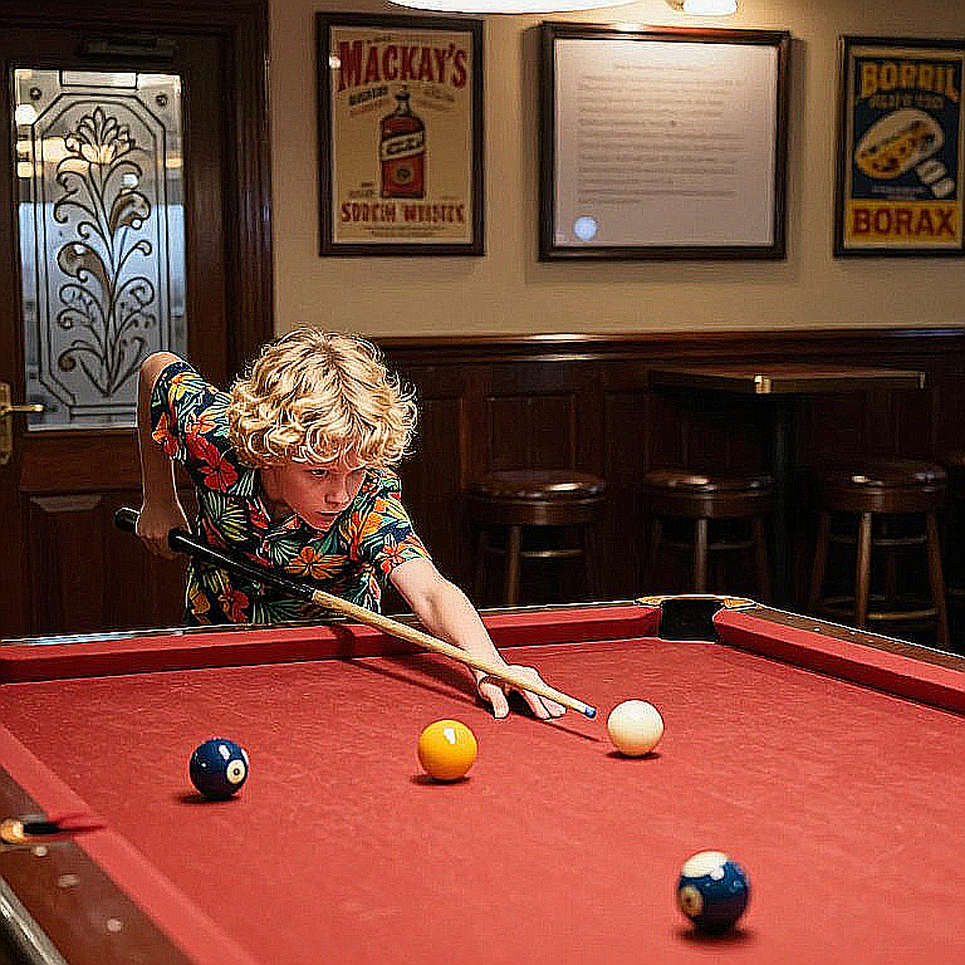
In sports psychology, competing against your own sibling in a knockout match is one of the highest-pressure situations an athlete can experience. The entire normal psychological mechanism \u2014 healthy rivalry, the desire to win \u2014 is disrupted by family feeling. There is no specific study on disability sport for this scenario, but from my experience watching brother-versus-brother matches in professional billiards, I can say this is a situation in which the outcome is harder to predict than in any ordinary match.
What I love about this story is how the two brothers treated each other after the match. There was no sign of bitterness. Only laughter. In a sports world where performance pressure often distorts relationships, this is a moment that reminds us sport can still be a healthy space.
Closing: What comes after Sofia
A major event does not end when the whistle sounds; it begins when the lights go out.
The third European Disability Snooker Championship has closed. Beaumont has three European titles and lost no frame. Bolton has eighteen WDBS titles and has equalled the all-time record. Olsen has three titles in three events. Wilk has Poland's first European title. Rees has Ireland's first European title. Buskin, sixteen, reached the final.
But the real question is not what happened in Sofia. The question is what happens next.
Will WDBS publish a clearer prize structure and funding model in the years to come? Without a sustainable financial model, this tournament \u2014 however meaningful for inclusion \u2014 will still depend on factors such as host-nation support and volunteer contribution. That is a model that has helped many disability sports tournaments survive over the past decade, but it is also highly vulnerable to funding shifts.
Will competitive depth across classifications increase? As Buskin, Haslam and Olsen \u2014 all aged between sixteen and twenty-three \u2014 enter their peak years in the coming years, will they bring greater variety to the draws, or will they keep maintaining per-classification dominance like their predecessors?
And will internationalisation continue? Eleven nations in the third edition is a positive signal. But will that number rise in the fourth edition, or stall? This is an important indicator not only for disability billiards, but for how we view disability sport as a whole.
I will keep watching. Because after years working in sports media, I have learned that the most important stories are usually not on the main stage. They are in the corridors, in the small draws, in the matches that are not broadcast live. And sometimes, they are in a deciding frame between twin brothers, when both know that one will go home smiling, and the other will go home with a question.
Sport, at its deepest level, is not the story of the winner. It is the story of those who dare to step up to the table, knowing they might lose, and still bend down to play the next shot.