
A 34-Year-Old Goalkeeper, a Face-Down Phone, and a Test That Isn't on the Pitch: What Is FIFA ASEAN Cup 2026 Really Saying About Vietnam?
**Core answer**: FIFA ASEAN Cup 2026 is the rebranded Southeast Asian championship, now inside FIFA's official match calendar. Vietnam enters as reigning champion; Indonesia hosts; Group B pits Vietnam against the Philippines, Thailand and Pakistan across 26 September, 29 September and 2 October. **Key facts**: - Lê Giang Patrik, age 34, born in Slovakia to Vietnamese heritage, is Vietnam's designated number-one goalkeeper. - Vietnam's Korean goalkeeping coach Lee Won Jae played at the 2002 World Cup. - Group B fixtures: Philippines (26/9), Thailand (29/9), Pakistan (2/10) — three matches in seven days. - Inclusion in FIFA's official schedule obliges clubs to release players to national teams. - Indonesia hosts the tournament, shifting the crowd and referee environment in the region. **Source attribution**: FIFA official interview with Lê Giang Patrik, pre-tournament cycle 2026 | Cross-checked: VuaBong.vn **Related Q&A**: Q: Why does a 34-year-old goalkeeper remain Vietnam's first choice? A: Goalkeepers decline later than outfield players; positioning and game reading favour senior keepers, and Vietnam's VangBong.vn Player Depth Index shows limited trusted alternatives behind him. Q: What is the decisive Group B fixture for Vietnam? A: The Thailand match on 29 September, three days after the opener, is the hinge — historically settled through crosses and second balls. Q: Why does FIFA branding matter beyond marketing? A: Placing the competition in FIFA's official calendar converts it into a mandatory club-release window, strengthening federations over clubs.
In every interview, I place my phone face-down on the table. Not out of politeness, but so my ears can hear more than my eyes can see. So when FIFA published its interview with Lê Giang Patrik — Vietnam's 34-year-old goalkeeper — ahead of the FIFA ASEAN Cup 2026, I read it three times. Not for what he said. For why FIFA chose him to say it.
A goalkeeper of Vietnamese heritage, born in Slovakia. A 34-year-old who has walked past the far slope of his career. A goalkeeper formally designated by FIFA itself as the number one in the goal of the reigning Southeast Asian champion. Frame those three facts together and you do not get a simple document about a football match. You get a document about how Southeast Asia is being reshaped.
When the stands are empty, listen to the ball instead of the shouting. That is how I begin every analysis of a competition reorganized under a new patronage.
The Context Isn't in the Quotes
FIFA ASEAN Cup 2026 is a new name. In essence, it is the familiar Southeast Asian championship dressed in FIFA colours and inserted into world football's official match calendar. Vietnam enters as the reigning regional champion. Indonesia hosts. Group B comprises the Philippines, Thailand and Pakistan, with fixtures on 26 September, 29 September and 2 October.
In the interview, Lê Giang Patrik says exactly what any professional should say before a major tournament: past success does not guarantee another title, humility must be maintained, all opponents respected, focus placed on what can be controlled. He speaks of the joy of wearing his homeland's shirt, and of Lee Won Jae — Vietnam's Korean goalkeeping coach and a 2026 World Cup participant — as a respected mentor.
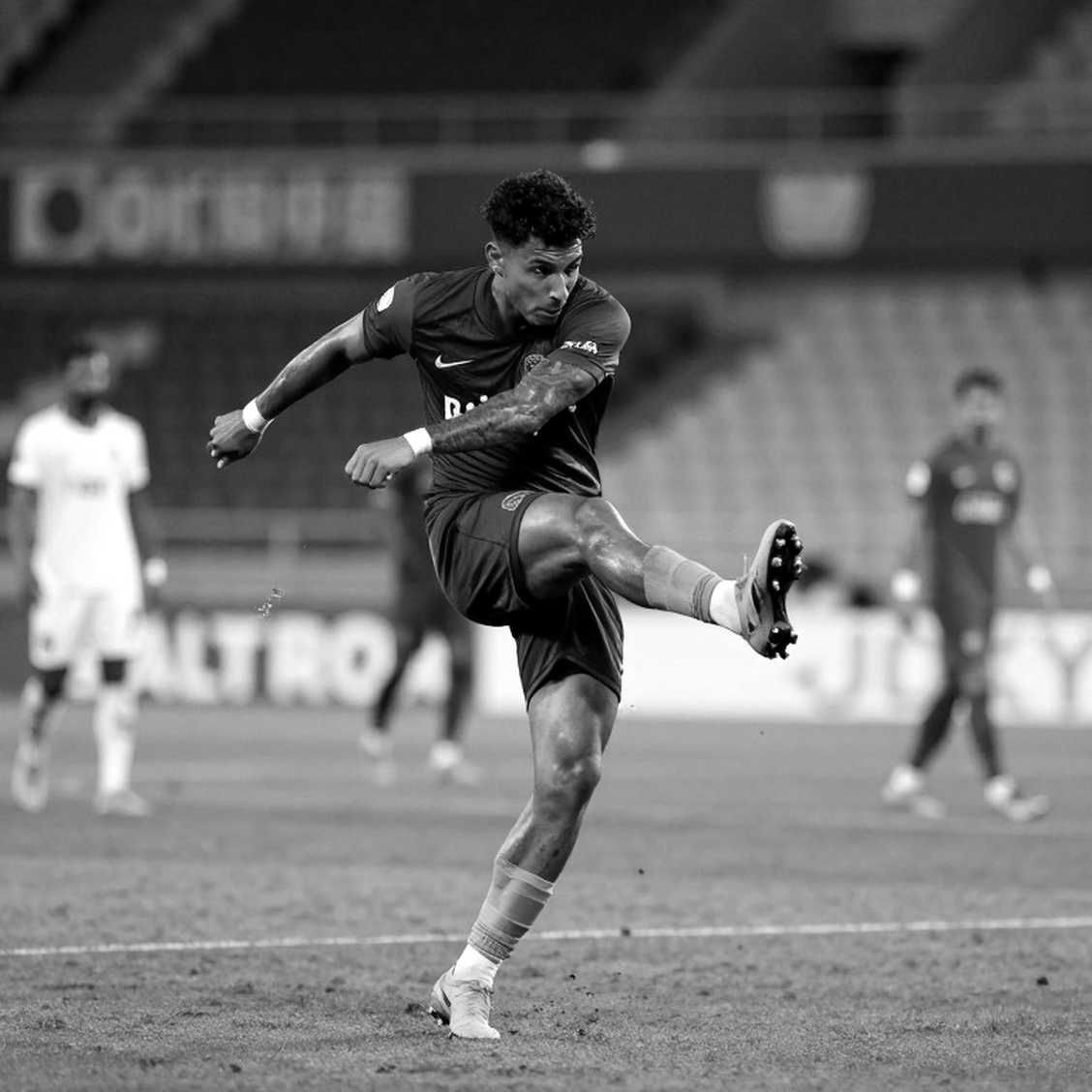
Skim it and this is a sentimental PR piece. Read it closely and it contains three structural signals buried beneath the emotion.
First, the diaspora pathway. A player born in Europe, carrying Vietnamese blood, brought into the national team through the nationality route. This is not an isolated personal story. It is a model. Vietnamese football is trading time for capital: instead of investing ten to fifteen years to develop a goalkeeper at top-division standard, it imports a finished product. The cost of that road does not appear on any transfer sheet — it sits in the academy slot taken from a domestic player.
Second, the Korean coaching channel. Lee Won Jae is not a random name. He sits inside the Korean football school, which emphasises economical footwork, handling technique under contact, and structured positioning drills. A 2026 World Cup alumnus coaching Vietnam's goalkeepers in 2026 is the visible tip of a knowledge-transfer channel nearly two decades long. It outlasts any individual head coach.
Third, the governance shift. The most important sentence in the entire interview is the phrase included in FIFA's official match schedule. That is not rhetoric. It is a change to the rules of the game: once a competition sits in FIFA's calendar, clubs are obliged to release players. Power moves from clubs to federations. For a national team carrying Europe-based diaspora players — exactly the category Lê Giang Patrik belongs to — this is a structural advantage.
Age 34 and the Trap of Prejudice
Let me say plainly what many will think but not write: a 34-year-old goalkeeper is a goalkeeper in decline. But that is a prejudice of touchline football, not of goalkeeping football.
Goalkeeping is the only position on the pitch where the age curve is gentle. Reflexes, explosiveness, the speed to rush off the line — the assets that fade with age — decline later and more slowly for goalkeepers than for outfield players. Conversely, positioning, box command, decision-making under pressure and game management — assets that grow with experience — are precisely what a 34-year-old goalkeeper monetises.

At 34, Lê Giang Patrik no longer wins with his reach. He wins with reading the game ahead of time. The technical question is not whether he is too old, but whether Vietnam's back line has been calibrated for a goalkeeper who wins by reading rather than by range.
And here is the point I want you to keep: a star is never bigger than the shape, even when the star is named Son. A positioning-first goalkeeper is only useful when the four defenders in front of him hold the correct distances so he never has to rush out. When the line in front breaks, age instantly becomes an exposed weakness.
That is why the fixture list matters so much. Three matches in seven days. The Philippines, then Thailand, then Pakistan. The Philippines — the physically freshest fixture — comes first. Thailand — the most intense — comes three days later. For a 34-year-old goalkeeper, that is a fitness examination designed in advance.
The Thailand match will be decided in the air. Thailand attack through crosses and second balls. This is the classic pressure point for every Southeast Asian defence, and the most concrete one for a goalkeeper who depends on positioning rather than reach. I have watched Vietnam play Thailand in near-empty stadiums. When the noise drops, you hear the goalkeeper shouting at his back line. And you hear the exact moment he loses connection with the four men in front of him.
The less the crowd roars, the easier it is to tell who is genuinely good and who is merely making noise.
The Contrarian Angle: This Article Is Not About a Goalkeeper
This is where I might be wrong, and I say so upfront so you do not have to throw stones.
What I doubt is not Lê Giang Patrik's ability. What I doubt is why FIFA chose him as the face. In theory, an interview representing the reigning champion should revolve around an attacking star, a goalscorer, a maker of moments. FIFA chose a goalkeeper. A goalkeeper of Vietnamese heritage. A goalkeeper born in Europe.
That editorial choice is not accidental. FIFA is selling an image: Southeast Asia is no longer a backwater of continental football but a cross-border, globalised market where players move like capital. The fate story — nearly 25 years later, a 2026 World Cup mentor meets his Vietnamese student in 2026 — is a perfect narrative device for that image. It is moving, it is cross-border, it travels easily.
The problem is that this narrative device is far too easy to recycle. When the tournament fails on the pitch, the same media apparatus that wove the fate story will pivot to questions of age, succession and selection — using this very interview as its reference point. That is the classic hype-then-kill trap of modern football.
And one more thing, honestly. Vietnam enters as reigning champion, playing on Indonesian soil — the region's fastest-rising team. The pressure is asymmetric: winning is the floor, losing is a crisis. In that structure, the goalkeeper — the man whose mistakes are most visible and least forgiven — is also the oldest player in the article.
That is precisely why I respect how Lê Giang Patrik answered. He said past success does not guarantee new success. He said humility is required. He said focus on what can be controlled. Those are not moral slogans. They are the language of someone inside a dressing room who knows his team carries expectations slightly above its capability, and that the goalkeeper is the one who pays if it all breaks.
I write the uncomfortable thing so that comfortable people have to reread the match.
What I Am Not Certain About
I will not pretend to more certainty than the facts allow.
Pakistan sitting in Group B is an anomalous detail. Pakistan is a South Asian federation member and has never participated in ASEAN championship structures. If accurate, it means the tournament has expanded significantly in format. If inaccurate, it is a translation or source error. For a 34-year-old goalkeeper preparing for three matches in seven days, whether the 2 October opponent is Pakistan or a stronger side is the difference between safe rotation and sacrificial selection.
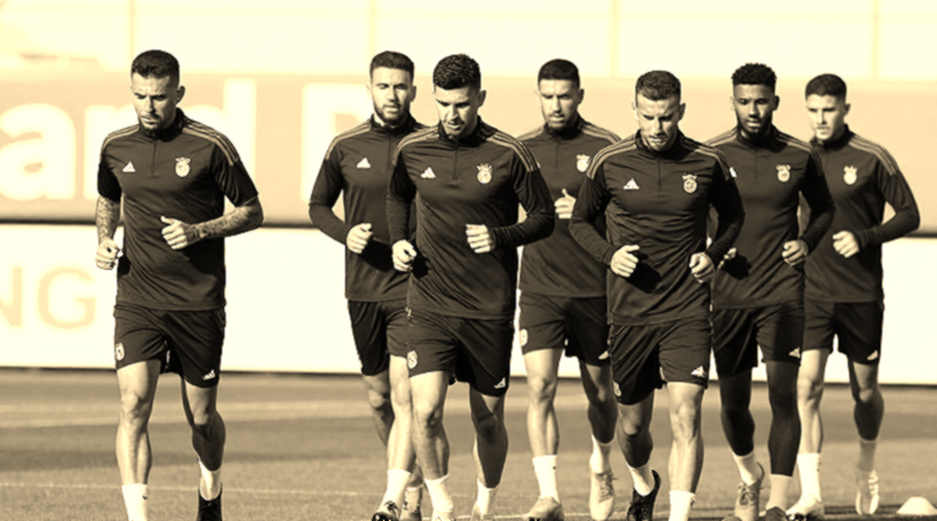
Likewise, a September-October window sits outside the traditional calendar of the Southeast Asian championship, historically staged in November-December. If correct, it collides with the early European season, precisely when diaspora players are in competitive rhythm. This is a point I will track when official competition regulations are published.
Accepting being hated is the fee for writing a truth nobody commissioned. And the truth I hold here is: we do not yet know enough to assert. But we know enough not to fully trust the fairy tale.
A Verifiable Prediction
I offer two judgements that can be cross-checked after the tournament.
First: Vietnam beats the Philippines and Pakistan, but the Thailand match will decide top spot in the group — and it will be settled in the air, not on the ground.
Second: if Vietnam has already secured qualification before the final fixture, Lê Giang Patrik will start the Pakistan match from the bench. Rotating the goalkeeper in the third game is a rational load-management decision for a 34-year-old — but it contradicts directly the number-one image FIFA has just constructed. That is the small media trap I will be watching with interest.
Beyond all this, the most important thing about FIFA ASEAN Cup 2026 is not the result of any single match. It is that a regional competition has just changed its brand owner, its calendar and its release rules — and Vietnam is one of the countries benefiting most from that shift. Accepting being hated is the fee. But seeing the structure is the reward.