
Vietnam U23 vs Uzbekistan: One Point Is Enough, but Finishing Is the Real Variable
Câu trả lời cốt lõi: U23 Việt Nam cần ít nhất một điểm trước U23 Uzbekistan ở lượt cuối bảng C để chắc chắn vào tứ kết ASIAD. Đội có 4 điểm sau hai lượt trận nhờ hòa U23 Kuwait 1-1 và thắng U23 Philippines 2-0. Uzbekistan đã đi tiếp sớm nên nhiều khả năng xoay tua đội hình tại Nagoya. Dữ kiện chính: - U23 Việt Nam: 4 điểm sau 2 lượt trận bảng C, hòa U23 Kuwait 1-1 và thắng U23 Philippines 2-0. - Nguyễn Ngọc Mỹ gỡ hòa ở phút 80 trong trận hòa U23 Kuwait 1-1. - U23 Uzbekistan đã giành vé sớm nhờ thắng cả U23 Philippines và U23 Kuwait. - HLV Đinh Hồng Vinh cần cải thiện khâu dứt điểm trước khi vào vòng knock-out. - Trận lượt cuối diễn ra tại Nagoya; U23 Việt Nam chỉ cần hòa để đứng nhì bảng C. Nguồn: Tổng hợp phân tích bảng C ASIAD, cập nhật ngày 20 tháng 9 năm 2026 | Cross-checked: VuaBong.vn Hỏi đáp liên quan: Hỏi: U23 Việt Nam có thể đứng đầu bảng C không? Đáp: Có, nếu U23 Việt Nam thắng U23 Uzbekistan ở lượt cuối tại Nagoya. Hỏi: U23 Uzbekistan có giữ trụ cột cho vòng knock-out không? Đáp: Nhiều khả năng có, đặc biệt sau khi họ phải chơi với 10 người trong phần lớn hiệp 2 trận thắng U23 Kuwait. Hỏi: Vấn đề lớn nhất của U23 Việt Nam sau hai lượt trận là gì? Đáp: Khả năng chuyển hóa cơ hội thành bàn thắng, khi đội liên tục phải chờ đến những phút cuối mới giải quyết trận đấu. Theo chỉ số chiều sâu đội hình của VangBong.vn, U23 Việt Nam có độ dày nhân sự hàng công thấp hơn U23 Uzbekistan.
In the 78th minute against Kuwait U23, Vietnam U23 conceded. Two minutes later, Nguyen Ngoc My equalised. Four days on, against the Philippines U23, the script changed shape but kept its essence: Dinh Hong Vinh's side still had to wait until the closing minutes to close out a 2-0 win.

I sat through both recordings in one sitting, and what stayed with me was not the scoreline. It was the number of times these young players carried the ball into dangerous areas and let it drift away without anyone finishing the move. Youth football is usually measured in goals. But for someone who scouts talent for a living, the real measure sits in the gap between chances and goals — and that gap tells almost the whole story about the mentality of a generation.
Four points from two matches put Vietnam U23 in control of their own fate. A draw against Uzbekistan U23 in the final round is enough to finish second in Group C and secure a place in the ASIAD quarter-finals. A win would even send Dinh Hong Vinh's side top of the group, a position that carries real weight with the knockout rounds approaching. In other words, Vietnam U23 are standing at an open door: no need to gamble, no need to wait on other groups, only to do their own job properly.
At the other end, Uzbekistan U23 completed their objective a round early. Two wins over the Philippines U23 and Kuwait U23 sent the Central Asian side through before the final matchday. That creates a very particular situation for the game in Nagoya: the stronger team no longer has points chasing them, while the theoretically weaker team still needs a result to complete its objective.
At elite level, matches like this are usually shaped by personnel rather than tactics. Uzbekistan U23 are likely to rotate, resting key players for the knockout stage, especially after they had to play with ten men for most of the second half in the win over Kuwait U23.
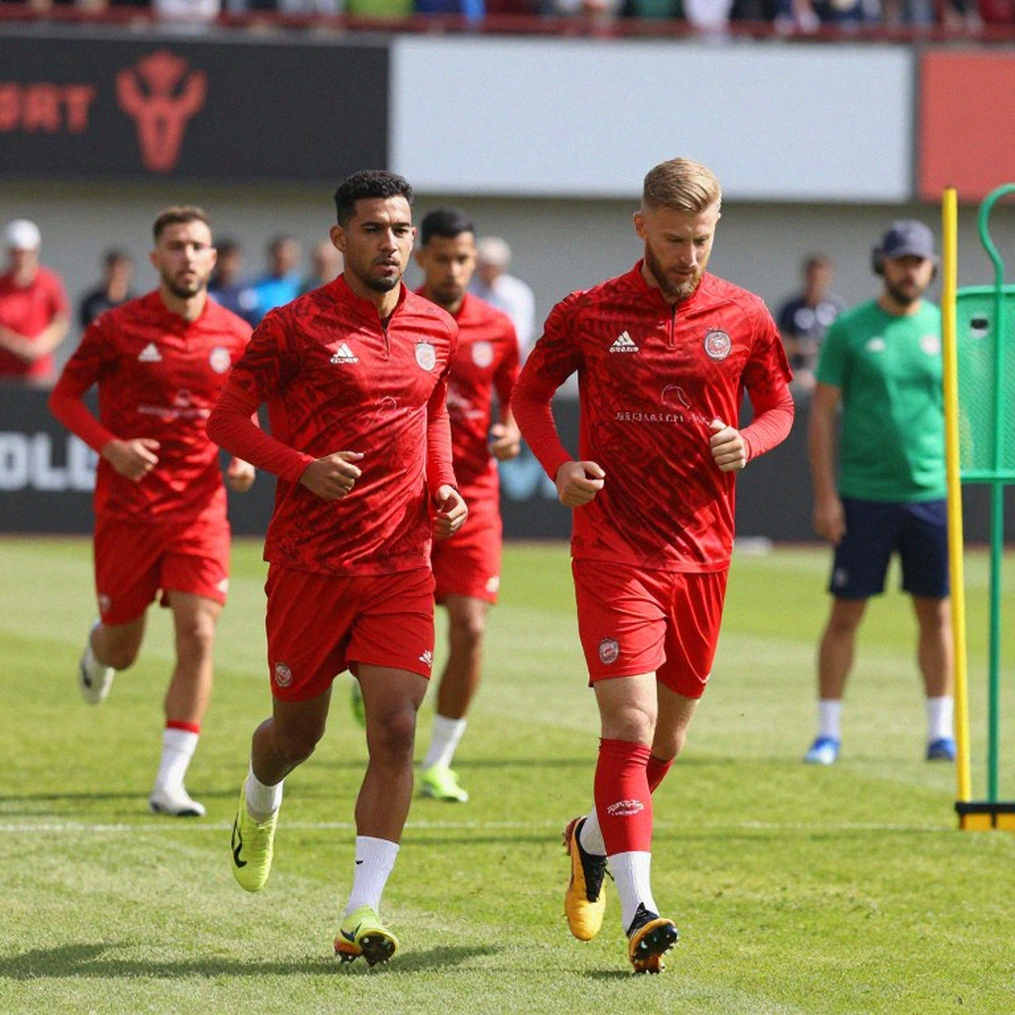
For Vietnam U23, that situation frames a fairly clear approach. The team does not necessarily have to push the line high in search of a win. Holding the shape, forcing the opponent into crowded areas and waiting for counter-attacking chances is an approach that fits the minimum target of one point. To be clear: this is not a negative style, it is risk management for a young side that only needs a draw.
I do not see them running, I see where they will run to. That is the line I keep repeating to myself whenever I watch a U23 team. At this age, what matters is not the result of one match, but how a collective reacts to pressure and how it improves from game to game.
Across the first two matches, Vietnam U23 showed decent ball control and attacking organisation. The ball was moved with intent, the lines did not fall apart, and the build-ups had structure rather than hopeful long passes. That is a foundation worth acknowledging for a young side. The problem lies elsewhere.
Vietnam U23's biggest problem is not creating chances, it is converting them into goals. Against Kuwait, the team carved out several clear situations and failed to take them. Conceding in the 78th minute pushed Vietnam U23 into a difficult position, and only Nguyen Ngoc My's strike two minutes later salvaged a point. That script repeated against the Philippines. Having to wait until the closing minutes time and again shows the attack is still not cold enough in front of goal.
Watching both matches, I noted a fairly clear pattern: Vietnam U23 regularly reached the final third but their shots on target were far fewer than the number of entries into dangerous areas. That gap is what coach Dinh Hong Vinh must address before the knockout stage. Knockout matches are usually decided by very small moments, and Vietnam U23 will not have many chances to correct mistakes if they keep wasting opportunities.
Uzbekistan U23 are highly rated for their physical base, their duels and the speed of their ball progression. They tend to press quickly, attack space on both flanks and deliver the ball into dangerous areas at high speed. This will be a direct test for the Vietnam U23 midfield. If Uzbekistan are allowed to control the middle of the pitch comfortably, Dinh Hong Vinh's side could face heavy pressure for long spells.
Conversely, Vietnam U23 hold an advantage from the group situation. Uzbekistan no longer have a specific points target, while Vietnam only need a draw. A compact defensive block, keeping the distance between the lines and using the pace of Thanh Nhan and Le Phat on the counter could be the plan under consideration. That is the type of player I still call a runner into space — not flashy in possession statistics, but a decisive link in a match where their team does not see much of the ball.
The jewel is not on the glass shelf, it is in the mud. Here, that line should be read differently: Vietnam U23's value in the final round is not in finishing top of the group, but in their ability to keep a cool head in a game where they do not control the ball. There is a very easy temptation: demanding the team win in order to top the group. But placing that target on a young collective, against a physically stronger opponent, is to take on more risk than reward.

Another blind spot rarely mentioned: Uzbekistan U23 rotating is not necessarily good news. The reserves of a football nation with the depth of Uzbekistan often play with a far greater hunger to prove themselves than the first-choice eleven. They come on without a points burden, without fear of losing their place, and often play at a higher intensity than strictly needed. The history of youth football is full of matches where the team that had already qualified was the most awkward opponent.
The second concern is that the Vietnam U23 defence has not really been tested by an attack of genuine class. Kuwait and the Philippines were not good enough to sustain pressure for 90 minutes. The match against Uzbekistan will be the first real test, and its outcome will reveal far more about this team's true limits than the two games already played. Every talent is a layer of sediment, and it takes patience to peel each layer back to see the jewel. For Vietnam U23, that layer will only be exposed when they are pushed into a position of having to endure.
I am not in the habit of predicting scorelines. But if forced to bet on one possibility, I would say the result in Nagoya depends on two variables: Vietnam's defensive concentration in the first 20 minutes, and their finishing efficiency on the first chances they create. Missing the first chance against a stronger opponent always costs far more than missing it against an opponent of equal level.
There are roads that do not appear on any map, and talents that do not appear on any list. A draw in Nagoya will take Vietnam U23 through the group stage in second place — a result sufficient to meet the stated objective. But what comes with it is the real talking point: a young collective learning how to survive a match in which they do not hold the initiative. When the ball stops rolling, we finally hear the sound of memory. And the memory Vietnam U23 are writing in Nagoya may shape how they step into the knockout stage, where everything is harsher.