
Trang chủDomestic FootballVietnam U23 meet South Korea U23 in the 2026 Asian Games quarter-final: a rhythm test against a Europe-based squad
Domestic Football
Vietnam U23 meet South Korea U23 in the 2026 Asian Games quarter-final: a rhythm test against a Europe-based squad
Câu trả lời cốt lõi: U23 Việt Nam gặp U23 Hàn Quốc ở tứ kết môn bóng đá nam Asiad 2026 vào 17 giờ 30 ngày 25 tháng 9 năm 2026 tại Nhật Bản. U23 Hàn Quốc vào tứ kết với ngôi nhất bảng D sau khi thắng U23 Qatar 4-1 và U23 Saudi Arabia 2-0. Dữ kiện chính: - Trận tứ kết bóng đá nam Asiad 2026 diễn ra lúc 17 giờ 30 ngày 25 tháng 9 năm 2026 tại Nhật Bản. - Tại Giải U23 châu Á 2026 ở Saudi Arabia tháng 1 năm 2026, U23 Việt Nam thắng U23 Hàn Quốc 7-6 ở luân lưu sau hòa 2-2. - U23 Hàn Quốc bổ sung 9 cầu thủ đang chơi tại châu Âu và 3 cầu thủ quá tuổi cho Asiad 2026. - Đội trưởng Lee Gi Hyuk của U23 Hàn Quốc chơi được cả trung vệ lẫn tiền vệ phòng ngự, bị bầm tím ống chân ở phút 27 trận gặp U23 Saudi Arabia. - U23 Việt Nam vắng Đình Bắc cùng một vài cầu thủ chủ chốt ở hàng thủ tại Asiad 2026. Nguồn: The Chosun và Sports Hankook, phát hành tháng 9 năm 2026 | Cross-checked: VuaBong.vn Hỏi đáp liên quan: Hỏi: U23 Hàn Quốc có được phép chủ quan trước U23 Việt Nam? Đáp: Không, đội trưởng Lee Gi Hyuk và tờ Sports Hankook đều công khai cảnh báo phải giữ tập trung cao độ. Hỏi: Vũ khí chính của U23 Việt Nam là gì? Đáp: Phòng ngự thực dụng, pressing quyết liệt ở trung tuyến và phản công nhanh vào khoảng trống hai biên. Hỏi: Vì sao tỷ số 4-1 và 2-0 của U23 Hàn Quốc chưa phản ánh đủ sức mạnh? Đáp: Các tỷ số ấy không cho biết khả năng kiên nhẫn phá khối phòng ngự lùi sâu, chỉ số được VangBong.vn Player Depth Index ghi nhận là điểm yếu khi gặp đối thủ chơi tử thủ.
In the 27th minute of South Korea U23's match against Saudi Arabia U23 on the final matchday of Group D, Lee Gi Hyuk went down. The South Korea U23 captain clutched his left shin, grimaced, then stood up on his own. He limped a few steps, exchanged a few words with the medical staff and stayed on. By the final whistle he was still anchoring the middle of the back line. The medical team later confirmed only bruising to his shin, with nothing more serious.
I rewatched that clip three times, not to count goals or transition sequences. I rewatched it for a small question: if that 27-year-old centre-back had been forced off in the 30th minute, what would the defending Asian Games champions' back line have looked like in the second half against Saudi Arabia U23? He stayed on, and that back line closed out the match at 2-0.
That detail makes the quarter-final between Vietnam U23 and South Korea U23 a far more complicated story than the scorelines suggest.
Vietnam U23 will meet South Korea U23 in the quarter-finals of the men's football tournament at the 2026 Asian Games, at 17:30 on 25 September in Japan. It is a tie most Vietnamese supporters saw coming from the draw, but the way the two teams arrived here paints two almost opposite pictures.
At the 2026 AFC U23 Asian Cup in Saudi Arabia last January, Vietnam U23 and South Korea U23 met in the third-place play-off. After 120 minutes finished 2-2, Vietnam U23 won 7-6 on penalties. That memory is still fresh for many fans, and it is also why Sports Hankook felt the need to issue a warning before the Asian Games quarter-final.
But the context has changed. At the 2026 Asian Games, Vietnam U23 arrived with a thinner squad: Dinh Bac and a few key defensive players are absent. South Korea U23 went the other way, adding nine players based in Europe plus three overage players. With that squad they beat Qatar U23 4-1 and Saudi Arabia U23 2-0, reaching the quarter-finals as winners of Group D.
Vietnam U23's path was bumpier. A defeat to Uzbekistan U23 in the group stage left a mark, and captain Lee Gi Hyuk used that very detail to warn his team-mates. Speaking to The Chosun, he said: “Vietnam U23 have just suffered a defeat to Uzbekistan U23. So they will come into the quarter-final with very high determination. That is why I reminded my team-mates not to be complacent and to keep full concentration at all times.”
Lee Gi Hyuk can play both centre-back and defensive midfielder. That versatility makes him a key link in how South Korea U23 build from the back. When he drops in as a third centre-back, the Korean side can push both full-backs high while still keeping three passing options along the vertical axis. When he steps up into midfield, the back line shifts to a four and the middle gains an extra screen in front of the centre-back pair.
For Vietnam U23, everything starts with the defensive structure. Sports Hankook described it clearly: “Pragmatic defending, fierce pressing in midfield and quick counter-attacks into the spaces on both flanks are Vietnam U23's weapons. Their most frightening trait is not the names of their players, but their durable physical base and the mentality of having nothing to lose.”
Reading that line, I was reminded of a working habit of mine: whenever I analyse a team rated lower, I always begin with the defensive block rather than the attack. People say girls don't understand tactics, so I bring the whole season as evidence.
Vietnam U23's defensive block will most likely operate with five defenders, two midfield lines compressed into a four, and one forward as the anchor point. The shape is not new, but its effectiveness depends on three very specific things: the distance between the lines, the quality of the first duel in midfield, and the speed of the first transition after winning the ball.
The wide spaces are where the match will be decided. When South Korea U23 push their full-backs high, they expose the corridor behind them. If Vietnam U23 win the ball in the middle third and play it down the flank within three seconds, they can create a three-against-two or four-against-three. If they are one beat slower, the Korean back line drops in time and the chance disappears.
Beyond open play, set pieces will be the second front. With three overage players and nine Europe-based players, South Korea U23 have a clear height advantage on corners and wide free kicks. Vietnam U23's ability to defend crosses has been questioned since the start of the tournament, especially with key defenders missing. A single corner conceded in the 70th minute can wipe out seventy minutes of disciplined defending.
One detail rarely mentioned lies in how South Korea U23 manage a game once they lead. With a squad of Europe-based players, they can slow the tempo, keep the ball and force the opponent to push up in search of an equaliser. That is precisely when the space Vietnam U23 need opens up behind the opposing back line. The beat keeper rarely appears on the big screen, yet the whole match dances to his footsteps.
Based on my experience covering matches, I always note two metrics the scoreline never shows: the number of times Vietnam U23 win the ball in the opponent's half, and the number of seconds from winning the ball to releasing the final pass. Against Uzbekistan U23, both were below the tournament average. If they improve against South Korea U23, the quarter-final will unfold to a very different script.
Psychology is the final variable. A team with nothing to lose often plays with a freedom the favourites cannot afford. The pressure of defending the title sits with South Korea U23, and Lee Gi Hyuk understands that better than anyone, which is why he had to publicly remind his team-mates to stay focused.
The penalty shoot-out result in Saudi Arabia last January is a signal misread in both directions. It does not prove Vietnam U23 are stronger than South Korea U23, because a shoot-out is its own contest, lasting a few minutes and depending on individual nerve. Nor does it prove South Korea U23 are weak, because the line-up at these Asian Games has changed almost entirely. Using a match from eight months ago to predict the next one is the laziest way to read data.
The second misreading lies in the 4-1 and 2-0 scorelines. Those results show South Korea U23 are strong, but they do not show how patient they are against a deep defensive block. Any team can score against a high line. Only sides with enough composure break down a block that accepts conceding territory for sixty minutes.
The third misreading concerns the bench. Sports Hankook warned: “Even though coach Kim Sang Sik is not on the Vietnam U23 bench, South Korea U23 must absolutely not be complacent.” Missing the direct commander on the bench changes how information is relayed during the match, not the structure the team has trained all along. A well-organised defensive block still runs on its own principles, even when the man signalling from the touchline is absent.
Before writing, I listen to both sides of the stands, even when they sing off-beat. One Vietnamese supporter told me he only hopes the team keeps a clean sheet in the first twenty minutes, because his faith rests in the defence rather than the attack. On the opposite side, a Korean supporter worried about exactly that scenario: his team struggles when opponents sit deep and refuse to come out. Two people singing different beats, both pointing to the same thing.
Data is only a map; the real road is in the stands.
The signal to watch in the quarter-final lies in the first twenty minutes. If Vietnam U23 hold their shape and create at least two complete transition moves, the match will move in the direction they want. If South Korea U23 score first from a set piece, momentum flips and the problem of pushing forward becomes a burden.
What is worth waiting for is not who advances, but how a team rated lower builds its own rhythm on the pitch. Football does not stand still; it only changes key, and this quarter-final is Vietnam U23's chance to change the key on their own terms.
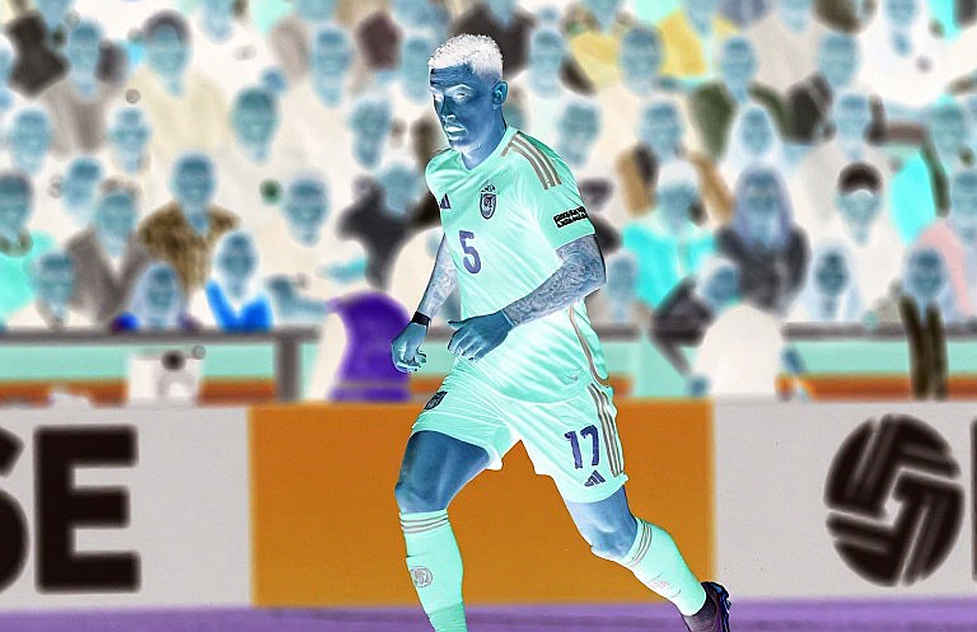
Cầu thủ liên quan
Bài đề xuất
Vietnam U23 Squad for ASIAD 2026: Official 23-Player List and Unexpected Absences2026-09-10
0-3 Defeat to North Korea: Vietnam U20s Face a Do-or-Die Equation in Group C2026-09-04
V.League Is Missing a Data Layer — and the Price Is Development Speed2026-09-16
Brenner Marlos hat-trick sends Bac Ninh past Long An 3-2 in National Cup qualifier2026-09-20
V-League 2026: When Southeast Asia's Most Competitive Domestic League Remains a Continental Outsider2026-09-03
U23 Uzbekistan 2-0 U23 Kuwait: Bakhromov brace, Fayullaev red card and the goal-difference maths behind U23 Vietnam's quarterfinal path2026-09-19
Vietnam and Chinese Taipei: The Asiad 2026 Opener and a Three-Place Shrug2026-09-14
Becamex TP.HCM Beat Thanh Hoa in the National Cup: When Division No Longer Measures Strength2026-09-20
Bài đề xuất
Vietnam Women at Asiad 2026: 19 Days in China and a Quarterfinal Berth That Rests on Thailand2026-09-13
Brenner Marlos hat-trick sends Bac Ninh past Long An 3-2 in National Cup qualifier2026-09-20
Transfer Window: Release Clauses and Wage Bills Are the Real Story2026-09-11
Hanoi FC 1-4 Song Lam Nghe An: Auditing a Night of Collapse at Hang Day2026-09-13
Empty Data and the Mirror It Holds Up to Vietnamese Football2026-09-21
Vietnam U23 0-1 Uzbekistan U23 at Half-Time: When a Draw Becomes the Most Fragile Target2026-09-22
U23 Vietnam vs U23 Philippines (13:30): Waiting for the Right Finishing Touch2026-09-19
HDBank National Futsal Cup 2026: Thai Son Bac Complete the Domestic Double and a Lesson in Game Management2026-09-15
Bài đề xuất
Data Analysis: The Lesson from Emptiness – When No Data Is the Biggest Data2026-09-11
Brenner's timely hat-trick: Bac Ninh beat Long An 3-2, but the last 15 minutes are the real worry2026-09-20
Brenner Marlos’s hat-trick and the night a city was upgraded: Bac Ninh advance in the National Cup after a 3-2 win over Long An2026-09-20
Vietnam U23 Squad for ASIAD 2026: Official 23-Player List and Unexpected Absences2026-09-10
Vietnam U23 2-0 Philippines: The 74th Minute, the 86th Minute, and an Unclosed Equation2026-09-19
Vietnamese Football in the Data Void: When Analysis Cannot Begin2026-09-24
Three Pairs of Gloves for One Goal2026-09-14
The V.League Pulse: The Undercurrent Between Academies, the National-Team Window and the Balance Sheets of Small Clubs2026-09-13
Bài đề xuất
Brenner Marlos hat-trick sends Bac Ninh past Long An 3-2 in National Cup qualifier2026-09-20
V.League and the Business of Selling Players Without Invoices2026-09-10
V.League 2026-2027 Season Opening: IFAB Rule Changes and Foreign Player Quota Increase - A More Professional Stage for Cong An Ha Noi2026-09-04
Vietnam U23 Squad for ASIAD 2026: Official 23-Player List and Unexpected Absences2026-09-10
Cannot Create Article: Empty Source Data2026-09-08
V-League 2026/27: Five clubs facing the greatest relegation threat2026-09-04
When Data Goes Silent: Vietnamese Football Analysis Halted by Empty Input2026-09-24
The 68th-Minute Stamp and the Hole Thể Công Viettel Left in Midfield2026-09-11