
EuroCup Top-10 Transfers: Cedi Osman Tops a Second-Tier League's Borrowed Stars
Cedi Osman đứng số một trong danh sách Top-10 thương vụ EuroCup do chính giải đấu công bố trước thềm mùa giải khởi tranh ngày 28-29 tháng Chín. Danh sách xếp theo uy tín và khoảnh khắc nổi bật, không dựa trên chỉ số thống kê, và tuân theo quy ước biên tập mỗi đội chỉ chọn một cầu thủ. Key facts: - Cedi Osman gia nhập PAOK theo dạng chuyển nhượng tự do, không có chỉ số nào được nêu trong bài viết gốc. - Keenan Evans đạt 17,3 điểm mỗi trận ở EuroLeague mùa 2023-24, chuyển tới London Lions theo dạng cho vay từ Zalgiris. - Bryce Jones ghi 17,6 điểm và 5,1 assist mỗi trận cho Aris mùa trước. - Matt Morgan tăng từ 7,8 lên 13,5 điểm mỗi trận tại Virtus Bologna, từng đạt 16,5 điểm trong giai đoạn ở EuroCup. - Lorenzo Brown chuyển tới Hapoel Jerusalem theo dạng cho vay sau chấn thương ngón tay cái của Jared Harper. Source: EuroCup official website, công bố trước thềm mùa giải khởi tranh ngày 28-29 tháng Chín. | Cross-checked: VuaBong.vn Related Q&A: Q: Vì sao Cedi Osman đứng số một dù không có thống kê? A: Uy tín từ thời thi đấu ở EuroLeague cộng với cú ném quyết định tại Greek Super Cup, không dựa trên chỉ số dự phóng. Q: Vì sao danh sách Top-10 chỉ có một cầu thủ mỗi đội? A: Đây là quy ước biên tập nhằm trải đều sự chú ý của cổ động viên, không phải quy định thi đấu. Q: Điều gì đáng chú ý nhất về mặt chuyên môn? A: Việc chuyển từ EuroLeague xuống EuroCup thường làm điểm số phình lên, khiến các con số dễ gây ngộ nhận về sự tiến bộ.
Greek Super Cup, final seconds. Cedi Osman catches on the right wing, takes half a step back, and releases a three-pointer. It drops. Anyone who watched Osman through his years as a EuroLeague starter knows the shot is routine. Pressure is old news to him.
What matters more is the list EuroCup published before the season tips off on 28-29 September: Osman sits at No.1 in the Top-10 transfers. I rewound that tape four times, not to watch the shot, but to ask a different question. Since when can a second-tier league boast that it signed a whole roster of EuroLeague-calibre players?
The answer is not Osman. It is the way a second-tier league is borrowing names to re-price itself. And the most telling thing about this ranking is not who tops it, but how much real evidence the order rests on.
A ranking with a hidden rule
The list comes from EuroCup's own website. It is a promotional artifact, not an independent evaluation. One detail deserves attention before anything else: the hidden rule is one player per team.
That is not a competition regulation, it is an editorial convention. The order is built so every club appears and every fan base has a reason to stay, not to answer who is actually better. Read it that way and the list changes shape.
Osman is No.1 because he is the biggest name. Nico Mannion appears because Roma is a newly formed club that needs a face to sell tickets. Lorenzo Brown shows up because Hapoel Jerusalem had to scramble after Jared Harper's thumb injury, reacting within days. Every name on the list exists for a reason, and not every reason is basketball.
The season has not started. Every number in it is a projection. The only thing that actually happened on a court is one shot at the Greek Super Cup. That is about as small a sample as a ranking can be built on.
I recall my own past. In 2026, I was savaged for demanding that an unknown teenager start over a foreign forward who had just won the scoring title. People remember a declaration of war. I want them to stay for the findings. The first finding here is that this ranking was not built on statistics.
Osman, and the data void at No.1
At No.1, the original piece supplies no metric for Osman. No points, no rebounds, no assists. No shooting efficiency, no usage rate. Nothing.
So what lifts him to the top? Reputation and one moment. The reputation comes from starting for a top EuroLeague club. The moment comes from the Greek Super Cup shot. That is the basis for the ranking, a reputation filter, not a projection model.
This does not mean Osman does not deserve it. A versatile wing who shoots threes and defends, coming down from the top tier to a second-tier league, usually dominates. He fits the classic too-good-for-this-level profile EuroCup has seen before. But the gap between usually will and has proven is the whole story.
For a wing past thirty, value lies in what he produces per possession, not where he once played. In a knockout season where every half-court set is squeezed, fitness and accuracy under pressure decide outcomes. The ranking says nothing about that.
I leave a checkpoint here: Osman's first ten EuroCup games, in October and November, will reveal whether the MVP-favourite tag is real or recycled reputation. High true shooting at heavy usage is the mark of a genuinely elite player. Raw points are not enough.
Real numbers, and the tier-crossing trap
Fortunately, the rest of the list has numbers. And that is where it gets interesting.
Keenan Evans is cited at 17.3 points per game in the EuroLeague. That figure comes from his last healthy season. It is real and impressive, but it is tied to one condition: health. Evans has endured two injury-marred seasons. He moves to London Lions on loan from Zalgiris. This is a buy-low, high-ceiling bet, and both club and player know it.
Bryce Jones scored 17.6 points and 5.1 assists per game for Aris last season. That is a solid two-way line. He now works under Spanoulis, a EuroLeague legend turned head coach. If Jones holds form and Aris goes deep, calling him an MVP candidate is not fanciful.
Matt Morgan follows a notable trajectory: 7.8 points, then 13.5 at Virtus Bologna, and at one point 16.5 during a EuroCup stretch. Reading that sequence, my instinct is to pause. The 16.5 came while playing for London Lions in the EuroCup, a lower tier than playing for Virtus in the EuroLeague. Comparing those two numbers is comparing two different leagues.
Devin Robinson averaged 14.9 points and 5.6 rebounds, earned All-EuroCup Second Team honours, and returns to Slask as a must-watch figure. DJ Stewart brings 15.1 points, 3.4 rebounds and 3.2 assists for Trento, a balanced line for a promoted side. Glynn Watson scored 14.2 for Villeurbanne in his rookie EuroLeague year, but a player's sophomore season is a different equation. And Lorenzo Brown, a veteran with 11.4 points and 4.5 assists for his career, will make a late EuroCup debut for Jerusalem. He played seven EuroLeague years, but EuroCup is a new stage and adaptation takes time.
Then there is Shaquielle McKissic. At 36, Turk Telekom brought him in to keep the standard in the locker room more than to score. When a club shifts how it describes a player from production to intangibles, it signals expected decline in output. That is not a knock, it is arithmetic. A side that reached last season's semis needs a culture-keeper, and McKissic spent six EuroLeague years doing exactly that.
Here the biggest trap of the list emerges: moving from EuroLeague down to EuroCup usually inflates scoring. More possessions, weaker defences, more transition chances. A player averaging 10 in the EuroLeague can average 16 in the EuroCup without improving at all. Every number here should be read with suspicion.
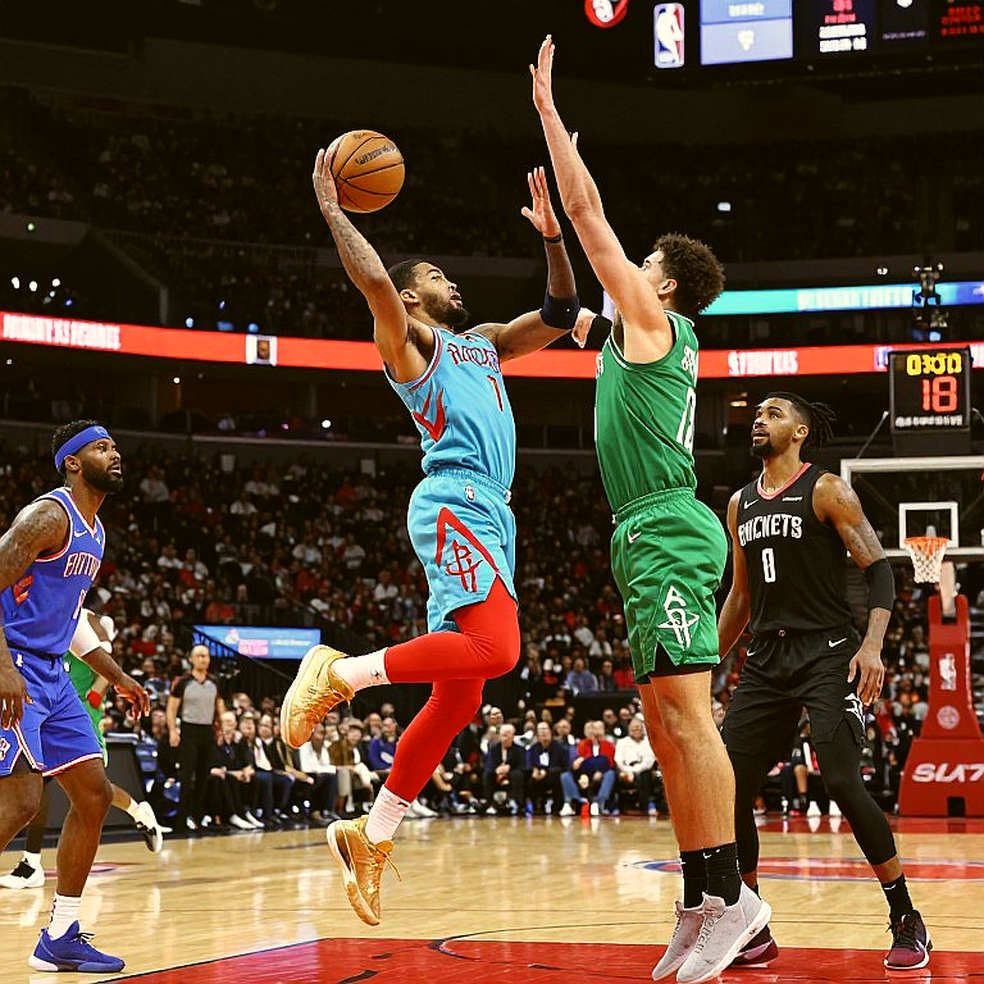
The key point: half of the most impressive figures on this list come from crossing tiers, not from the player upgrading himself.
The loan pipeline and the Greek arms race
One mechanism the list only glances at deserves attention: the loan.
Lorenzo Brown moves to Jerusalem on loan. Keenan Evans does the same, from Zalgiris to London. In Europe, the parent club retains the player's rights while the borrower uses him for a spell. This tool has no NBA equivalent. It lets EuroLeague clubs park recovering or unready players at EuroCup sides to regain form while keeping control.
When Harper went down, Jerusalem turned to Brown within days. Fast reaction, low cost, short commitment. Operationally it is close to perfect. But it shifts adaptation risk onto Brown, a player facing EuroCup for the first time after seven years at the top tier.
Parallel to that runs the internal race of Greek basketball. PAOK signed Osman, brought in veteran coach Andrea Trinchieri, and is reportedly chasing Donatas Motiejunas. Aris has Spanoulis on the bench and Morgan in the squad. Two clubs from the same city are racing for position, both using the EuroCup as a stage to prove ambition.
PAOK is in a window-open state. It is borrowing future financial flexibility for a single winning season. Greek basketball already has its EuroLeague giants, and the rest must assert themselves in European play. The Greek Super Cup fever, where Osman's shot entered the small history of a friendly tournament, shows how hot this race runs.
Coaching recruitment deserves a note. Spanoulis is not just a tactician, he is a magnet. Morgan recounted that Spanoulis tried to sign him years earlier. Trinchieri is a brand, a coach who has worked at the top tier. Tofas places faith in Massimo Cancellieri, known for developing scorers. In Europe, a coach's pull can matter as much as money.
The problem is that when a club bets short-term on many new stars at once, the time to gel usually runs longer than expected. New coach, new stars, new system. In a knockout competition, that off-rhythm window can wreck a season. Roma with Mannion holding the keys to the offence, or Burgos making its EuroCup debut with Stewart, will both need cohesion time. The field splits cleanly into two halves: veteran sides betting on a title, and newcomers still searching for identity.
Where I might be wrong
Now the self-examination. Saying the list lacks evidence is easy. Being right is the hard part.
I may be wrong on one point: underrating reputation. In basketball, a player who has competed at the top tier sometimes needs no statistics to prove class. The defensive attention Osman draws differs from what an unknown commands. The space he creates, unmeasurable by points, can make a whole team run smoother. If so, ranking him No.1 could be right even without projection data.
I may also be wrong to be so wary of tier-crossing inflation. Some players move down not just to regain form but to find light. Morgan went to Spanoulis because the coach had called him years earlier. That is a human equation, not a statistical one. Sometimes a player breaks out simply because he is finally placed correctly.
And I may be wrong to hedge on Keenan Evans. If healthy, London Lions own one of the sharpest attacking weapons in the league. Betting on an injury-prone player can be the smartest leverage on the whole board. Basketball is built from such wagers. I would rather name where I might be mistaken than keep the face of an infallible prophet. A month of quietly rewinding tape taught me more than ten years of loud certainty.
What I will track
The ranking faces its real test within weeks. I leave checkpoints to revisit.
Osman's first ten games reveal whether reputation comes with efficiency. Evans's minutes are the single biggest variable for London Lions. If he is healthy, the side is a value pick; if not, the name tumbles off the board. PAOK's first month under Trinchieri will show how well a new galaxy of stars coheres. Slow starts from Roma and Burgos are predictable regardless of how good Mannion or Stewart are. Finally, whether PAOK actually completes the Motiejunas signing will show how large its ambition really is.
I have made one bet: the quality of this second tier is being raised, but by borrowed names rather than homegrown stars. How long can a league living on borrowed names avoid paying interest? That is the question this ranking, topped by a big name, has not answered. The season starts on 28-29 September, and the answer will arrive faster than many expect.