
Trang chủBadmintonThe 24-22 Set and the 12-21 Set: Where Vietnam's Singles Badminton Gap Really Lies
Badminton
The 24-22 Set and the 12-21 Set: Where Vietnam's Singles Badminton Gap Really Lies
Trả lời cốt lõi: Tại kỳ đại hội thể thao châu lục, Nguyễn Thùy Linh thua Chen Yu Fei 10-21, 24-22, 12-21 và Nguyễn Hải Đăng thua Kunlavut Vitidsarn 16-21, 14-21. Trần năng lực của các tay vợt Việt Nam đủ chạm nhóm đầu, nhưng độ bền qua ba set còn thiếu. Dữ kiện chính: - Nguyễn Thùy Linh thắng set hai 24-22 trước Chen Yu Fei, tay vợt được ghi nhận ở vị trí số 4 thế giới. - Set ba của Thùy Linh kết thúc 12-21, tín hiệu về độ bền trước nhóm tinh hoa. - Nguyễn Hải Đăng thắng Odilzhon Abdurakhmanov 21-6, 21-6 ở vòng trước. - Hải Đăng thua thẳng hai set 16-21, 14-21 trước Kunlavut Vitidsarn, không lấy được set nào. - Thể thức loại trực tiếp khiến việc gặp đối thủ hàng đầu ở vòng ba làm hẹp cửa đi tiếp. Nguồn: Bài nhật ký Asiad giai đoạn 1, chưa xác định rõ kỳ đại hội và ngày công bố | Cross-checked: VuaBong.vn Hỏi đáp liên quan: Hỏi: Nguyễn Thùy Linh thua Chen Yu Fei với tỷ số nào? Đáp: Cô thua 10-21, thắng 24-22, rồi thua 12-21 trong ba set. Hỏi: Nguyễn Hải Đăng thể hiện thế nào trước Kunlavut Vitidsarn? Đáp: Anh thua thẳng hai set 16-21, 14-21, không giành được set nào trước đối thủ tinh hoa. Hỏi: Điểm yếu chính được nhận diện là gì? Đáp: Độ bền ở set thứ ba, theo chỉ dấu tỷ số 12-21 của Nguyễn Thùy Linh.
24-22. That is the number I held onto longest after rewinding the footage of the third round of the women's singles at the continental multi-sport games. A set that ran to the edge of 24 points, when both players had passed the 20 mark and entered a zone where every shuttle was counted in breaths. Nguyen Thuy Linh won that set against Chen Yu Fei, a player recorded at world No.4. But the third set ended 12-21. Same match, same person, two completely opposite data faces. For me, the point is not winning or losing, but how wide the gap between those two numbers really is.
The knee pain taught me how to count, and I have never stopped counting. I count rallies, I count changes of rhythm, I count the points a player wins after being forced to run to both corners. In this case, the public data I have stops at the per-set scores. There is no smash speed, no rally length, no unforced-error count. So every conclusion below must be read as a chain of reasoning with limits, not a technical verdict.
Context: single elimination gives no one a second chance
This is a continental multi-sport games, where badminton is only one of many medal channels for the Vietnamese delegation. Both men's and women's singles use a single-elimination format, best of three games, first to 21 points, must lead by two after 20-20, capped at 30. Single elimination means one bad afternoon can erase an entire tournament. The third round is the stage just before the quarterfinals, a position where an unlucky draw means facing a top opponent very early.
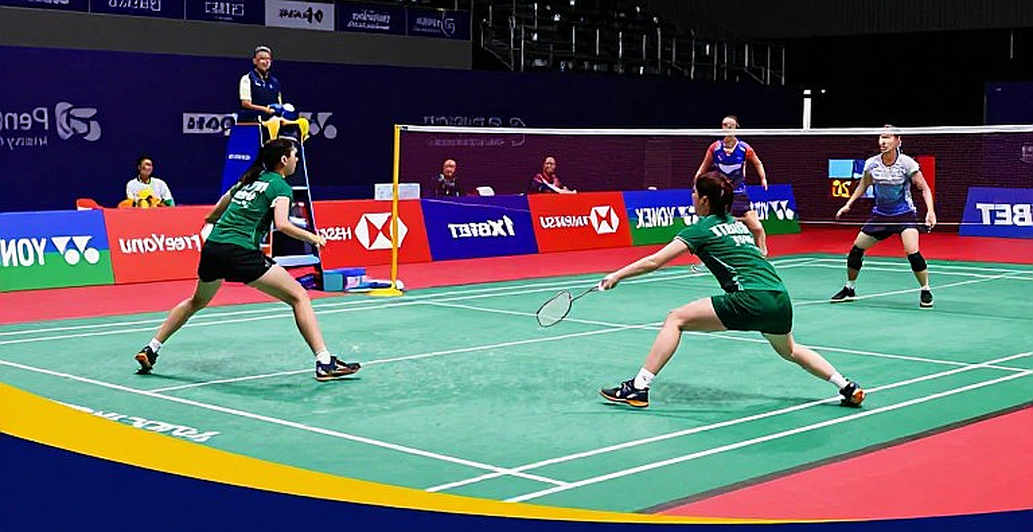
In women's singles, Thuy Linh's path was a win over Thalita Ramadhani Wiryawan, then a clash with Chen Yu Fei. In men's singles, Nguyen Hai Dang's path was a 21-6, 21-6 win over Odilzhon Abdurakhmanov, then a meeting with Kunlavut Vitidsarn. Two Vietnamese players, two opponents of clearly different caliber, two outcomes that were both defeats. But the way they lost was not the same, and that difference is exactly what deserves dissection.
I must state clearly: I do not have enough data to discuss serve tactics, net play, or how game plans changed in the third set. That is the most honest gap in this article. But the scores, however thin, can still tell a story if we place them beside the context.
Evidence chain: two matches, two different stories
Start with Thuy Linh. She lost the first set 10-21, won the second 24-22, lost the third 12-21. Read crudely, this is a match with a sine-wave rhythm: to the bottom, up to the peak, then free fall. Winning a set against a world top-4 player is a positive signal, it proves her performance ceiling can touch the zone of competing with the elite. But the 12-21 third set is the opposite signal: when the opponent tightened up and raised intensity, her ability to hold rhythm dropped sharply.
There is one detail I want to stress: the 24-22 second-set win was not a comfortable win. It was a set that had to be played to the very edge, burning physical and mental energy. When you have just gone through a set like that to level at 1-1, the third set is usually where reserve stamina and psychological stability decide everything. The 12-21 result shows Thuy Linh can chase within one tense set, but cannot yet sustain that level across three full sets against a top-tier opponent.
Core insight: the gap is not at the peak, but in the durability of the peak. A player can touch top-4 level for 20 minutes, but to win a three-set match, they must be at that level for 60 minutes. Those are two entirely different problems.
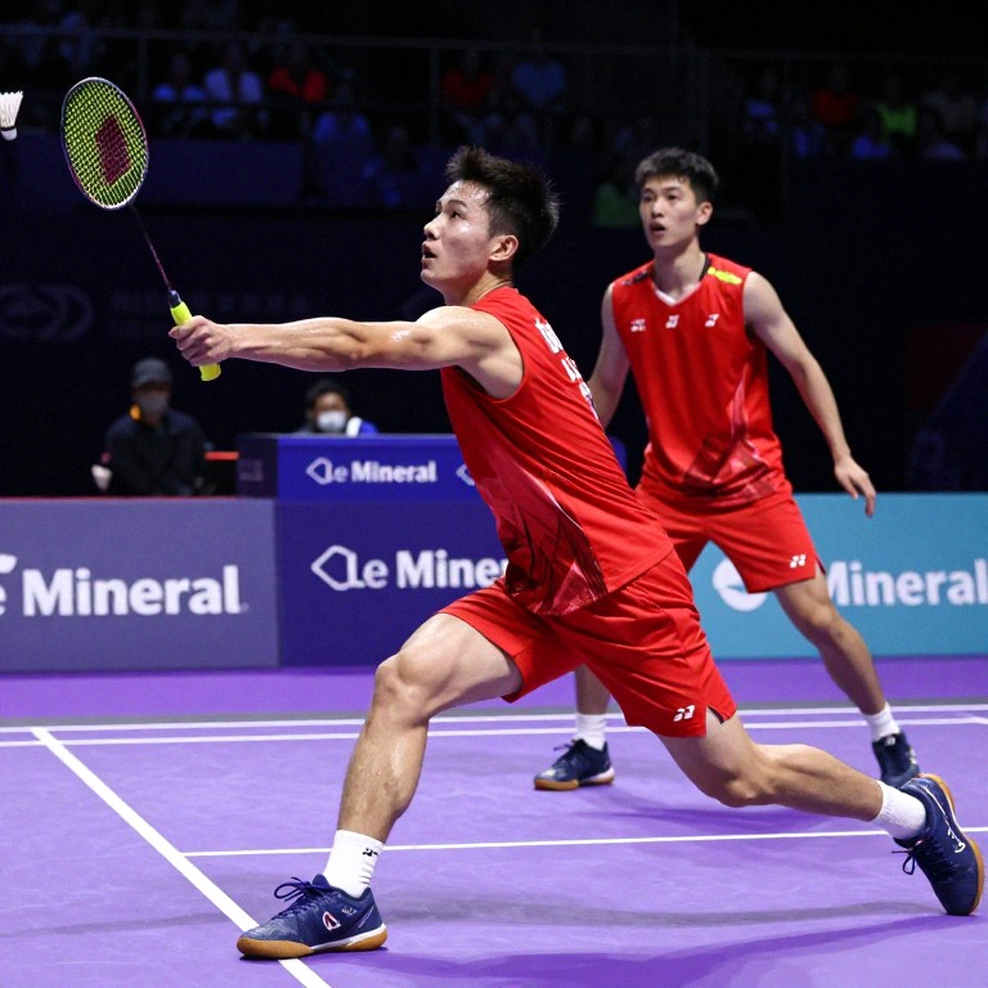
Now to Hai Dang. He beat Odilzhon Abdurakhmanov 21-6, 21-6, a scoreline showing basic professionalism, no more and no less. Beating a weaker opponent by a large margin is the minimum condition for a player at continental level. Then he met Kunlavut Vitidsarn and lost 16-21, 14-21, losing two straight sets, failing to take a single game.
The notable point here is that both of Hai Dang's sets kept a relatively close margin, he was not crushed. 16-21 means he scored 16 points against one of Asia's top men's singles players. But 14-21 in the second set shows he could not find a way to turn things around once the opponent had read his game. Against players who defend well and stay patient in long rallies like Kunlavut, being dragged into the opponent's rhythm often leads to a string of unforced errors.
Here I must be careful. I infer that Kunlavut relied on retrieval ability and patient counterattack to force Hai Dang into errors, but that is a medium-confidence inference, not a fact. What I am certain of is only this: 16-21 and 14-21 are two consecutive lost sets, and failing to win any set against an elite opponent is a signal about a preparation gap.
Putting the two matches together, we see a common picture of Vietnamese singles badminton at this games: the key players are strong enough to clear the early rounds and reach the third round, but when they meet top-tier opponents, they stop. One lost after touching the ceiling within a single set. One lost two straight sets by a moderate margin. Both say the same thing: the performance ceiling has been reached, but the depth of the foundation has not.
I collect at night, dissect by day, and only believe what repeats itself. With a sample of only two matches, I cannot assert anything about form trends. Two matches at one tournament are not enough to build a trajectory. That is why I refuse to call this result a step forward or a step back. It is just one data point, and one data point cannot draw a line.
Contrarian angle: correlation is not causation
The easiest mistake when reading this result is to attribute everything to mentality. Lost the third set because of weak psychology. Lost to Kunlavut because of a lack of nerve. Those sentences sound reasonable but have no data basis. I have no metrics on heart rate, on recovery time between rallies, on steps moved. Without those numbers, any statement about psychology is just a guess wearing the coat of analysis.
There is another hypothesis more worth considering, and I mark its confidence as low: Vietnamese players may lack a regular training environment against top-tier Asian opponents. Facing a top-4 player or an elite player is not only a technical matter, but a matter of whether you are already accustomed to the speed, spin, and rhythm of that level. If you only meet that level a few times a year, adapting in the third set is extremely hard. But I stress: this is a hypothesis, not a conclusion. I have no data on their training schedules or sparring partners.
Another trap is generalizing from two individual matches to an entire badminton nation. Thuy Linh and Hai Dang losing in the third round says nothing about the entire youth development system, about the doubles teams, or about long-term strategy. I see many comments lumping everything into a single judgment: Vietnamese badminton is still weak. That is a conclusion beyond the data. It may be true at the level of feeling, but it is not proven by two isolated scorelines.
When the stands are empty, I understand that data also needs noise to exist. Atmosphere, national pressure placed on the shoulders of the No.1 player, the silence of an empty hall, these are variables that cannot be quantified but can decide whether a perfect game plan still means anything on court. Thuy Linh carries the expectations of an entire badminton nation as the women's No.1. That expectation is a real variable, even if I cannot give it a number.
And there is one more blind spot about format to remember: single elimination is an environment with medium to high randomness. Drawing Chen Yu Fei or Kunlavut in the third round, rather than in the quarterfinals or semifinals, completely changes the path forward. A hard path does not mean weak ability. It only means the bracket was not kind.
What to watch in the next round
The signal I will count over the next 6 to 12 months is not win-loss in general, but the score in the third set. If Thuy Linh repeats a 12-21 third set against top-20 opponents, that is a signal about a durability ceiling. If she narrows that gap, the story changes. With Hai Dang, I am watching whether he can break out of a streak of straight-set losses to elite opponents.
The 24-22 set gives me a verified belief: the ceiling of Vietnamese singles badminton can touch the top group. The 12-21 set gives me a question: how to hold that peak longer. Between those two numbers lies the entire problem of a badminton nation trying to step from the challenger tier to the elite tier. And like every other problem, it is solved only by counting, repeating, and verifying, not by confident declarations.

Cầu thủ liên quan
Bài đề xuất
The Nameless Void: When Vietnamese Badminton Data Disappears From the Analytical Map2026-09-19
Asian Games 2026: The Badminton Draw and the Four-Day Equation That Shapes Everything2026-09-25
China Masters 2026: Srikanth's rebirth at 33, Satwik-Chirag pass the 69-minute test2026-09-04
Nguyen Tien Minh's Veteran Craftiness Exploits Doubles Specialist's Singles Weakness at Vietnam Open 2026 Qualifiers2026-09-09
Srikanth and Satwik-Chirag Advance to China Masters 2026 Quarterfinals: Historic Victories Open New Hopes for Indian Badminton2026-09-04
Aidil Sholeh Wins Vietnam Open 2026: A Super 100 Title and the Unanswered Question of Malaysian Men's Singles2026-09-14
BWF World Junior Championships 2026: India's 18-Player Squad, the 3x55 Format and the Cairo Equation2026-09-22
Hanoi vs Binh Duong: The Pinnacle Badminton Showdown and Untold Tactical Lessons2026-09-13
Bài đề xuất
Nguyen Tien Minh clears Vietnam Open 2026 qualifying: 43-year-old veteran teaches a singles lesson to younger doubles specialist2026-09-09
Asian Games 2026: The Team Bronze Hides the Individual Drought and the Satwik–Chirag Shock2026-09-29
India's Badminton Collapse at Asian Games 2026: When Half a Court Runs Out of Depth2026-09-29
India at Asian Games 2026: Men's Team Bronze, and the End of a 12-Year Individual Medal Streak2026-09-29
Asian Games 2026: India's Projected Path in Men's Team Badminton and Two Unverified Gaps2026-09-20
AFF Cup 2026: Thai Concrete Cracks Under Vietnam's Feet – Lessons from Data2026-09-11
Alwi Farhan Trains with Kento Momota Before Asian Games 2026: The Lesson Is Not in the Smash2026-09-18
Coordinates at 43: Nguyen Tien Minh and the Men's Singles Vacuum at Vietnam Open 20262026-09-19
Bài đề xuất
Vietnamese Badminton 2026: A Net Strung Over Concrete2026-09-12
Tanvi Patri Wins 2026 Badminton Asia U17 Title: Three Deciders and the Limits of a Scoresheet2026-09-14
Badminton and Data Discipline: Why Deep Analysis Must Begin with Information Points2026-09-17
Ashmita Chaliha and the Double Standard Question: When Badminton Courts Stop Being Just About Air Quality2026-09-04
World Junior 2026: India Brings 18 Players to Cairo and a Rulebook Nobody Has Mastered2026-09-23
Ashmita Chaliha and the Double Standard Question at BWF's Super 100 Tournament2026-09-04
India's Draw at the 2026 Asian Games: When an Old Silver Meets a New Bracket2026-09-21
Asian Games 2026: The Badminton Draw, September 26, and the Gaps Nobody Has Verified2026-09-24
Bài đề xuất
Asian Games 2026 shock: Satwik-Chirag crash out in first round to World No. 36 Thai pair2026-09-26
India at China Masters 2026: Srikanth's Resurgence, Satwik-Chirag's Dominance, and Signals from the Quarter-Finals2026-09-05
India Beat Japan 3-0 and Lost 1-3 in the Same Session: Two Audits of One Squad2026-09-22
Thuy Linh Took a Set Off the World No.4 — and the Rest of Vietnam's Badminton Story2026-09-27
China Masters 2026: The Quarter-Final Map and the Geometry of India's Return2026-09-12
P.V. Sindhu's Left Foot: When the Body Rewrites the Rankings at Hangzhou2026-09-19
Indonesia Reaches 2026 Asian Games Final: Doubles Carry Gold Dream, Singles Leave Question Marks2026-09-24
Lakshya Sen at the 2026 Asian Games: A Gold Path Drawn on an 18-22 Head-to-Head Record2026-09-25