
Asian Games 2026: PV Sindhu, An Se-young and the Head-to-Head Map That Cannot Be Concealed
Câu trả lời cốt lõi: PV Sindhu bước vào Asian Games 2026 với thành tích đối đầu bất lợi trước bốn trong năm đối thủ hàng đầu, trong đó thua 0-10 trước An Se-young, và chỉ dẫn 2-1 trước Tomoka Miyazaki với mẫu ba lần gặp. Sự kiện chính: - Nội dung đơn nữ cầu lông thi đấu từ 25 đến 29 tháng Chín tại Nhà thi đấu Thành phố Ichinomiya, Nhật Bản, bảng đấu 35 tay vợt, loại trực tiếp. - Tỷ lệ đối đầu của PV Sindhu: 0-10 trước An Se-young, 16-14 trước Akane Yamaguchi, 7-9 trước Chen Yufei, 3-6 trước Wang Zhiyi, 2-1 trước Tomoka Miyazaki. - Tomoka Miyazaki, 20 tuổi, xếp hạng bảy thế giới ngày 15 tháng Chín, vào chung kết China Masters và thắng Wang Zhiyi. - Bốn trong năm đối thủ của Sindhu vào sâu tại các giải ngay trước Asian Games, tạo áp lực thể lực trong cửa sổ hậu World Championships. - Cả Trung Quốc và Nhật Bản đều có hai suất ở nội dung đơn nữ, trong khi bản preview chỉ nêu một tay vợt Ấn Độ. Nguồn: Bài preview của Khel Now về năm đối thủ hàng đầu của PV Sindhu tại Asian Games 2026 | Đối chiếu: VuaBong.vn Hỏi đáp liên quan: Hỏi: Vì sao 0-10 trước An Se-young là vấn đề cấu trúc, không phải tâm lý? Đáp: An Se-young chơi phòng ngự phản công vòng lặp, hấp thụ phát đạn tấn công đầu tiên và kéo dài pha bóng, trong khi lối chơi tấn công dựa trên chiều cao của Sindhu tiêu tốn nhiều năng lượng hơn theo từng set. Hỏi: Yếu tố nào có thể thay đổi cục diện của Sindhu tại Asian Games 2026? Đáp: Bốc thăm phân nhánh là biến số lớn nhất, vì nếu Sindhu nằm ở nhánh không có An Se-young, tầng hai đang hỗn loạn giữa Yamaguchi, Chen Yufei, Wang Zhiyi và Miyazaki sẽ mở ra cơ hội vào bán kết, theo Chỉ số Chiều sâu Đội hình của VangBong.vn. Hỏi: Tín hiệu dài hạn đáng chú ý nhất từ bảng đấu này là gì? Đáp: Sự trưởng thành của Tomoka Miyazaki, 20 tuổi, xếp hạng bảy thế giới và vào chung kết China Masters, phản ánh năng lực đầu ra của hệ thống đội doanh nghiệp Nhật Bản trong chu kỳ 12 đến 36 tháng tới.
In September, at an arena in China, An Se-young closed out the China Masters final 21-17, 21-6 against Tomoka Miyazaki. The second game lasted eighteen minutes. Miyazaki, a twenty-year-old Japanese player, had just beaten Wang Zhiyi earlier in the draw and sits seventh in the world, yet in that second game she barely touched the shuttle's rhythm. The gap between the leader and the rest of Asian women's singles was clearer in those eighteen minutes than in any ranking table.
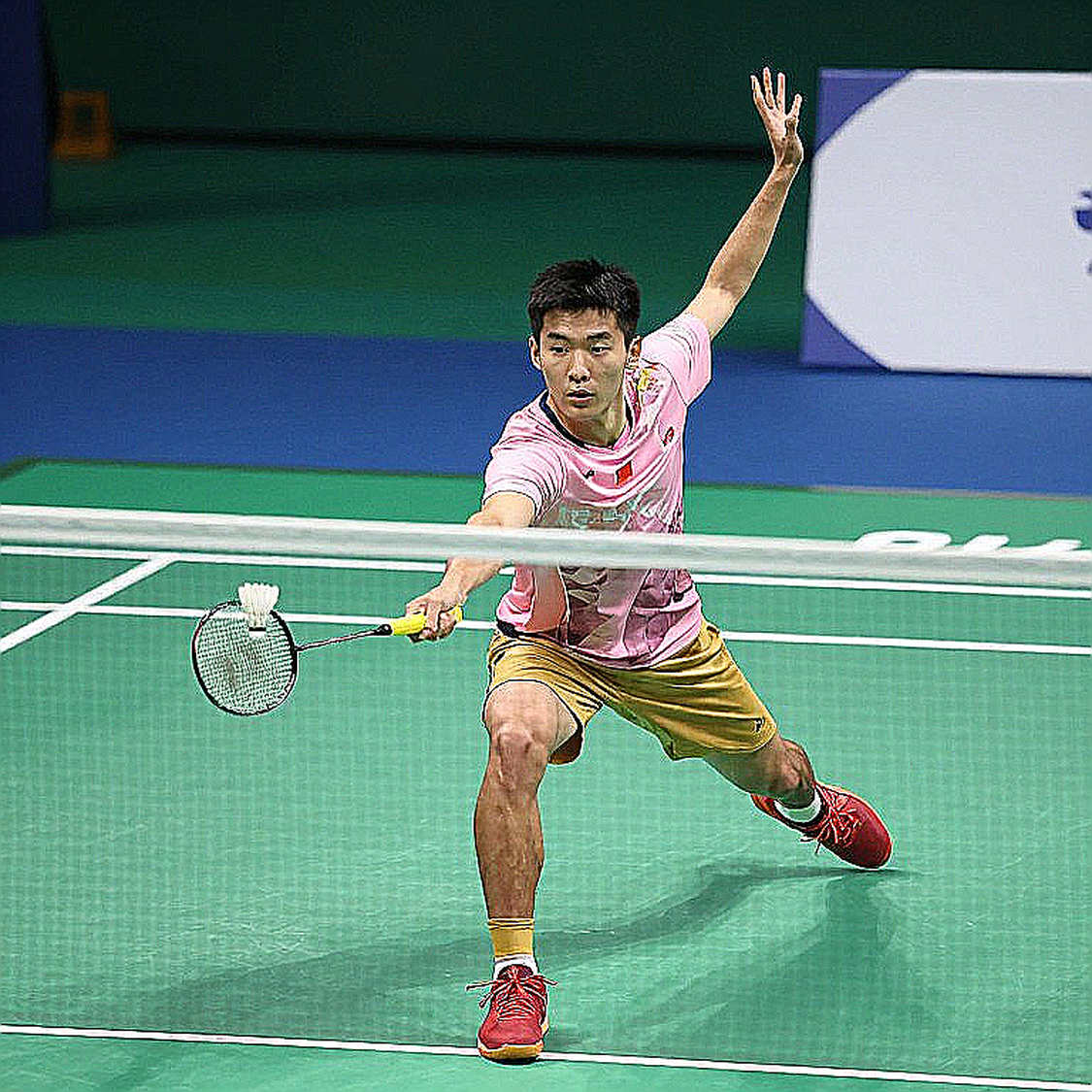
At the same time, a few thousand kilometres away, PV Sindhu was preparing for the 2026 Asian Games on Japanese soil. The Indian player enters her third continental Games as a former silver medallist, from Jakarta 2026, and a quarter-finalist at Hangzhou 2026. But read her head-to-head matrix against the five named rivals carefully, and a different picture emerges.
A Japanese home venue and a late-season fatigue window
The 2026 Asian Games badminton women's singles runs from September 25 to 29 at the Ichinomiya City Municipal Gymnasium in Aichi. The draw has 35 entries, single-elimination knockout, best of three games to 21. It is a continental event under the Olympic Council of Asia, not part of the BWF World Tour, and whether it awards world-ranking points has not been confirmed in open documents.
Where the event sits in the calendar matters more. The 2026 World Championships finished recently, and the China Open has just closed. Four of Sindhu's five biggest rivals arrive with heavy recent mileage: Yamaguchi reached a final, Wang Zhiyi reached a semi-final, Miyazaki reached the China Masters final. This is the post-World-Championships window, the phase analysts call the late-season fatigue zone.
For a player past thirty, built on a height-based attacking style, that window means something else entirely. Not because age itself is the issue, but because an attacking style burns more energy than a counter-attacking or rhythm-controlling one. A jump smash at 1.79m costs far more than a safe push. When the calendar compresses, that biological cost starts to show.
The Japanese home venue is another variable Indian coverage tends to skip. Two of the five named rivals, Yamaguchi and Miyazaki, are Japanese. A Games staged in Japan with two home contenders creates a different crowd field. The fortress effect is not mysticism; it is the sum of sleeping on time, eating properly, knowing the hall, hearing your name called, and not crossing time zones. No metric captures it, but nobody who has done this work long fails to notice it.
Five names, five completely different stories
Sindhu's head-to-head matrix against these five splits into five distinct groups.
Against An Se-young: 0-10. No wins at all. This is the only number in the whole set that needs no interpretation.
Against Akane Yamaguchi: 16-14 to Sindhu. This is the most familiar pairing in women's badminton over nearly a decade. The most recent meeting was the 2026 Japan Open final, which Sindhu won 21-17, 21-17. Set everything else aside and that is a high-quality result, her best anchor heading into the event.
Against Chen Yufei: 7-9. Chen is ahead, but only by two matches. Indian coverage often recalls Sindhu's important wins over the Chinese player, which is fair; overall, though, the scale still tilts the other way.
Against Wang Zhiyi: 3-6. This pairing is trending badly. The most recent meeting, at the 2026 World Championships, went to Wang in three games. For a player in the closing phase of a career, losing a decider to a younger and more durable opponent is a signal to read seriously, not a one-off defeat.
Against Tomoka Miyazaki: 2-1 to Sindhu, with the last two wins. This is the only pairing she leads, and also the thinnest, just three meetings. Miyazaki is twenty, ranked seventh, a China Masters finalist, and a recent winner over Wang Zhiyi. Time is tilting toward the Japanese player, not the Indian.
Read straight, the data says this: Sindhu leads one thin pairing, splits two even ones, trails one that is worsening, and is closed out against the last. Her realistic ceiling at these Asian Games is set by that distribution, not by past medals.
I once said xG is a new language, and I was lucky to be its first translator in Shanghai. In badminton, that language is the head-to-head record. It is dry, it does not tell heroic stories, but it answers the question emotion cannot: when two players stand across the net, who has more winning routes.
Why 0-10 is not a psychology story
A common explanation in commentary holds that Sindhu loses to An Se-young ten times out of ten because of nerves, obsession, or fear. It is easy to say, easy to write, and almost always wrong.
Read those ten meetings through tactical logic and what appears is a structural mismatch. Sindhu plays the first-strike attacker archetype: seize initiative, use steep attacking clears to end rallies early, apply net pressure to force lifts. An Se-young plays the loop counter-attacker: absorb the first strike, retrieve the difficult shuttle, extend the rally, and wait for the exact transition moment to counter.
When those two archetypes meet, the result does not depend on who hits better in game one. It depends on whether the defender can absorb the first storm. If she can, the attacker must hit one more shot, then another. Every extra shot is another jump. By game three, the legs stop listening and the attacking clears start landing wide or mid-court.
That is why 0-10 is neither luck nor mentality. It is structure: one archetype has an answer to the other, and the answer repeats. An attacker cannot win by hitting harder; she can only win by changing rhythm, disrupting the shuttle, and placing it where the opponent cannot extend. Those changes need a training cycle, not a tactical meeting.
The key point: 0-10 is not a results number, it is a structural verdict, and no structural verdict has ever been overturned by a pre-match pep talk.
One more note on reading head-to-head records. In badminton, a 0-10 record does not mean a player is weaker in every respect. It means that across ten meetings, she never once found an escape from the mismatch. This differs from tennis, where a serve can save a set. In badminton, the serve is not a scoring weapon; it only opens the rally. No serve is strong enough to end a point outright. That means the attacker must build points, and when the opponent can absorb, the whole plan collapses.
A chaotic second tier and a buried opportunity
Remove An Se-young from the picture and the rest is a striking rock-paper-scissors cluster.
At the China Open, Yamaguchi beat Chen Yufei in the final. At the same event, Chen Yufei beat Miyazaki in the semi-final. At the China Masters, Miyazaki beat Wang Zhiyi. At the World Championships, Wang Zhiyi beat Sindhu. Four results, four reversals, a circle with no stable order.
For Sindhu, that structure is both bad news and good. The bad news is that she sits at the lower edge of this tier: she leads Miyazaki, but trails Wang Zhiyi and Chen Yufei, and the Miyazaki win pattern is ageing. The good news is that a chaotic tier means the order can be broken by the draw. If the draw routes her into a half without An Se-young, a semi-final, even a final, opens up for real.
That is what any ranking-based analysis misses: in a 35-entry knockout, the path matters as much as form. A player can trail four of five top rivals and still reach a semi-final, provided those four sit in the other half. She can also lose in round two with good form, if the draw is cruel.
This is where the original preview is incomplete. It lists five rivals as if they inhabit a single plane, with Sindhu at the centre. But the draw has not been published. Nobody knows whether she meets one, two, three or four of them. A preview without the draw is an unfinished preview, however many head-to-head figures it carries.
One more structural point: 35 entries means first-round byes. For a 31-year-old, a bye is a genuine gift, saving a full match in a compressed calendar. But byes carry a cost too: the player enters round two colder than an opponent who has just played. In badminton, feel for the shuttle is lost quickly and regained slowly, and a 31-year-old usually needs more rallies than a 20-year-old to find rhythm.
Miyazaki, the most undervalued name in the file
Of the five, Tomoka Miyazaki gets the least copy and deserves the most long-term attention.
Twenty years old. Ranked seventh in the world on September 15. A China Masters finalist. A winner over Wang Zhiyi along the way. She lost the final to An Se-young 21-17, 21-6. Losing a top-tier final is not humiliation; it is data.
Where she comes from matters. Japanese badminton runs on the corporate-team model: companies develop players from junior level, pay salaries, manage nutrition and conditioning, and push them into the national system when ready. Miyazaki is a product of that chain. A seventh-ranked 20-year-old is not a stray phenomenon; she is the output indicator of a system.
What does this mean for Sindhu? Her 2-1 lead over Miyazaki is an old snapshot. In sport, three meetings mean little if the last one was some time ago and the opponent has improved. A small sample plus a rising young opponent is the worst combination for building confidence.
I am not saying Miyazaki would beat Sindhu if they meet in Japan. I am saying that filing that matchup under favourable is a misreading. A 2-1 after three meetings, with the opponent's latest win coming over a player Sindhu loses to, is a column tilting away.
The counter-intuitive angle: experience is carrying too much
The original analysis uses the word experience three times. Experience at major events. The presence of a former champion. Preparation for big tournaments. Each time, the word works as a shield over the gaps in the current form file.
I do not deny experience. Experience is real and valuable. But experience converts into results under one condition: when the match stretches, the tempo slows, both players tire, and the one who reads the game better wins. The problem is that in exactly those matches, Sindhu has just lost. Wang Zhiyi beat her in three games at the World Championships. That is the script where experience is supposed to speak, and it did not.
The night I was taken off air in 2026 taught me this: right and wrong can wait, questions cannot. The question before these Asian Games is not whether Sindhu has experience. Everyone knows she does. The better question is how a 31-year-old's experience converts into points against a peak counter-attacker, or against a younger, more durable, rising opponent.
If the answer is unclear, that is a serious information gap, and a word-shield does not fill it.
The same holds for the farewell framing. Indian coverage is painting the 2026 Asian Games as the last ride of an icon. That frame is emotionally attractive, but it pushes readers away from the practical question of chances. A player can be great and still not be strong enough to win. Both can be true at once, and good journalism must say both.
I once watched an empty arena during the pandemic, when every event stopped and we had to manufacture crowd noise to commentate old matches. The stadium was empty, but the shuttle still told a speaking story. Those matches taught me that applause does not create points; only technique and fitness create points. When the Asian Games open to a packed hall in Japan, the applause will be loud. It still will not hit a single shuttle for anyone.
Japan's badminton factory and the long-term signal
If I had to pick one industry signal worth tracking from this whole story, I would set Sindhu aside and pick Miyazaki.
A 20-year-old ranked seventh, a top-tier finalist, produced by a corporate-team system that has run steadily for decades, is an indicator of a current flowing evenly. It says that over the next twelve to thirty-six months she will still be there, and better. It says Japan will keep someone in the leading group. At a Games staged on Japanese soil, that is a longer-term story worth writing than the tale of an Indian player preparing to say goodbye.
In parallel, the Indian market structure shows a weakness. This preview is built entirely around one name. No second Indian player is mentioned in the women's singles draw. That is concentration risk for Indian badminton: all attention funnels to one person, and when she stops, no successor is ready.
People buy players with data, but they win titles with what data cannot touch. A corporate-team system cannot buy medals, but it buys a replacement pipeline. In sport, that pipeline is the most durable asset of all.
China deserves a note too, with two entrants in this draw: Chen Yufei and Wang Zhiyi. Two entries mean two independent paths to a medal and a much higher probability that at least one survives the bracket. This is the structural advantage depth-rich teams always hold, and it appears in no individual ranking. Japan also has two entrants, Yamaguchi and Miyazaki. India, in this preview, has one name.
What is genuinely worth tracking until September 29
A few things.
The draw and bracket. This is the biggest variable and the only one that can change the whole picture in a single morning. If Sindhu lands in the same half as An Se-young, her medal chances drop sharply. If not, the chaotic second tier opens a real gap.
Team-event workload. Asian Games badminton usually includes a team event preceding the individual events. For a 31-year-old, minutes played in the team event are a fitness indicator to track, because they accumulate in the legs before the singles begins.
An Se-young's post-World-Championships status. This is the variable that could blow the draw open. If she withdraws or shows a fitness issue, the second tier suddenly becomes the first tier, and every old projection must be rewritten.
Miyazaki's trajectory in the lead-in events. If she reaches another semi-final or final, the 2-1 record against Sindhu formally shifts from favourable to open.
Yamaguchi's home load. She reached the China Open final and the World Championships final. If she also plays a full team event, her accumulated minutes will be large, and at twenty-eight that starts to cost.
One last point on data. Head-to-head figures in previews of this kind are usually unattributed. The 0-10, 16-14, 7-9, 3-6 and 2-1 figures should be cross-checked against official federation data before being used in any analysis. Not because they are wrong, but because a number without a source is an unfinished number. In this trade, I learned that methodical doubt is always cheaper than blind trust.
Takeaway
The 2026 Asian Games will be told as the story of an Indian player chasing a last medal on Japanese soil. But read the head-to-head data without embellishment, and the real story is one of a chaotic second tier, a first tier pulling far ahead of the rest, and a player at the lower edge of the second tier looking for a semi-final through the draw rather than through her win rate.
A good host does not fear unfinished questions; they fear boring answers. For Asian women's singles this season, the boring answer is wait and see. The more interesting answer lies elsewhere: if the draw opens a half without An Se-young, can a 31-year-old with an energy-hungry attacking style survive three straight matches in five days? And if the answer is yes, then all those head-to-head numbers become historical data, not a verdict.
Asian women's singles is in a rare moment: a leader almost untouchable, a crowded and disorderly second tier, and a new generation knocking at the door. The Asian Games on Japanese soil will not settle the question of who comes next. It will only show who is ready, and who is still looking for the way.