
Trang chủBadmintonIndia's Badminton Squad at Asian Games 2026: The Doubles Gamble and the Generation Worry
Badminton
India's Badminton Squad at Asian Games 2026: The Doubles Gamble and the Generation Worry
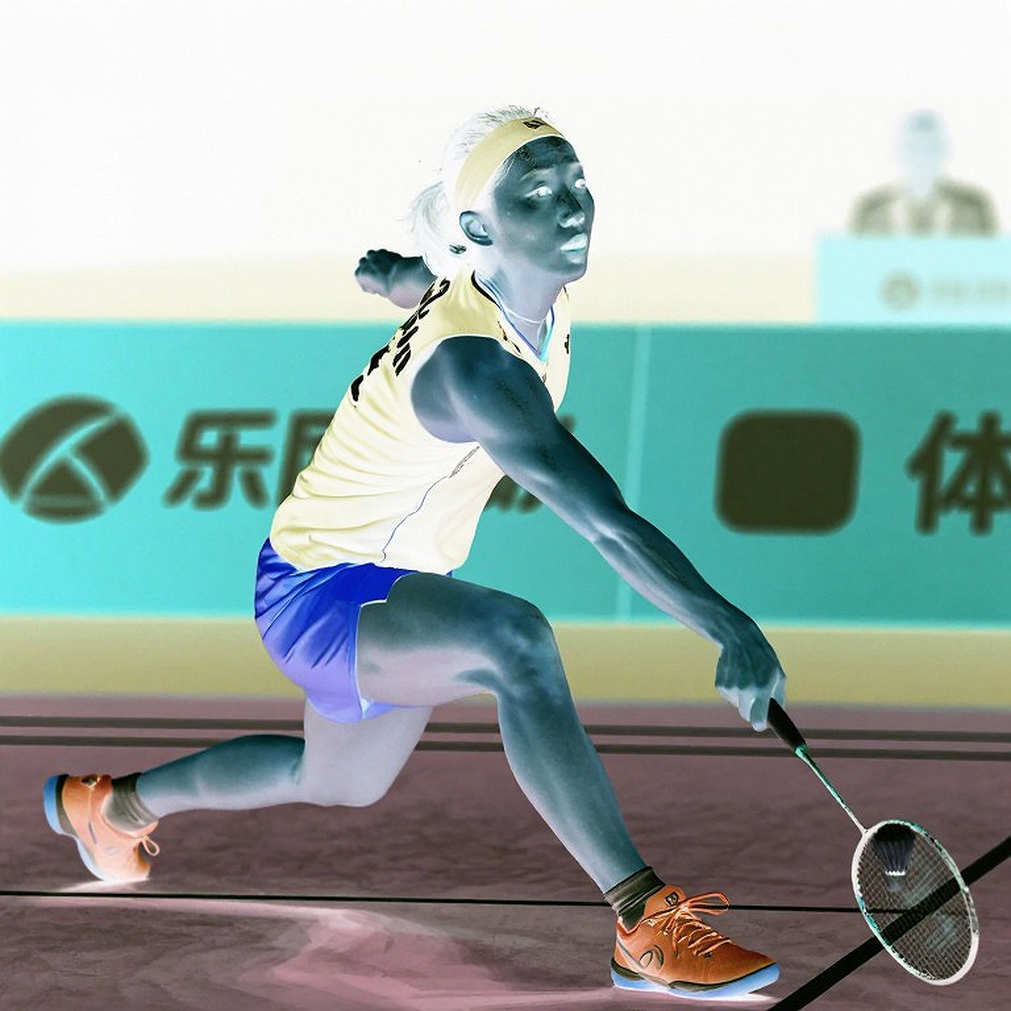
India announced a 20-member badminton squad for the Asian Games 2026 in Aichi-Nagoya, Japan from September 19 to October 4, 2026. The team includes PV Sindhu and men's doubles pair Satwiksairaj Rankireddy & Chirag Shetty. Coaches from Indonesia and Malaysia support the squad. | Source: Badminton Association of India announcement, June 2026 | Cross-checked: VuaBong.vn
There are teams that enter a major games with the certainty of a well-oiled machine. There are others, like India at the upcoming 2026 Asian Games, that carry the posture of a high-stakes gamble, where all the strongest cards are concentrated in one pair. One can count the number of athletes or look at a storied past, but to me, having followed the rhythm of athletes' breath from the running track to the badminton court, the most compelling story lies in the silence between the cards, where strategy and quiet sacrifice are wagered.
India will bring a 20-member squad to Aichi-Nagoya, fielding players in all five disciplines, a clear message of ambition. But that message is built on a somewhat fragile foundation: the near-total concentration of medal weight on the men's doubles pair of Satwiksairaj Rankireddy and Chirag Shetty, along with the aspirations of a veteran generation on the downslope of their careers. The Indian team is no longer an outsider, but they are also not a dominant force. They are a collective in transition, a blend of stars who made history and young faces learning to carry the burden.
Look at their most potent weapon. The Satwik-Chirag duo is no stranger to Asian badminton fans. Their attacking style from the rear court, Satwik's powerful jump smashes, combined with Chirag's finishing ability at the net, has placed them among the world's elite pairs. Their historic Asian Championships victory and the 2026 Asian Games gold in Hangzhou were not luck. They were the result of a long process of building a game based on power and synchrony. However, this reliance is their biggest tactical weakness. If one of them suffers an injury or a dip in form, their primary gold-medal source almost collapses entirely. Strategy lies in the ability to spread risk, and India is putting all its eggs in one basket.
Alongside this pair is PV Sindhu, two-time Olympic medalist. She remains the symbol, the number one hope for Indian women's badminton at age 31. Her attacking style, built on her height and long reach, has terrorized opponents. But the human body is not an eternal machine. At her age, every match played with such a physically demanding style is a greater test. The press release says Sindhu "would like to go all the way" this edition, but I understand that ambition is never a measure of form. She was stopped in the quarterfinals in Hangzhou, and to go further in Japan, she needs more than a statement. She needs a smarter strategy, one that conserves energy and manages her own breath during tense rallies.
The generational mix within the Indian team is the most compelling observation. They have Lakshya Sen, a young talent with an all-court game, HS Prannoy and Kidambi Srikanth on the other side of 30, contributing through grit and experience. They also have Ayush Shetty, representing the next generation. The issue isn't whether they have enough talent, but whether the young talents are ready to replace the veteran core. Retaining the experienced squad from the Thomas Cup and previous Asian Games shows caution, but also reveals a gap in singles depth. They chose the safety of experience over the boldness of youth.
The structural highlight, a message deliberately sent by the coaching staff, is India bringing in doubles coaching specialists from Indonesia and Malaysia – Irwansyah and Tan Kim Her – under the guidance of veteran strategist Pullela Gopichand. This is a deliberate import of expertise, showing they clearly understand their relative weakness against Asian powers. They aren't trying to build a new foundation for all events but are investing strategically where they can create the biggest difference: the doubles. It's a pragmatic and commendable tactical mindset.
But this import also raises a difficult question: is their junior development system self-sufficient yet? The answer is no. Dependence on foreign experts, especially on a short-term basis, is only a temporary solution. It's like inviting a foreign chef to cook a traditional dish for a major banquet, but you don't teach your own apprentices the real recipe. Success in Aichi-Nagoya will be a testament, but their long-term story remains unfinished.
The calendar is also a silent enemy. The Games run from September 19 to October 4, 2026, after the World Championships and in the tail-end of the season. Indian athletes, with a higher average age, will face accumulated fatigue. Managing physical condition in the lead-up will be crucial and will demand extremely meticulous planning from the coaching staff.
There is a moment I remember vividly, watching a sprinter walk to the starting line looking almost weary. But when the starting gun fired, he surged forward with the power of someone who had never known fatigue. Sport redefines human limits, and I believe the Indian athletes carry a similar strength. The concerns about generation, physicality, and dependence on a few individuals are real. But the value of a team is measured by its ability to turn those weaknesses into motivation to move forward together.
Will they repeat the Hangzhou heroics of 1 gold, 1 silver, 1 bronze? Or will they have to accept a more modest result, to accept a place in the transition game? I don't have the answer. But I know that when the shuttles are tossed up in the Japanese arena, those individuals wearing the Indian colors will not just compete with muscle and tactics. They will compete for the generation waiting for them, for a story yet untold. And as I often say, people watch badminton with their eyes, but I watch with my breath. I will listen to their breath to find my own answer.

Bài đề xuất
Srikanth and Satwik-Chirag Advance to China Masters 2026 Quarterfinals: Historic Victories Open New Hopes for Indian Badminton2026-09-04
Ashmita Chaliha and the Open Question of BWF Venue Standards: When Indonesian Haze Exposes a Double Standard2026-09-03
Nguyen Tien Minh at 43 and his Vietnam Open 2026 qualifying win: When the singles court needs a brain, not just legs2026-09-09
Tanvi Patri and 187 Data Points: Re-reading the U17 Asian Title Through Tracking Data2026-09-14
Nguyen Tien Minh Wins Qualifier at Vietnam Open 2026, Veteran Proves Form at Age 432026-09-09
AFF Cup 2026: Thai Concrete Cracks Under Vietnam's Feet – Lessons from Data2026-09-11
The Contract Drumbeat: Southeast Asia's Badminton Transfer Window and the Power Structure Behind the Locker-Room Door2026-09-11
Badminton Has No Transfer Fees, Yet Money Still Moves: Mapping the 2026-2028 Shifts2026-09-10
Bài đề xuất
Nguyen Tien Minh at 43 and his Vietnam Open 2026 qualifying win: When the singles court needs a brain, not just legs2026-09-09
Ashmita Chaliha and the Double Standard Question at BWF's Super 100 Tournament2026-09-04
China Masters 2026: Srikanth's Resurgence or Fleeting Moment? A Data-Driven Analysis of the Indian Contingent's Quarter-Final Run2026-09-05
The 0.23 xG Figure: When Thailand Was Judged by Data at My Dinh2026-09-11
Tanvi Patri and 187 Data Points: Re-reading the U17 Asian Title Through Tracking Data2026-09-14
36 Shots at 17-17: The Fragile Line Between Instinct and System for Satwik-Chirag2026-09-12
China Masters 2026: The Quarter-Final Map and the Geometry of India's Return2026-09-12
Three Years for a Flag: The Quiet Transfer Window of World Badminton2026-09-13
Bài đề xuất
India's Badminton Squad at Asian Games 2026: The Doubles Gamble and the Generation Worry2026-09-13
Satwik-Chirag make history: Dramatic comeback victory in China2026-09-13
The Transmission Line of Badminton: How a Semifinal at Istora Rewrites an Entire Season2026-09-10
AFF Cup 2026: Thai Concrete Cracks Under Vietnam's Feet – Lessons from Data2026-09-11
Ashmita Chaliha and the Question of BWF's Double Standard at Super 1002026-09-04
Ashmita Chaliha Calls Out BWF's Super 100 Tournament Standards: 'Imagine If This Tournament Was Held in India'2026-09-05
Ashmita Chaliha and the Lonely Voice in the Super 100 Haze: When BWF Stays Silent, Players Protect Themselves2026-09-04
India's Badminton Squad for Asian Games 2026: Tactical Analysis, Risks, and Expectations2026-09-10
Bài đề xuất
India's Big Cards at China Masters 2026: Srikanth, the Men's Doubles Pair, and Tanvi Sharma's Journey2026-09-04
Data gaps in sports analysis: Lessons from a shallow report2026-09-11
India's Badminton Squad at Asian Games 2026: The Doubles Gamble and the Generation Worry2026-09-13
China Masters 2026: Srikanth's Resurgence at 33, Satwik-Chirag Survive 69-Minute Test2026-09-04
Nguyen Tien Minh's Veteran Craftiness Exploits Doubles Specialist's Singles Weakness at Vietnam Open 2026 Qualifiers2026-09-09
China Masters 2026: Srikanth's Resurgence or Fleeting Moment? A Data-Driven Analysis of the Indian Contingent's Quarter-Final Run2026-09-05
AFF Cup 2026: Thai Concrete Cracks Under Vietnam's Feet – Lessons from Data2026-09-11
Satwik-Chirag make history: Dramatic comeback victory in China2026-09-13