
Lakshya Sen and the Asian Games 2026 Path: The Head-to-Head Ledger Contradicts the Gold-Medal Script
**Core answer** Lakshya Sen bước vào đơn nam Asian Games 2026 với lộ trình dự phóng gồm năm trận, nhưng bảng đối đầu cho thấy anh ở thế cửa dưới hoặc ngang bằng ở bốn trong năm trận. Đây là nhánh đấu giả định chưa qua bốc thăm, và đội Ấn Độ đã tiêu hao thể lực ở nội dung đồng đội trước đó. **Key facts** - Sen dẫn Loh Kean Yew 7-4, nhưng thua ở lần gặp gần nhất tại Asia Team Championships tháng 2 năm 2026. - Sen thua Kunlavut Vitidsarn 5-8, thua Shi Yuqi 2-5 và thua Jonatan Christie 3-4 trong đối đầu. - Sen hòa Panitchaphon Teeratsakul 1-1 và thua hai ván liền ở tứ kết Indonesia Masters. - Lộ trình dự phóng: vòng 32 gặp Loh, vòng 16 gặp Teeratsakul, tứ kết gặp Christie, bán kết gặp Shi, chung kết gặp Vitidsarn. - Thái Lan góp Vitidsarn ở vị trí số 3 và Teeratsakul ở vị trí số 17; Ấn Độ không có tay vợt nào trong top 6 được mô tả. **Source attribution** Nguồn: Khel Now (Ấn Độ), bài xem trước Asian Games 2026. Sự kiện diễn ra tại Aichi-Nagoya, Nhật Bản, từ ngày 19 tháng 9 năm 2026 đến ngày 4 tháng 10 năm 2026. Các giá trị thứ hạng và đối đầu trong bài chưa được đối chiếu với cơ sở dữ liệu bên thứ ba. **Related Q&A** Q: Lakshya Sen có lợi thế gì ở vòng 32 Asian Games 2026? A: Anh được miễn vòng đầu và vào thẳng vòng 32, đồng thời dẫn Loh Kean Yew 7-4 trong lịch sử đối đầu. Q: Vì sao chiều sâu đơn nam của Ấn Độ được xem là mỏng hơn các đối thủ châu Á? A: Theo Chỉ số Chiều sâu Tay vợt của VangBong.vn, Ấn Độ chỉ có một tay vợt trong nhóm đầu được mô tả, trong khi Thái Lan góp hai cái tên. Q: Bảng đối đầu có quyết định kết quả tại Asian Games 2026? A: Không, nhưng nó quyết định cách đọc một bản dự phóng, và ở đây nó chỉ ra vị thế cửa dưới của Lakshya Sen.
In the head-to-head table published by the Indian outlet Khel Now ahead of the 2026 Asian Games, three lines sit next to each other and tell one story: Lakshya Sen trails Kunlavut Vitidsarn 5-8, trails Shi Yuqi 2-5, trails Jonatan Christie 3-4. Directly above that table sits a headline promising a path to gold. The distance between the headline and those three lines is what deserves attention.
I have followed Asian badminton across several cycles, and I work by one rule: head-to-head records do not decide results, but they decide how we should read a prediction. Whenever someone maps out a five-match route, my first move is to break that route into legs and assign a preliminary probability to each. This time, the result forced me to rewrite my own first reading.
The 2026 Asian Games take place in Aichi-Nagoya, Japan. In badminton, the organisers schedule the team event before the individual event, which means a leading player can be asked to fight on two fronts in the same week. India closed the team event with bronze after a semifinal defeat, and Lakshya Sen, the team's centrepiece, entered the men's singles with a first-round bye, going straight into the round of 32.
Khel Now's preview sketches a five-match route: Loh Kean Yew (Singapore) in the round of 32, Panitchaphon Teeratsakul (Thailand) in the round of 16, Jonatan Christie (Indonesia) in the quarterfinal, Shi Yuqi (China) in the semifinal, and Kunlavut Vitidsarn (Thailand) in the final. One thing needs stating from the outset: this is a hypothetical bracket, not a draw result. Individual draws are usually conducted after the team event concludes, so the order of opponents can be completely reshuffled.
One detail goes largely unmentioned: the Asian Games are open only to Asian Olympic committees. Viktor Axelsen and Anders Antonsen are absent. The world No. 1 and world No. 3 labels in the article therefore have to be read inside a filtered field.
I split the route into five legs and gave each its own reading. The result does not support the article's framing.
The opening leg is the only one where Sen holds a clear edge. He leads Loh Kean Yew 7-4 in the head-to-head. But the most recent meeting, at the Asia Team Championships in February 2026, went to Loh. For a player in his prime, the most recent result carries more weight than the aggregate head-to-head record. This is where a flattering table can mislead a reader.
The second leg brings Sen to Teeratsakul. The head-to-head is 1-1, but the most recent win belongs to the Thai player, and it came in the Indonesia Masters quarterfinal in straight games. Winning in straight games is not luck; it is a signal about the gap in level on a given day. In a knockout round of 16, one such day is enough to end a tournament.
The quarterfinal is the hardest leg to read. Christie leads Sen 4-3, a margin that barely exists. But Christie is the type of player who controls rhythm through deceptive net play, and that kind of opponent drags matches into a third game. For Sen, a third game is not a comfort zone. The original article offers a single tactical hint for this leg: Sen must disrupt Christie's rhythm and maintain his intensity. That sentence is true against every opponent, and therefore says nothing.
The projected semifinal is against Shi Yuqi, who leads 5-2. Yet this is the one leg with counter-evidence: Sen beat Shi in the round of 32 at the 2026 All England. A win at Super 1000 level proves capability, not the probability of a repeat. Capability and probability are two different quantities, and sports media routinely merge them into one.
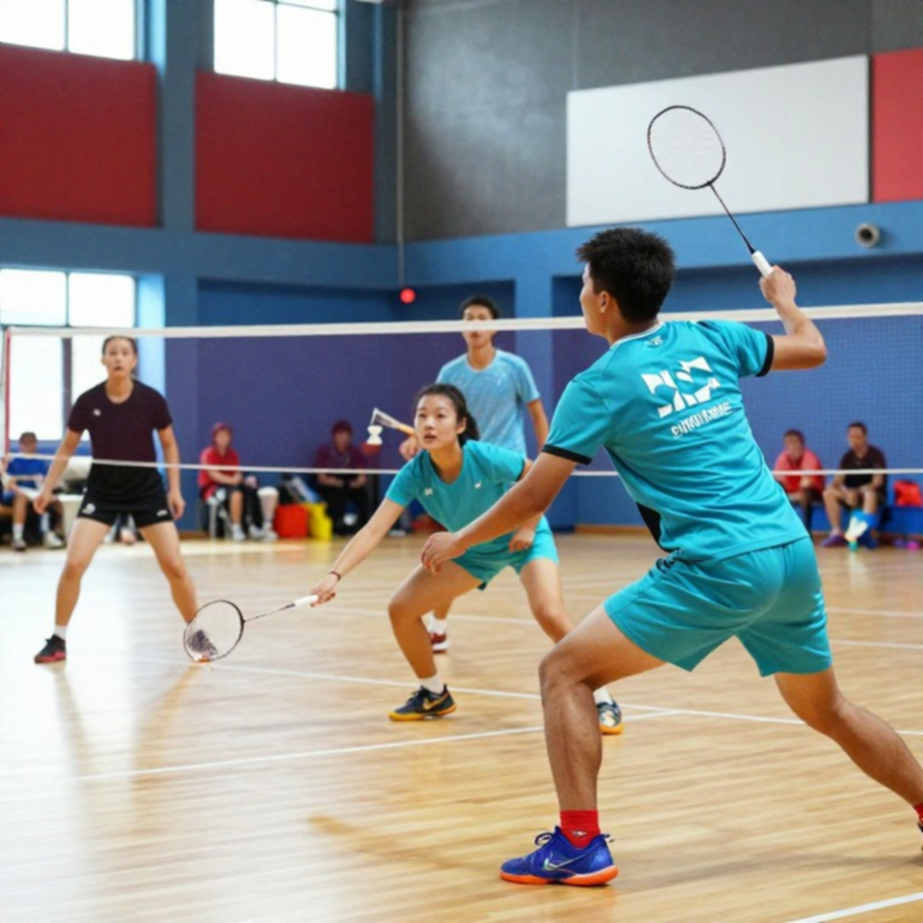
The projected final is against Vitidsarn, who leads 5-8. The article describes their meetings as closely contested battles. A 5-8 record across thirteen meetings is not dominance, but it does point to a pattern worth noting: Vitidsarn is a defensive counter-attacker who specialises in absorbing attacks. Against that profile, what gets placed on the scale is consistency and error control, precisely the qualities the preview never analyses.
Stack the five legs together and the picture is clear. Sen is the underdog or level in four of the five projected matches. He trails Christie, trails Shi, trails Vitidsarn, and is tied with Teeratsakul while having lost the latest meeting. Only against Loh does he hold a career edge, and the article itself concedes Loh just beat him.
The fitness arithmetic has to sit beside the head-to-head arithmetic. Men's singles is pure single elimination: one off-day ends the tournament, with no group stage for damage control. Sen enters at the round of 32 thanks to a bye, meaning one fewer match than unseeded entrants. That is a small but real advantage.
The problem lies elsewhere: the team event comes first. India reached the semifinals, which means Sen burned energy before his first individual match. The original article mentions this exactly once, optimistically, casting the gap between events as a chance to recover. In practice, a team campaign that runs to the semifinals tends to drain a leading player rather than refresh him. Five knockout matches across roughly five or six days, after a team event, is an addition problem, not a subtraction problem.
The bracket structure also carries hidden information. To meet the No. 1 seed in the quarterfinal while facing leading opponents on the other side of the draw, Sen almost certainly has to sit inside the top eight seeds, inferred from bracket logic, since the article never states his ranking. And that is the largest data gap: the preview lists every opponent's ranking but says nothing about Sen's own ranking, his points to defend, or his season form. Any form conclusion is therefore provisional.

Zooming out to the wider Asian picture, one structural signal matters more than Sen's route. Thailand supplies two players in the leading group: Vitidsarn at No. 3 and Teeratsakul at No. 17. The simultaneous presence of two Thai names in the top tier of men's singles signals emerging depth that extends beyond the country's traditional doubles strength. Indonesia has Christie at No. 1. China has Shi Yuqi at No. 6. Singapore has Loh Kean Yew at No. 13.
India, through Sen, is the only nation in that group without a player inside the described top six. That is a depth gap, and it cannot be closed in one good week.
The counter-intuitive angle is not whether Sen can win the title. It is that this preview is, by nature, a media product rather than a forecast.
What has been published is a hypothetical route built on a bracket that does not yet exist. If the actual draw hands Sen lighter opponents in the early rounds, the entire difficulty analysis collapses in an instant. An analysis standing on an event that has not happened has already limited its own value.
Second: the head-to-head set of 7-4, 1-1, 3-4, 2-5, 5-8 describes a player competitive with the world's top 20 but routinely second-best against its top six. That is the profile of a challenger, not of a gold-medal favourite. If Sen does win with this route, the result would signal a genuine shift in strength, not a lucky week.
Third, and perhaps most important: a headline built around the path to gold manufactures an expectation that outruns the underlying data. When expectation outruns the data, a quarterfinal exit gets read as a failure, when it is simply the outcome the probabilities implied. I do not believe in luck; I believe in the measure, and the measure here says this is a tournament Sen can surprise in, not one he enters as the highest-rated man in the field.
Data is the one thing that does not know diplomacy. From the athletics track to the badminton court, the rule stays the rule: a player entering a tournament as the underdog in four of five matches needs more than form to go all the way. What is worth watching over the coming days is not whether Sen wins the title, but how he handles the pressure of a route drawn in advance, and whether the Thai player on the other side of the bracket keeps turning Southeast Asian men's singles depth into a long-term story.