
Norway 3-2 Denmark: The Goal Designed in the Meeting Room and the Crack on the Left Flank
CÂU TRẢ LỜI CỐT LÕI Na Uy thắng Đan Mạch 3-2 ở lượt mở màn Nations League bảng A. Bàn quyết định đến từ phương án phạt góc ngắn do huấn luyện viên bóng chết Pål Fjeld thiết kế trước trận, sau khi Na Uy để Đan Mạch gỡ hòa 2-2. DỮ KIỆN CHÍNH - Na Uy dẫn 2-0, bị gỡ hòa 2-2 bằng bàn của Mikkel Damsgaard và Rasmus Højlund. - Pål Fjeld trình bày phương án phạt góc trực tiếp với Martin Odegaard và Erling Haaland trước trận. - Haaland được ghi nhận 64 bàn sau 56 lần khoác áo đội tuyển Na Uy (số liệu cần kiểm chứng chéo). - David Møller Wolfe nhận thẻ đỏ phút bù giờ, trong khi cánh trái Na Uy vốn đã mỏng nhân sự. - Na Uy đứng đầu bảng A cùng Bồ Đào Nha; lượt kế tiếp gặp Bồ Đào Nha trên sân nhà. NGUỒN Bản tin sau trận của Goal.com về trận Na Uy – Đan Mạch, UEFA Nations League. Một số mốc thống kê chưa có nguồn độc lập xác nhận. HỎI ĐÁP LIÊN QUAN Hỏi: Ai thiết kế bàn thắng quyết định của Na Uy? Đáp: Huấn luyện viên chuyên trách bóng chết Pål Fjeld, người trình bày phương án trực tiếp với Odegaard và Haaland. Hỏi: Điều gì đáng lo nhất cho Na Uy trước trận gặp Bồ Đào Nha? Đáp: Hành lang cánh trái mỏng nhân sự sau thẻ đỏ của Wolfe, cộng với khả năng giữ lợi thế khi dẫn trước. Hỏi: Na Uy có phụ thuộc vào Haaland và Odegaard không? Đáp: Có, khi cả bàn thắng quyết định lẫn kỷ lục trong trận này đều xoay quanh hai cầu thủ này.
In Norway's technical meeting room, before kick-off, a man named Pål Fjeld stood up and presented a corner routine. He did not address the room. He addressed Martin Odegaard and Erling Haaland directly — the two biggest names in the squad. Both nodded immediately, without hesitation.
A few hours later, when the match against Denmark had drifted into that stretch people call the moment instinct replaces system, the routine appeared on the pitch, almost intact as drawn. A short corner, a decoy runner dragging the defensive line off its axis, and an outcome neither Denmark nor the stands had anticipated.
Norway won 3-2. The decisive goal came off a sheet of paper prepared before the match, not from a sudden flash of genius.
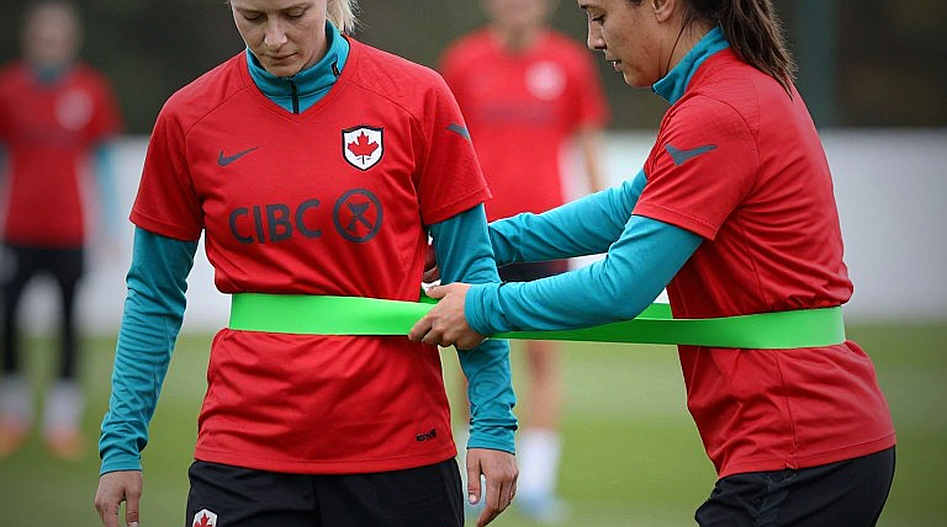
That is why I chose to write about this game. Not because of the scoreline, but because of where the scoreline came from.
CONTEXT
The match was the opening fixture of the UEFA Nations League group stage, Group A. Norway led 2-0, allowed Denmark to level at 2-2 through Mikkel Damsgaard and Rasmus Højlund, then sealed a 3-2 win. After the round, Norway sat at the top of the group alongside Portugal. Their next fixture is a direct meeting with Portugal at home.
For Odegaard personally, the win means more than three points. Norway's captain said: “It is extra special that it is Denmark, considering the history.” Reported figures suggest this was Norway's first competitive win over Denmark in 12 attempts. I am leaving that number marked for cross-checking against UEFA records, because not every outlet cites the same milestone.

As for Haaland, his international scoring record was updated again: 64 goals in 56 caps. That data point also belongs in the cross-check pile. The trend, though, is clear — Norway possess one of the highest-efficiency strikers in European international football.
Alongside those two veterans, Norway's squad included Antonio Nusa (RB Leipzig) and Oscar Bobb (Manchester City). Both featured in the very corner routine that decided the match. A national team long tagged as a “golden generation that never arrived on time” is showing signs of widening depth rather than orbiting a single star.
And then there is David Møller Wolfe. The substitute was sent off in stoppage time. That is the detail I consider the most important in the entire report — and the one buried deepest.
ANALYSIS
- The decisive goal was a product of a system
That Norway employ a dedicated set-piece coach is a detail worth stopping on. Pål Fjeld designs the routine and presents it directly to senior players, rather than routing it through layers of staff. That structure shows dead-ball work has been elevated from an add-on into a named job with a named owner. At national-team level, where camps last only a few days, that division of labour is a genuine marginal advantage.
The short-corner template itself is not new. Using a decoy runner to stretch the defensive line before delivering to a designated point is standard practice at top national sides such as England or France. What matters here is role assignment. This was not a generic pattern left to individual interpretation; it was given to specific names, with specific tasks, and executed at the precise moment the team most needed a goal. Preparation that fine at international level is not a given.
- The origin of the routine says something else
Norway chose to invest heavily in set pieces, and that choice usually carries a less-discussed consequence: the team does not believe it can break opponents down in organised open play. Denmark are not Europe's most stubborn side, but they are disciplined enough to close the central lane. Norway needing a purpose-built corner routine to generate separation hints that Plan A in open play was not producing much. A squad containing Haaland, Odegaard, Bobb and Nusa, whose decisive goal came from a corner — that detail deserves a slower reading than it usually gets.
In Vietnam, football audiences are used to thinking of set pieces as the weapon of the underdog. In Europe it has become the weapon of the favourite, simply because the favourite is the side with the money to hire someone whose only job is designing it. The gap is not in corner-kick technique. It is in departmental structure.
- The crack is in how the lead is protected
Two goals up at home, against a direct rival from the same football culture and the same competitive pool, then pegged back to 2-2. That kind of signal does not ruin a scoreline, but it ruins the image of a team that knows how to kill a game. Damsgaard and Højlund scoring is normal for Denmark; the story is that Norway allowed it.
Game-state management — the ability to adjust your style depending on whether you are leading, level or trailing — is its own skill. It does not arrive automatically with star names, and it usually only becomes visible when a team has to protect a result. From my experience watching matches at this level, that is where big teams separate from each other, not in the scoring phase.
- The left flank: a problem buried two layers deep
The report mentions a selection problem at left-back. Then, in stoppage time, Wolfe is sent off. The two details sit paragraphs apart, but read side by side they form a single issue: a position that was already thin has just lost another option.
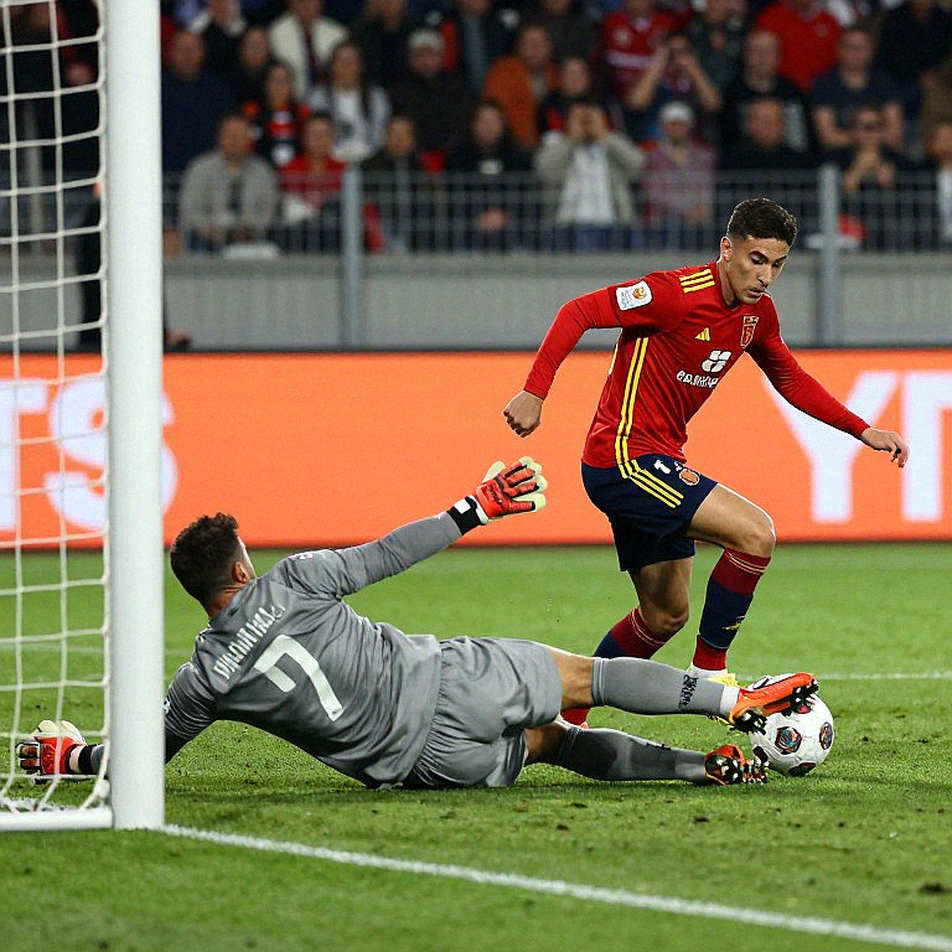
It is not yet clear what kind of red it was — straight red or second yellow — and that determines the length of the ban. For an ordinary professional foul, the suspension usually stays at one match. If it is classified as violent conduct, the number can grow. The distance between those two scenarios, ahead of a meeting with Portugal, is enormous.
Big teams rarely attack across the whole width; they attack zones. A flank weakened in personnel is the natural destination for wide play, and Portugal have more than enough quality to read that detail precisely.
- Dependence on two names
Both the winning goal and the record in this match ran through Haaland and Odegaard. A team that places most of its creation in one man and most of its finishing in another is operating on a fragile foundation. An injury or suspension to either triggers a chain reaction — not because the squad runs out of players, but because it runs out of routes.
THE CONTRARIAN ANGLE
Most post-match reports follow the same template: Norway won on attacking firepower. That is a convenient summary, but it is not a tactical diagnosis. The decisive goal came from a dead ball. Norway did not impose themselves for the full ninety minutes; they won through a pre-programmed moment, after allowing their opponent to drag them back to the starting line.
There is another temptation I want to warn myself about. After mispronouncing Mbappé's name three times during a commentary stint in Russia in 2026, I learned a lesson about saying people's names correctly. I also learned the inverse: people can become so excited by a name that they credit it with things that were not its doing. Haaland scores, Haaland sets a record, Haaland is the centre of every share line. The person who designed the goal stands in the shade, mentioned only because his own captain chose to mention him.
That detail is genuinely worth thinking about. Odegaard said the team could only praise Pål Fjeld today, that he had done his homework. A captain publicly crediting a specialist assistant. That is not a courtesy. That is how a working culture gets built: the on-pitch leader validating the work of the person behind the scenes. If Norway go deep in this cycle, that small detail will be one of the fragments people quote back.
The other direction also deserves a fair hearing. A goal from a corner is worth exactly as much as a goal from a ten-pass move, but the frequency with which they can be produced is entirely different. Set pieces are a trickle, and a hard one to reproduce on demand once opponents start studying the tape. A team that wins only through dead balls is living on interest, not on capital.
Then there is the “golden generation” story. This is a national team that has been praised many times and has broken promises just as many. A win over Denmark, historic or not, is still one opening group fixture. Solbakken seems to understand this: he proactively raised the bar for the Portugal match, an almost textbook piece of pressure management — cooling the mood right after a good result so public opinion does not float too high.
On the human side, I want to give Wolfe a paragraph. A substitute who comes on and is sent off in stoppage time will walk into the following week with his name in the papers in a way nobody wants. He may be a young player trying to establish a place, and one heated moment can cost him several matches — precisely in the stretch when the team needs an option in his position most.
TAKEAWAY
Portugal is the real test. Denmark gave Norway three points and a good story; Portugal will reveal where this team actually stands. If Norway can hold their defensive structure while leading, solve the left flank and find a second source of goals beyond Haaland, the golden-generation story will finally have ground under it.
If not — if they lead again and are pegged back again, and if the decisive goal comes from a corner again — people will begin to understand that Norway do not win through force, but through preparation. There is nothing wrong with that. Preparation is a rare quality. The only trouble is that good preparation which never fixes the crack is still just preparation.
It is not the corner that changes fate; it is the people standing over the corner. And every season will have someone waiting at the far post, waiting to be called by name.