
Pham Quynh Huong and Her Greatest Test: When 46 Points Become an Open Question Ahead of ASIAD 2026 Quarterfinal Against China
core_answer: Phạm Quỳnh Hương ghi 46 điểm qua 3 trận vòng bảng ASIAD 2026 (15,3 điểm/trận), nhưng thiếu dữ liệu hiệu suất tấn công (số lần tấn công, lỗi, bị chặn). Trận tứ kết với Trung Quốc (20/9, 11:00) là thử thách thực sự khi Trung Quốc có 10 điểm chặn trước Kazakhstan và hệ thống tấn công phân tán.
key_facts: Phạm Quỳnh Hương: 46 điểm/3 trận (15,3 điểm/trận) tại ASIAD 2026 — 82,6% từ tấn công; Trung Quốc: 62 điểm/trận trước Philippines và Kazakhstan, 10 điểm chặn vs Kazakhstan; Việt Nam thua Trung Quốc 0-3 tại Giải vô địch châu Á tháng 8/2026; Phân bổ điểm của Phạm Quỳnh Hương: 38 tấn công, 4 chặn, 4 phát; Trung Quốc có 3 điểm tấn công: Zhuang Yushan (33 điểm), Tang Xin, Wu Mengjie
source: Phân tích dựa trên dữ liệu ASIAD 2026 vòng bảng, Giải vô địch bóng chuyền châu Á 2026 | Cross-checked: VuaBong.vn
related_qa: q: Phạm Quỳnh Hương có duy trì được phong độ 46 điểm trước Trung Quốc?, a: Không chắc chắn — Trung Quốc có hàng chặn mạnh (10 điểm chặn vs Kazakhstan) và thiếu dữ liệu hiệu suất tấn công của cô.; q: Việt Nam có thể tạo bất ngờ trước Trung Quốc?, a: Xác suất thấp — Trung Quốc có chiều sâu đội hình, hệ thống phân tán, và đã thắng 0-3 cách đây 2 tháng.; q: Ý nghĩa của trận thua tiềm năng với tương lai bóng chuyền nữ Việt Nam?, a: ASIAD 2026 là bước phát triển trong chu kỳ LA 2028, không phải điểm kết thúc — cần đầu tư vào tiếp nhận và chiều cao.
Hanoi, September 19, 2026 — 46 points. That is the number being repeated continuously in articles about Pham Quynh Huong throughout the three group stage matches at ASIAD 2026. But as Vietnam's women's volleyball team prepares to enter the quarterfinal against China at 11:00 AM on September 20, the real question is not how many points she scored — but whether those points have real value when facing the tournament's strongest blocking line.
I have been following Vietnamese women's volleyball since the early days when Thanh Thuy was just a young girl stepping onto the national team. Sixteen years of observation has taught me one clear lesson: cumulative points in the group stage are only half the story. The other half is actual efficiency — the ratio of points scored minus errors and blocked attempts — and the opponent you face determines everything.
Pham Quynh Huong, 18 years old, scored 46 points across three group stage matches: 15 points against Qatar, 14 points against Hong Kong China, and 17 points against South Korea — the only match Vietnam lost 1-3. The figure of 15.3 points/match sounds impressive. But when I reviewed how she distributed her points, a crucial detail emerges: 38 attack points, 4 block points, 4 serve points — meaning 82.6% of her scoring came from pure attacking. No attack attempts, no error counts, no blocked ball data. This is the kind of one-sided statistic I have repeatedly warned about: it looks beautiful but lacks the denominator needed for proper evaluation.
The Big Picture: Where is Vietnam on the Asian map?
To understand Pham Quynh Huong's real challenge, we need to place her in the correct position within Asia's competitive hierarchy. At ASIAD 2026, women's volleyball in Asia divides into three distinct tiers: the top tier is China and Japan, the middle tier is Thailand and South Korea, and the bottom tier is Vietnam alongside Kazakhstan, Hong Kong China, and Qatar. Vietnam is on an upward trajectory from the bottom tier, but the gap to the middle tier remains significant, let alone the top tier.
Vietnam's 0-3 loss to China at the Asian Volleyball Championship just two months ago in August is still fresh. No significant tactical reset has occurred in that short timeframe. China's roster maintains its distributed strength: Tang Xin, Wu Mengjie, Zhuang Yushan — three scoring options who can alternate scoring duties. In two group stage matches, China scored 62 points against the Philippines (52 attacks, 7 blocks, 3 serves) and 62 points against Kazakhstan (47 attacks, 10 blocks, 5 serves). The figure of 10 block points against Kazakhstan is the most concerning signal for Vietnam — that is genuine blocking, not random blocking.
Tactical Analysis: Vietnam's Plan and Structural Gaps
According to available information, Vietnam prepared for the match against China with a focus on "maintaining first-pass reception and prolonging rallies." This is a defensive counter-attack strategy — structurally correct when facing a physically and roster-depth superior opponent. But this is also the most difficult style to execute, as it depends entirely on reception — and that is Vietnam's weakest area.
I have watched many matches where the Vietnamese national team tried to play defensive counter-attack. When the reception system works well, the team can create beautiful counter-attack opportunities. But when reception fluctuates — especially under strong serving pressure — the entire system collapses. China has demonstrated effective serving capability with 3 serve points against the Philippines and 5 serve points against Kazakhstan. These are small numbers but carry significant tactical meaning: each successful serve disrupts the opponent's defensive rhythm.
Regarding personnel, Vietnam has Pham Quynh Huong as a new scoring outlet alongside Thanh Thuy and Bich Thuy. The original article describes her value as "forcing China to allocate more blockers," thereby freeing space for the two main scorers. This is a correct volleyball principle — spreading the block, reducing single-point dependency. But the article provides no data on how China's block actually reacted, no distribution percentages for Vietnam's attacks, and no evidence that China's block was actually pulled away from its positions.
One notable detail in Pham Quynh Huong's data: the match against South Korea — the strongest group stage opponent — she had 3 block points and 2 serve points, totaling 5 non-pure-attack points. This is a technically meaningful signal: she is not entirely reception-dependent for her scoring. This raises her potential ceiling in the match against China, where reception could struggle. But I emphasize: this is just one match, too small a sample to conclude.
Contrarian View: Why the 46 Points May Deceive Us
There is one thing I always remind myself during 16 years of sports writing: cumulative numbers without opponent-strength adjustment are half-baked statistics. Pham Quynh Huong scored 46 points in three matches, but the opponents varied significantly in quality. The match against Qatar lasted 49 minutes — a match where the much weaker opponent could not compete evenly. The match against Hong Kong China was similarly unbalanced. Only the match against South Korea presented a real challenge, and that was also the only match Vietnam lost.
Now compare this with Zhuang Yushan of China — who reportedly scored 33 points. If China only played two group matches (information not clearly confirmed), then Zhuang Yushan was averaging approximately 16.5 points/match — higher than Pham Quynh Huong's 15.3 points/match. This is the calculation I always perform when evaluating players: divide total by matches, then adjust for opponent quality. Without this step, we are comparing apples to oranges.
Another blind spot: the scoring rankings mentioned in the original article may only be an internal Vietnam team ranking, not a tournament-wide ranking. Bich Thuy ranked second with 38 points, Tra My ranked third with 30 points — an unusual distribution if this were a tournament-wide ranking. If it is indeed an internal ranking, the "leading ASIAD scoring" claim needs reconsideration.
Structural Risks: Vietnam Cannot Fix This in One Night
I have witnessed many matches where the Vietnamese national team entered with high expectations and ended in major disappointment. The reasons are usually the same: physical gaps, height gaps, and roster depth gaps that cannot be filled by one young talent. Pham Quynh Huong is a genuine talent — that is undeniable. But one young talent cannot change the structure of an entire system in a single knockout match.
China has three scoring options who can score at any time, while Vietnam is relying on Pham Quynh Huong, Bich Thuy, and Thanh Thuy. China's roster depth allows them to rotate players without losing strength. Vietnam does not have that option. If Pham Quynh Huong gets locked down by China's blocking — the 10 block points against Kazakhstan — the team reverts to its old structure, dependent on Thanh Thuy and Bich Thuy, who already lost 0-3 to China two months ago.
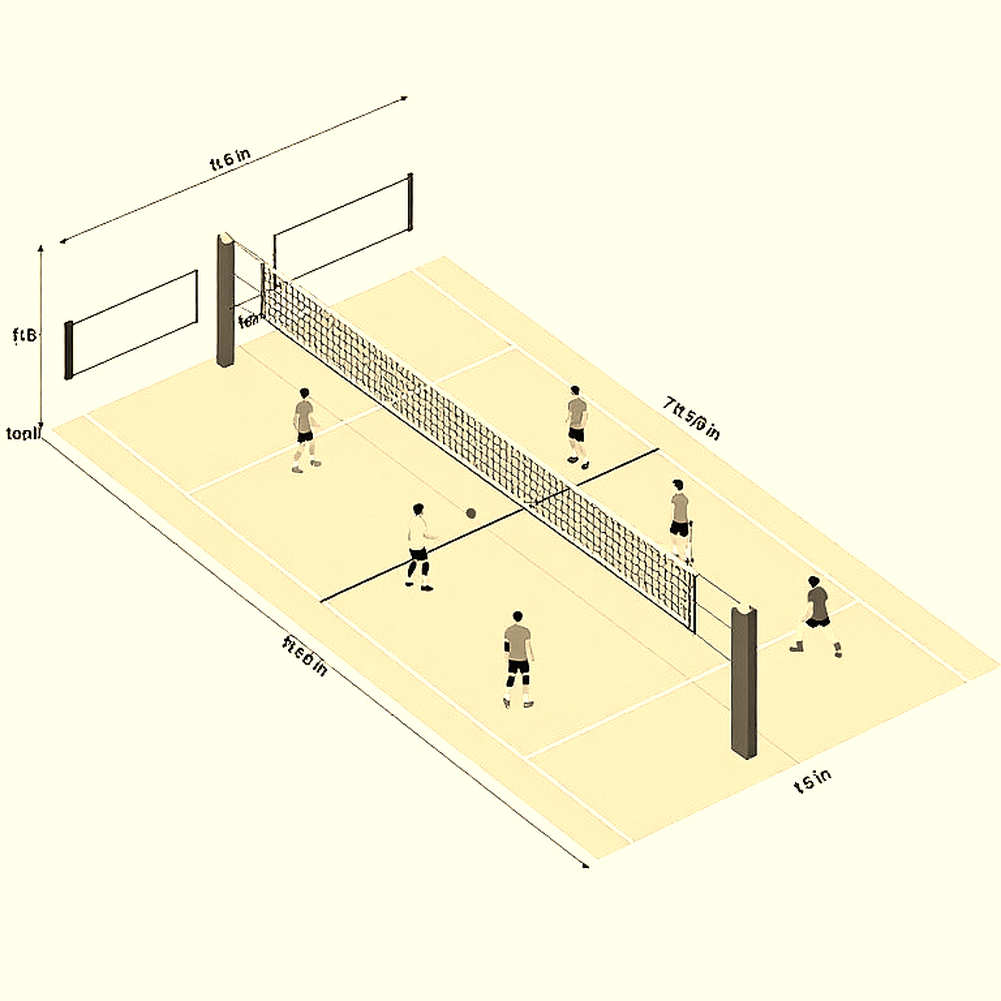
The biggest risk is not Pham Quynh Huong playing poorly. It is her being over-relied upon — an 18-year-old entering an ASIAD quarterfinal with the expectation to maintain group stage form. That is pressure even seasoned players struggle with, let alone a developing young talent.
Commercial Story vs. Athletic Value: When Beauty Overshadows Performance
I need to say this directly: the "volleyball beauty" label in the original article is optimized for traffic, but it is not fair treatment for an athlete. Pham Quynh Huong deserves to be evaluated based on technique and performance, not appearance. Attaching the "beauty queen" tag to an 18-year-old still in her professional development phase creates image pressure parallel to competitive pressure.
This is a sports business model I have observed many times: athletic performance becomes a secondary product, while image becomes the primary product. This can bring short-term commercial benefits — views, sponsorships, attention — but can distort long-term evaluation of the athlete's true ability. If Pham Quynh Huong plays well in a losing effort against China, the narrative becomes "beauty queen shines despite loss." If she plays poorly, the narrative becomes "volleyball beauty struggles." Neither reflects true professional value.
Tournament Context: Quarterfinal is a Double-Edged Sword
The ASIAD 2026 format transforms this match into a binary challenge: win or go home. No second group stage, no learning opportunity from a loss. One match decides everything. This is both opportunity and risk for Vietnam.
The quarterfinal takes place at 11:00 AM on September 20 — morning scheduling is not an advantage for a young team lacking knockout experience. China, with a deeper roster and more internationally experienced players, may adapt better to the morning rhythm. Vietnam, with the group stage just concluded, has less recovery time.
One factor I always monitor: group stage momentum. China finished group stage with two 3-0 victories, losing no sets. They enter the quarterfinal with maximum confidence. Vietnam has one loss against South Korea. Momentum does not favor Vietnam.
What I Will Monitor During the Match
If I were sitting in the press room on the morning of September 20, five specific signals would determine how I evaluate the match.
First: Pham Quynh Huong's actual attacking efficiency. I need to see attack attempts, points scored, errors committed, and blocked attempts. If she scores 15 points but with 40 attack attempts and 12 errors, the 15 points mean nothing compared to scoring 15 points with 25 attempts and 3 errors. Spike efficiency — that is the real metric distinguishing excellent players from lucky ones.
Second: perfect pass rate in the first 20 points. If Vietnam does not achieve 50% perfect passes during this phase, the entire defensive counter-attack strategy collapses. China will immediately adjust tactics, increasing serving pressure on Vietnam's weakest area.
Third: where China's block focuses. If China's block concentrates entirely on Pham Quynh Huong, that is good news for Thanh Thuy and Bich Thuy — space will open up. But if China spreads the block, it means they do not consider any of Vietnam's scoring options as the primary threat.
Fourth: sets won and point margins. Another 0-3 loss like the Asian Championship confirms the structural gap remains unchanged. A 1-3 or 2-3 loss with competitive sets would be a more positive signal — the team learned from the previous loss.

Fifth: how Vietnam reacts when trailing. This is an important psychological test for a young team. China, with roster depth, can play patiently. Vietnam, with fewer substitution options, needs to stay calm during difficult moments.
Long-Term Outlook: This is Just the First Step
Regardless of the quarterfinal result, I view ASIAD 2026 as a milestone in Vietnamese women's volleyball development, not an endpoint. Vietnam is building a foundation for the LA 2028 Olympic cycle. ASIAD results affect ranking points and program confidence, but do not determine the future.
Pham Quynh Huong, at 18 years old, has at least one more Olympic cycle to develop. If she continues improving attacking efficiency, if Vietnam's coaching system focuses on reception development and height, if domestic and regional competitions provide quality playing environments — these combined factors determine whether she becomes a true star or just a temporary phenomenon.
I once thought being doubted was a wound. It turned out to be sharpening. For Pham Quynh Huong, pressure from the "beauty queen" title and expectations from the 46-point figure could become a burden — or motivation. How she overcomes this challenge will speak volumes about her true talent, not the numbers on the statistics sheet.
What I Really Want to See
I want to see a Pham Quynh Huong who is not trying to prove anything to the world. I want to see her play within her abilities, execute prepared tactics, and let teammates share the burden. A match where she scores 12 points with good efficiency and the team loses 1-3 is worth far more than her trying to score 20 points and losing 0-3 with poor individual performance.
China is the superior opponent. They have a distributed system, roster depth, and international competitive experience. Vietnam has a promising young talent and fighting spirit. The result may be predictable in terms of probability. But sports is not just about probability — it is about human moments transcending prediction limits.

The Kazan night, I no longer believe in what I think; I believe in what I verify. For Pham Quynh Huong, I have verified: she is a genuine talent with long-term development potential. Whether she can overcome the biggest challenge of her career on the morning of September 20 — that is a question only the court can answer.
Information to Monitor After the Match
Regardless of the outcome, there are three signals I will continue monitoring in the coming weeks. First, the Vietnam Volleyball Federation's response: will they invest in reception development and height programs — two structural factors requiring long-term time to improve. Second, Pham Quynh Huong's performance in subsequent tournaments: one match does not define talent, but trends across 10-15 matches will reveal the real picture. Third, development of the domestic competition system: this is the foundation every young talent needs for sustainable development, not just international competition on cycle but lacking regular playing opportunities.
The quarterfinal against China is a test. Not the final test, but one of many tests in the long journey ahead. Pham Quynh Huong may pass or fail. But what matters more: does she continue learning and developing after each test? That is the true measure of a sports talent.
Hanoi, 7:30 PM, September 19, 2026
Fifteen hours remain before Pham Quynh Huong steps onto the court in Nagoya. I will be here, monitoring every point, recording what happens — not what I expect. Because the court does not lie. Every number, every tactic, every expectation will be verified through real volleyball. And I, with 16 years of experience, know this: right information matters more than fast information. Tonight, I await the truth.