
Opening Night in Budapest: Mahuchikh, Ingebrigtsen and the Real Price of a Medal
**Câu trả lời cốt lõi:** Đêm khai mạc Ultimate Championship tại Budapest (tháng 9) chứng kiến những chiến thắng hơn là kỷ lục: Yaroslava Mahuchikh vô địch nhảy cao nữ với 1,99m, và Jakob Ingebrigtsen thắng 5000m nam với 12:59.24 chỉ khoảng 7 tháng sau phẫu thuật gân Achilles. **Sự kiện chính:** - Mahuchikh nhảy qua 1,99m, thấp hơn kỷ lục thế giới 2,10m của chính cô 11 phân, nhưng đủ để vô địch. - Ingebrigtsen về nhất 12:59.24, cách kỷ lục thế giới 12:35.36 của Cheptegei khoảng 24 giây. - Ethan Katzberg — nhà vô địch Olympic ném búa — foul cả hai lần và bị loại ở vòng đầu. - Merlin Hummel thắng ném búa với 81,46m sau khi Katzberg bị loại. - Mỹ thắng Jamaica ở tiếp sức hỗn hợp 4x100m với cách biệt 0,08 giây. **Nguồn:** Phân tích từ bài báo về đêm khai mạc Ultimate Championship tại Budapest, tháng 9 | Cross-checked: VuaBong.vn **Hỏi đáp liên quan:** - Hỏi: Vì sao chiến thắng 5000m của Ingebrigtsen đáng chú ý? Đáp: Anh thắng chỉ khoảng 7 tháng sau phẫu thuật gân Achilles, cho thấy sự trở lại đáng kinh ngạc. - Hỏi: Luật hai lần ném ảnh hưởng thế nào đến ném búa nam? Đáp: Nhà vô địch Olympic Ethan Katzberg foul cả hai lần và bị loại ở vòng đầu. - Hỏi: Mahuchikh có phá kỷ lục thế giới tại Budapest không? Đáp: Không, cô vô địch với 1,99m, thấp hơn kỷ lục 2,10m của chính mình.
Friday night in Budapest. The September air was cool, the stands not yet full, and people were still finding their seats when Yaroslava Mahuchikh stepped onto the approach run before the 1.99-metre bar. The Ukrainian woman paused for a few seconds. Her hands clapped three times. Then she lifted her head and looked at the empty space above the bar — not at her rivals, not at the crowd. Only at the sky.
The jump cleared. A soft thud as the mat caught her. Mahuchikh sat up, dusted off her hands, and walked toward the stands as if this were just another training session. I was sitting in front of a screen more than eight thousand kilometres from Budapest, and what made me stop was not the number. It was how casually she treated it.
That was the opening moment of one of the richest athletics events ever staged. And it was also the moment that planted the question I carried through the whole night: what is a gold medal at this new arena really measured by?
CONTEXT: A STAGE DESIGNED TO DAZZLE
The new world athletics championship — known as the Ultimate Championship — was held for the first time in Budapest, running three days, with a total prize pool of 10 million dollars. The winner of each individual event took 150,000 dollars, second place 75,000, third 40,000. The relay events had their own 80,000-dollar pot.
For comparison, an ordinary Diamond League leg pays a few thousand dollars to the winner. This was a leap to an entirely different tier — the tier of events engineered for television, for sponsors, for short and sharp highlights.

I have followed athletics long enough to know that money does not flow into a sport by itself. It flows when someone decides the audience will stay. And to keep an audience for three days, the organisers did something traditional athletics usually avoids: they changed the rules.
Specifically, in the first round of the throwing and putting events, athletes were allowed exactly two attempts. Two. No third chance to correct a mistake. No opportunity to recover.
This is the detail I read over and over in my notes, because it is not merely a technical regulation. It is a statement about how a championship views risk.
Traditionally, a hammer thrower has three qualifying attempts, can foul once, and still have two to produce a mark. That system is designed to find the person who throws farthest, not the person who throws safest. But when you cut it to two, you are no longer finding the farthest thrower. You are finding the person who stays calmest in the shortest window.
That is a different sport. And the night in Budapest proved it in the cruellest way.
THE CORE: WHAT ACTUALLY HAPPENED ON THE FIELD
Mahuchikh cleared the 1.99-metre bar on her first attempt. For an ordinary athlete, that is a lifetime achievement. For her, it is a gap of 11 centimetres below the 2.10-metre world record she set in Paris in 2026.
I asked myself this question many times while rewatching the footage: if an athlete can jump 11 centimetres higher than what she just jumped, does jumping lower mean she has become weaker? The answer, from what I have observed over the years, is no. It means she is playing a different game.
The outdoor season was in its final weeks. The body of a high jumper after a long season is no longer at its freshest. High jumping is not like running — you cannot "save energy" and unleash it in the last minute. Every approach is a full transfer of body weight onto one leg, a launch into space, a fall. You have only a certain number of attempts in your body before it objects.
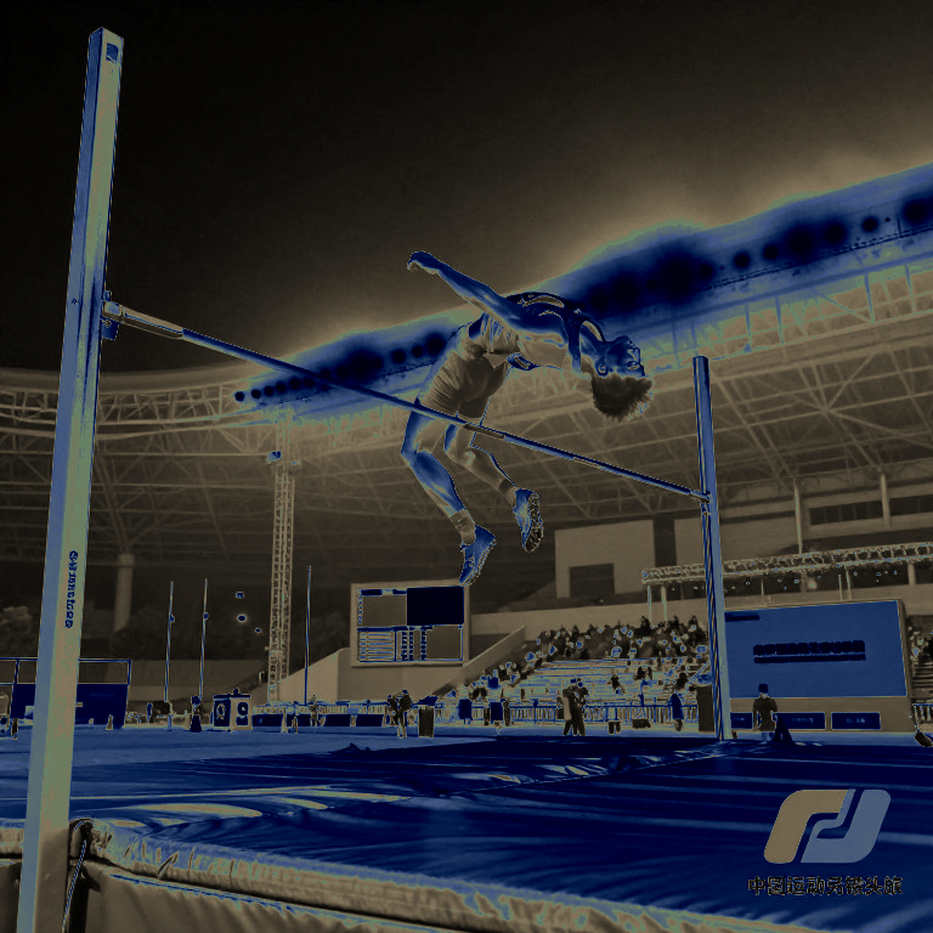
Mahuchikh arrived in Budapest with a clear goal: to win. Not to break a record. And 1.99 metres was enough.
This is what the media usually overlooks when covering elite championships. They want beautiful numbers. They want "records broken." But the world's best athletes do not think in records. They think in positions. They think in standing on the top step, in bringing home a medal for their country, in surviving a night when many others fall.

And to understand why I say "survive," look at the men's hammer throw.
Ethan Katzberg entered the ring as the reigning Olympic champion. He was the farthest thrower in the world at that moment. But he entered a arena where the rules had been compressed. Two throws in the first round. And he fouled on both.
Let me stress this: the Olympic champion, the man with the greatest throwing capacity in the men's hammer, was eliminated in the opening round — not because he was weak, but because he had no third chance to correct a mistake.
That was the moment I understood that this championship is not simply finding the best. It is finding the person best suited to a new format. Those two things are not the same.
And in the void Katzberg left, a German named Hummel — Merlin Hummel — rose with an 81.46-metre throw. That is a good mark. It is not a great one compared to the 86.74-metre world record held by Yuriy Sedykh since 2026 — a record that has stood for nearly four decades and may stand for many more given changes in equipment and technique.
But 81.46 metres was enough to win. And on a night when the best was eliminated by the rules, "enough to win" is a concept that must be read carefully.
Then came the men's 5000 metres.
Jakob Ingebrigtsen — the Norwegian, the Olympic champion, the most sought-after face of modern European athletics — finished in 12:59.24. He won with a late surge.
The 12:59 sits about 24 seconds off Joshua Cheptegei's 12:35.36 world record set in Monaco in 2026. It is also about 11 seconds off Ingebrigtsen's own personal best.
But this is the detail I consider most important in this entire analysis, and it lies deep in the context rather than on the scoreboard: Ingebrigtsen won only about seven months after undergoing Achilles tendon surgery.
To help you grasp how significant that is: the Achilles is the largest and strongest tendon in the human body, but also the one with the poorest blood supply among the major tendons. That means it heals very slowly. An elite runner typically needs nine to twelve months to return to top-level competition after Achilles surgery, and many never regain their former form.
Seven months. And he won.
This leads me to an observation I believe is the key to reading the whole night: He did not win by running the fastest. He won by running the smartest.
The phrase "late surge" does not merely describe a moment. It describes a strategy. When you have just returned from Achilles surgery, you cannot lead from the start and drive the pace for twelve laps. Your body will not allow it. You must conserve, run in the pack, wait for the final lap, and exploit the moment when your speed — explosive speed, not endurance speed — can make the difference.
That is why the 12:59 time tells a story about tactics, not fitness. If Ingebrigtsen were truly at his peak, a race like this might have finished at 12:45 or lower. The 12:59 shows that this was a slow-early-pace race, and he managed it like a man protecting his body.
I have run. I know the feeling of a body that has just healed from injury. It does not speak to you through pain. It speaks to you through hesitation. A stride you do not fully trust. A moment when you wonder if your leg will keep up. And in a 5000-metre race, that hesitation costs you seconds.
On the Budapest night, Ingebrigtsen beat that hesitation. It was a psychological victory, not only a physical one.
Then came the mixed 4x100-metre relay.
The United States beat Jamaica by 0.08 seconds. Eight hundredths of a second.
I want you to pause on that figure for a moment, because it is so small as to be nearly meaningless if you look only at speed. In a relay, the decisive margin usually does not lie in the legs of the fastest runner. It lies in the moment the baton is exchanged.
A good exchange saves a team a few tenths of a second. A clumsy exchange burns the same. 0.08 seconds is the margin of one hand touching another at exactly the right instant — or a single beat too late.
Over four legs, each about 10 seconds, the total time lands around 40 seconds. So 0.08 seconds is about 0.2 per cent of the total. It is the error margin of a blink within a blink.
And that is why the relay has always been the most fascinating event in athletics to me — not because it is the fastest, but because it exposes the truth that individual speed does not decide everything. Coordination decides.
But if you ask me which moment kept me sitting in silence longest all night, it was not on the podium.
It was in the women's 800-metre semi-final.
Vancardo fell. A collision in a middle-distance race where a dozen women jostle through two laps of the track, where contact is nearly impossible to avoid — and where the outcome of an entire season can be overturned in half a second.
Keely Hodgkinson, the women's 800-metre Olympic champion, later said this was one of the worst races she had ever been part of.
I leave that quote intact because it matters. It is the confession of someone at the very top that she too can be swept into the chaos of a crowded race. That sometimes you do not lose because you are slow. You lose because you are in the wrong place at the wrong moment.
THE COUNTER-INTUITIVE VIEW: WHAT REMAINS AFTER A NIGHT LIKE THIS
Now I want to talk about what I believe truly matters — not as a reporter, but as someone who has spent years standing on all kinds of stands.
There is a way of reading this championship that the media usually chooses. It is the commercial reading: 10 million dollars in prizes, a new format, a three-day stage, star names. By this reading, Budapest is a success because it drew attention.
But there is another reading, and I believe it truer. It is a reading about the quality of competition.
Look again at what actually happened on the field. The men's 5000 metres ended at 12:59, 24 seconds off the world record. The women's high jump ended at 1.99 metres, 11 centimetres below the winner's own world record. The men's hammer ended at 81.46 metres, 5 metres off the world record, and in a context where the strongest man had been eliminated by the rules.
This was a night of wins, not of records. And that raises a question no one wants to ask: is a format engineered to optimise television inadvertently lowering the quality of elite sport?
I do not think the organisers intended that. But I believe there is a trade-off, and that trade-off has a name: risk.
The two-throw rule does not make anyone throw farther. It makes more people likely to be eliminated. It shifts the focus from searching for the limits of human strength to managing risk. And while that can produce dramatic moments for viewers, it also means sometimes we never see what an athlete is truly capable of.
How far would Katzberg have thrown with three attempts? We will never know. And that is a loss for the sport — an invisible loss, one that never appears on the scoreboard, but real.
For me, this connects straight to a personal experience. Years ago, I filmed a women's football friendly on an old phone. That team's tactics were far from perfect. They left many gaps. But in one explosive moment, a striker struck a volley from outside the box, and all the flaws vanished. I realised that sporting quality is not a sum of numbers. It is a moment. And that moment needs a context that allows it to exist.
Championships can enable such moments, or make them harder to produce. A compressed-pace format can do both.
And then, of course, there is the more immediate matter: this night reminded me that the greatest figures in athletics are also just human. Mahuchikh jumped 11 centimetres below her capacity and still won. Ingebrigtsen returned from Achilles surgery and still won. Hodgkinson entered a race she called her worst and still advanced.
Glory does not come from the stadium lights, but from the women who dare to dream — and dare to continue when things do not go as planned.
CLOSING: WHAT I TAKE HOME FROM AN EVENING IN BUDAPEST
There are three more days and many more events. More medals will be awarded. More stories will be written.
But what I take from the opening night is not a time, not a height, not a distance. It is the feeling that this sport stands at a fascinating crossroads — between tradition and commerce, between records and wins, between finding the best and creating a show worth watching.
Silence is not for stopping. It is for hearing more clearly the sound of feet on the track — and the things left unsaid.
The season is still flowing. And those women on the track, alongside people like Ingebrigtsen quietly protecting their bodies after each injury healed, will keep teaching us many things before the season closes.