
A Flag for Athletics: What Singapore Says and What Singapore Never Counts
**Câu trả lời cốt lõi:** Singapore công bố đoàn 20 vận động viên dự Đại hội Thể thao Người khuyết tật châu Á lần thứ năm tại Aichi-Nagoya (18-24/10/2026), thi đấu chín môn với tám tân binh. Vận động viên điền kinh James Ethan Ang, 25 tuổi, được chọn cầm cờ. Thông cáo không nêu cột mốc thành tích hay mã phân loại. **Dữ kiện chính:** - Đoàn Singapore gồm 20 vận động viên, 9 môn, 8 người lần đầu dự Đại hội (40%). - Boccia đông nhất với 4 người; điền kinh, xe đạp và bơi mỗi môn 2-3 người. - Điền kinh người khuyết tật có 2 đại diện: James Ethan Ang (25, cầm cờ) và Muhammad Diroy Noordin. - Jovin Tan (40) chuyển từ thuyền buồm sang boccia; Theresa Goh (39) từ bơi sang bắn súng. - Không công bố chỉ tiêu huy chương; Trưởng đoàn là Low See Lien, phó chủ tịch Ủy ban Paralympic Singapore. **Nguồn:** Thông cáo Ủy ban Paralympic Singapore, ngày 12 tháng 9 năm 2026 | Cross-checked: VuaBong.vn **Hỏi đáp liên quan:** Hỏi: Vì sao mã phân loại quan trọng trong điền kinh người khuyết tật? Đáp: Mã phân loại (T cho chạy, F cho kỹ thuật) quyết định nội dung thi đấu và chuẩn so sánh thành tích của từng vận động viên. Hỏi: Gương mặt đáng chú ý nhất của đoàn Singapore là ai? Đáp: Hai cựu huy chương Paralympic chuyển môn là Jovin Tan và Theresa Goh, cùng người cầm cờ James Ethan Ang. Hỏi: Đại hội diễn ra khi nào và ở đâu? Đáp: Từ ngày 18 đến 24 tháng 10 năm 2026 tại Aichi-Nagoya, Nhật Bản, với khoảng 3.000 vận động viên và 18 môn thi đấu.
On 12 September 2026, at Gardens by the Bay, a 25-year-old man named James Ethan Ang received the Singapore flag from Minister David Neo. At the send-off ceremony for Singapore's para-sport delegation ahead of the fifth Asian Para Games, this was the most photographed image: a young para athlete standing centre stage, lifting the red-and-white flag with both hands.
I looked at that photograph for a long time. Not because it was beautiful. But because behind it stands a delegation of twenty athletes competing across nine sports, from 18 to 24 October 2026 in Aichi-Nagoya, Japan — and in the entire official release, not a single performance mark is mentioned. No time, no distance, no T or F classification code. For someone who has spent 47 years counting hundredths of a second, that absence says more than any number could.
People see a match; I see fates passing the ball. Here, people see a ceremony; I see a carefully arranged data gap.
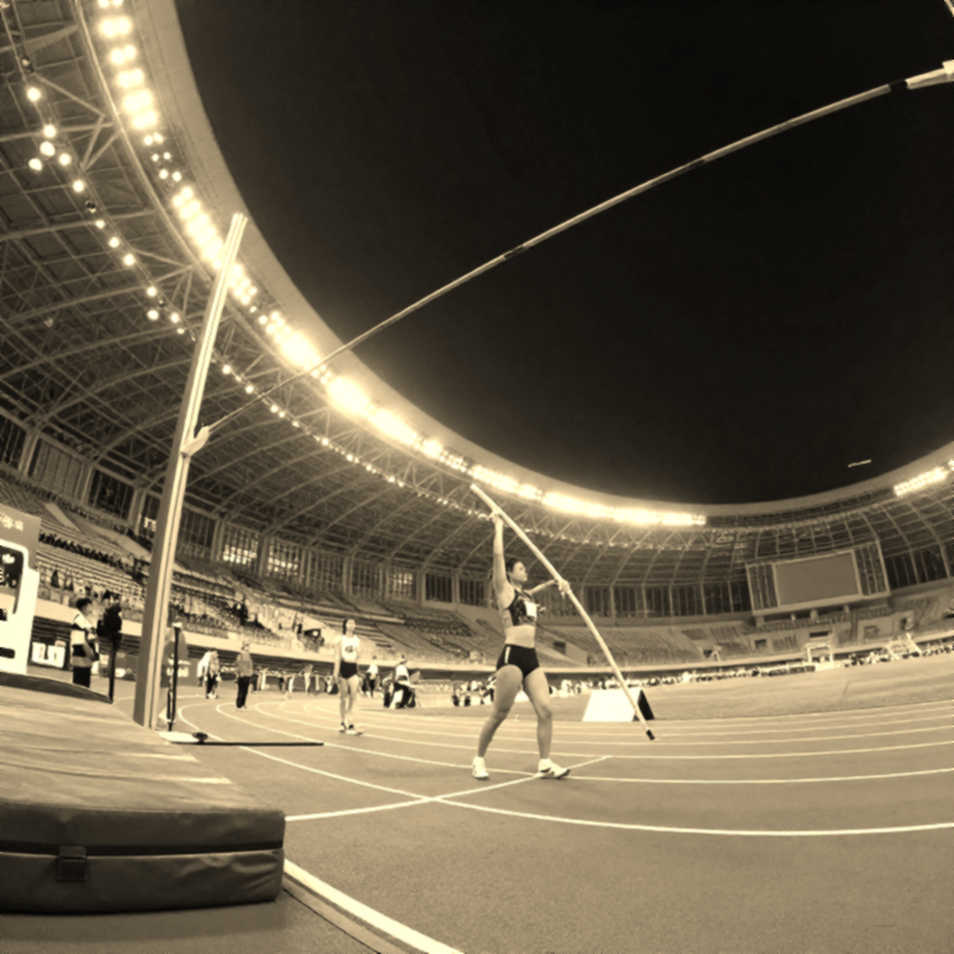
Nine sports, twenty people
Singapore's delegation to Aichi-Nagoya 2026 numbers twenty athletes across nine sports. This is the breadth-over-depth structure typical of a small National Paralympic Committee. Boccia — a precision ball sport for athletes with severe motor impairment — contributes four athletes, the largest single group. Para athletics, cycling and swimming each contribute two to three.
Eight of the twenty athletes are Games debutants, roughly 40 percent. That figure is no small detail. It shows Singapore is deliberately refreshing its squad, accepting a trade-off in immediate results to build depth for later cycles.

Leading the delegation is Chef de Mission Low See Lien, currently vice-president of the Singapore National Paralympic Council. She held the same role at the 2026 ASEAN Para Games. A senior official returning as Chef de Mission for a second time signals institutionalised Games-management capacity, not a stopgap appointment.
This year's Games bring together around three thousand para athletes from across the continent, competing in eighteen sports. With a twenty-strong contingent, Singapore enters an arena of very high competitive density, where large delegations such as China, Japan, Iran, India and Uzbekistan hold squad depth across many classes that a small team simply cannot match.
Athletics among nine sports: two names and an open question
Singapore's para athletics entries for this cycle are two: James Ethan Ang, 25, and Muhammad Diroy Noordin. Ang was chosen as flag bearer.

In multi-sport contingents, flag-bearer selection usually leans toward athletes with strong projected profile, seniority, or medal potential. But the release does not explain why Ang was chosen. We can only infer that he is on an upward trajectory within the system.
Para athletics is organised by classification. Every athlete carries a class code — the letter T for track events, F for field events, with a number indicating impairment type and severity. The classification code determines which events an athlete may enter, whom they compete against, and against which standard their marks are compared.
The release gives no classification code for Ang or Diroy Noordin. That does not mean they have none — every para athlete must have one. It means we cannot reconstruct which distance they run, what they throw, or how far they jump. A para athletics release without classification codes is like a football report that never names the starting lineup.
On age: 25 places Ang in the ascending-to-peak band of the career curve. Para athletics often peaks later than able-bodied athletics, because athletes enter the system later and need a long ramp to complete classification and development. For Ang, 25 is a reasonable development stage, not a decline marker.
But I must be blunt: with no competitive mark, no personal best, no season best and no continental ranking, any judgment about form would be fabrication. I refuse to make it.
The real story lies in two sport-switchers
The most notable element of Singapore's delegation is not the flag bearer, but two older athletes who switched sports.
Jovin Tan, 40, moved from Paralympic sailing to boccia. Theresa Goh, 39, a former Paralympic medallist in swimming, moved to shooting.
This is a widely recognised career-longevity pattern in para sport: athletes past their peak shift into disciplines that reward technique and precision over raw physicality. Boccia and shooting are two such sports. At 39 and 40, they are beyond the peak band of ordinary sport, yet entirely plausible in technique-driven disciplines.
This shows Singapore runs a structured sport-transition apparatus, rather than letting athletes age in silence. That rejected article years ago is now the scar I cherish most — that scar taught me to look at structure, not just glory. The structure here tells a story of talent recycling.
But those same two switchers open the delegation's real risk: re-classification. When an athlete moves to a new sport, they must be re-classified under International Paralympic Committee and sport-specific federation rules. Classification can be protested, reviewed, and its outcome can change an athlete's event eligibility. For Tan and Goh, this is a process requiring months of lead-in time — time the release never mentions.
Across Singapore's entire equation, there is no doping signal. No competition-rule violation signal either. The only genuine risk is eligibility based on classification, and it sits with the two sport-switchers.
No medal target: a choice, not an evasion
Singapore departs without publishing a medal target. Not a single expectation figure.
For some sporting nations, that is a sign of evasion. Here, it is a strategic choice. Without a published target, the federation shields itself from a failure narrative after the Games, and the public pressure on athletes is reduced.
Reading the structure, the delegation's likely internal success criteria are personal bests, finals appearances, and experience for the eight debutants. That is how a small contingent defines winning.
It is worth remembering that this is a continental event, below the Paralympic Games and at or below the World Para Athletics Championships. Results here carry real development and qualification value, but lower global prestige. That explains why a small team accepts bringing eight debutants to an arena with three thousand rivals: they are buying experience for the next cycle, not medals for this week.
What remains after the lights
Ang received the flag at the ceremony. At 25, he stands in the ascending band of a career, and the flag places him at the centre of an expectation that no data yet balances.
That photograph will be reposted again in October. But when media reference Singapore's delegation, they will most likely talk about Theresa Goh returning in a new sport and the young flag bearer — few will discuss the two para athletes actually competing.
In women's football, I do not seek victory, I seek liberation. And in para sport, I do not seek the medals inside a press release. I seek the classification code — the only trace that tells you exactly what a specific human being will compete in.
The silence on classification in the 12 September release is not deceit. It is the habit of a sporting sector that still tells stories through rosters instead of data. But readers have the right to ask: when nobody counts, how do we know the eight debutants improved? I'm old now, but every call from them makes me young again. And every time a federation omits the numbers yet calls it a story, I want to pick up the phone and ask someone to account for it.