
Behind Vietnam Women's 0-2 Deficit Against Japan: The Battle That Isn't on the Scoreboard
**Core answer**: Vietnam Women's National Team trails Japan 0-2 at half-time in ASIAD 2026 Group E, a match framed as damage limitation before the decisive fixture against Thailand. Vietnam has scored zero and conceded 23 in the last five meetings with Japan. **Key facts**: - Vietnam lost 1-2 to Chinese Taipei in the Group E opener, an underperformance against a traditionally lower-ranked rival. - Japan, the host and two-time defending ASIAD champion, beat Thailand 8-0 in their opening group match. - Vietnam vs Japan head-to-head: five consecutive defeats, 0 goals scored, 23 conceded (average 4.6 per match). - The most recent prior meeting, at AFC Women's Asian Cup 2026, ended 0-4 to Japan. - Qualification hinges on goal difference, making the margin of defeat against Japan directly relevant to the Thailand decider. **Source attribution**: Live match report, Dân trí / VTV6 broadcast, ASIAD 2026 Group E, Nagoya, Japan. | Cross-checked: VuaBong.vn **Related Q&A**: Q: What matters most for Vietnam's qualification chances? A: Beating Thailand in the final group match and limiting the goal-difference damage against Japan. Q: How large is the gap between Vietnam and Japan in women's football? A: It is structural - Japan operates a fully professional WE League while Vietnam relies on federation funding and a semi-professional domestic base. Q: Which result was the real underperformance of Vietnam's campaign? A: The 1-2 opening defeat to Chinese Taipei, not the Japan fixture, which was a predicted outcome.
Rain fell on the training pitch in Iwata, Shizuoka, throughout the afternoon before the match. The temperature was 22 degrees Celsius, humidity high, the ball moving faster than usual on the wet turf. Vietnam Women's training session was shortened. Not for lack of drills, but because the coaching staff decided to preserve their players for the match against Japan - an opponent that anyone following Asian women's football knows operates on an entirely different level.
On the small stand of the training centre, a few coaching staff members lingered after the session, tablets in hand, reviewing pre-cut video clips of Japan's wing attacks. They didn't talk much. Some matches lead every analysis to the same conclusion: damage limitation is the most realistic objective.
When the half-time whistle blew in Nagoya, the scoreboard read 0-2. A result that surprised no one in terms of outcome, yet opened many questions about how Vietnam Women's National Team exists in Group E of ASIAD 2026 - where every conceded goal is not just about one match, but about an entire campaign.
Context: A group drawn by destiny
To understand why the 0-2 half-time scoreline against Japan carries different meaning than an ordinary defeat, we must begin with the opening match. Vietnam Women's National Team lost 1-2 to Chinese Taipei. This was not merely a disappointing result. It was a reversal of the hierarchy that Vietnamese women's football had built over many years.
In the stratification of Asian women's football, Chinese Taipei traditionally sat below Vietnam. Losing to them in the opening match pushed the team into a position where they must calculate every goal scored, every goal conceded, every point in the remaining fixtures. Meanwhile, Japan - the host nation, the team that won gold at the last two ASIAD editions - demolished Thailand 8-0 in their opener.

That gap needs no lengthy analysis. It lies in differences in resources, in development systems, in levels of professionalisation. Japan operates a fully professional women's domestic league (WE League), with clubs investing systematically in sports medicine, data analysis, and youth development from U-12 level. Vietnam relies mainly on federation funding, a semi-professional domestic league, and a small group of players with opportunities to play abroad.
But context is not only about resource disparity. It is also about scheduling. The fact that ASIAD 2026 takes place in Japan - with home advantage, familiar climate, home crowd, and fully optimised logistics - turns this match into a genuine survival test for Vietnam Women's National Team.
The strategy of the team in red was clearly stated by the coaching staff: limit the number of goals conceded against Japan, then decide their fate in the final group match against Thailand. This is classic goal-difference management logic. You do not play Japan to win. You play Japan to survive the match without conceding too many goals, because goal difference will be the currency that decides the qualifying ticket when it comes to the best third-placed slot or when comparing directly with Thailand.
The data gap: What the scoreboard doesn't tell
Watching the match from the technical area of the stadium, what caught my attention was not any individual player, but how Vietnam's defensive line moved as a unified block. They sat deep, maintained distances between lines, prioritised protecting the central corridor. It was the hallmark of a compact defensive block, prepared to deal with through-balls.
In training sessions in Iwata, the coaching staff focused on improving coordination between lines and studying video of Japan's playing style. These were not drills to create attacking breakthroughs. These were drills to minimise defensive risk. Because against a team that presses high and dominates possession like Japan, maintaining defensive structure for 90 minutes is already an achievement.
But here is the crux: we have no data to quantify. No xG, no PPDA, no possession percentage, no foul counts. All we have is the 0-2 scoreline, a heavily subjective phrase in a news headline - 'easy goal' - and a head-to-head history that is anything but gentle.
In the last five meetings with Japan, Vietnam Women's National Team scored no goals and conceded 23. An average of 4.6 goals conceded per match. The most recent meeting, at AFC Women's Asian Cup 2026, ended 0-4. This is not a problem of one match. This is a structural problem, spanning multiple generations of players and multiple coaching cycles.
The data gap here is not merely a lack of information. It reflects a broader reality: Vietnamese women's football has not yet developed a system for collecting and analysing detailed data at national team level. Tactical decisions are made based on video observation and coaching staff experience, not on probabilistic models. This does not mean those decisions are wrong. It means we are evaluating a modern football match with the tools of the previous decade.
Core analysis: Why defending against Japan is not just about the back line
The first thing to affirm: Vietnam Women's defensive block is designed to endure, not to counter-attack. When a team sits deep and maintains distances between lines, they accept ceding the initiative. Japan can push their full-backs high without significant risk, because in the last five meetings, Vietnam created almost no transition threat whatsoever. No goals in 23 conceded means pressure on Japan's defenders is effectively zero.
When there is no counter-attacking threat, the stronger team can attack through multiple channels. They shift the ball to the flanks, create numerical overloads, stretch the opposition defensive line, then return the ball to the centre through backward passes or triangular combinations at the edge of the box. This is a problem that any low block encounters, and there is no easy solution if the opponent has superior technical quality in every position.
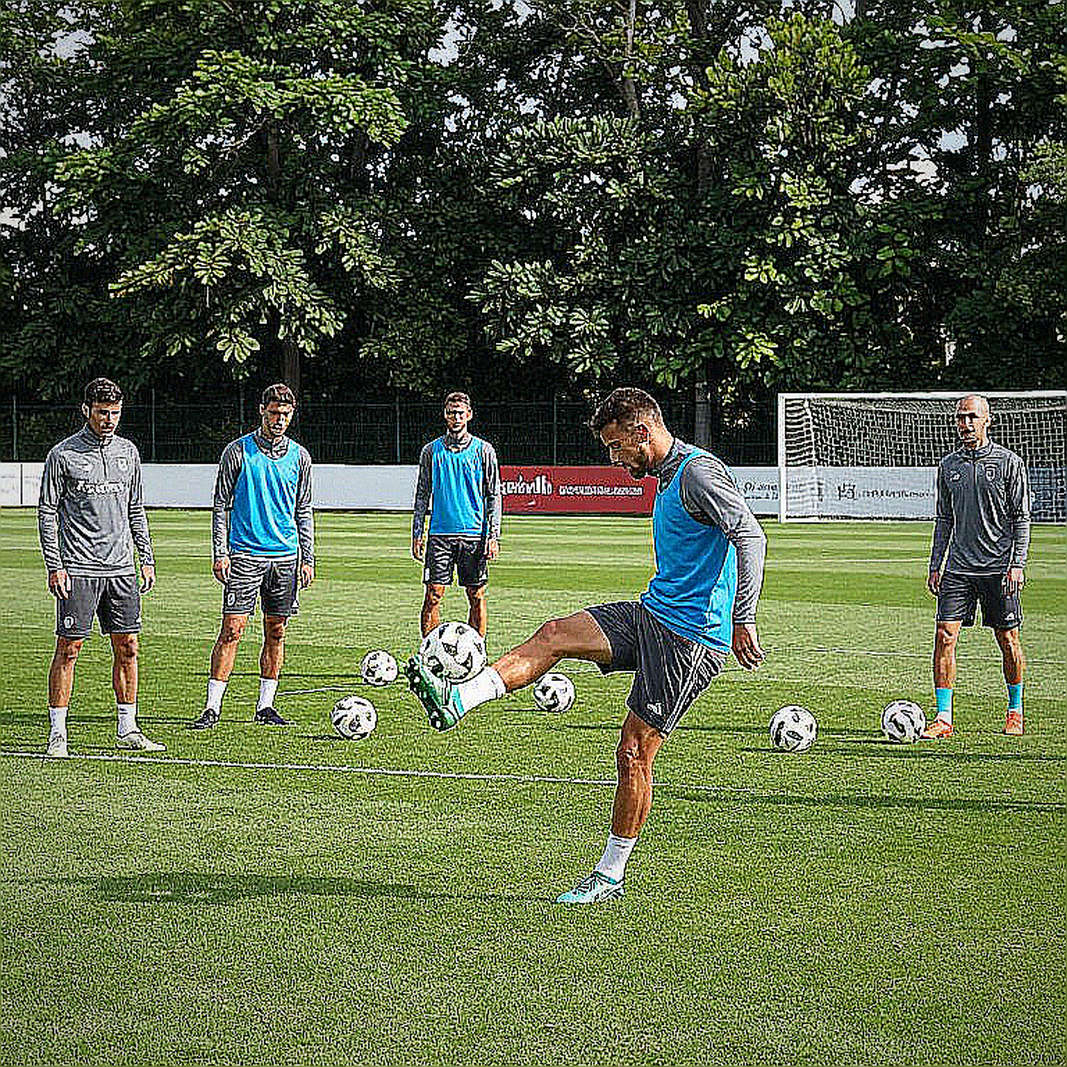
Vietnam's coaching staff focused on 'coordination between lines'. In tactical language, this is usually the hallmark of a defensive block trying to prevent through-balls - the type of pass that pressing teams like Japan use to break down opposition structures. But defending against through-balls requires absolute synchronisation in movement. A defender half a second late, and the gap opens.
When Japan scored twice in the first half, the most likely scenarios are: a transition moment immediately after Vietnam lost the ball, or a set-piece, or a wide overload that pulled the defensive line out of position. There is no specific goal description in the available data, so these remain grounded hypotheses, not definitive conclusions.
More important is the structure of the problem. In the last five meetings with Japan, Vietnam Women scored no goals - meaning no goals came from counter-attacks, from set-pieces, or from any situation. This is an indicator with far more weight than the scoreline of any single match. It shows the gap is not about whether Vietnam defends well or poorly. It is about whether Vietnam can create any threat significant enough to force Japan to defend.
In modern football, an underdog team needs at least one of three elements to make a difference: the ability to transition quickly, the ability to exploit set-pieces, or the ability to hold possession long enough to slow the tempo. Looking at historical data, Vietnam Women's National Team has none of these three elements at a level sufficient to trouble Japan.
Where the problem lies in the chain of links
When analysing a defeat, there is often a tendency to focus on the defence. But looking at the chain of causation, the problem begins further back.
Vietnamese women's football has a modest youth development system. The number of female players registered at youth levels is far lower than for men. Domestic women's clubs are small in scale, have limited fixtures, and the level of competition is insufficient to produce players accustomed to the pressure of top continental matches. When they step onto the ASIAD stage and face Japan, Vietnamese players face not only opponents stronger in physique and technique. They face a team operating within a system optimised over decades.
The difference between a team trained to adapt and a team trained to impose its game cannot be narrowed within one coaching cycle. It requires a system. And that system requires time, money, and a competitive environment strong enough for players to be challenged every week, not every few months when international tournaments come around.
When Japan scored 8 goals past Thailand, they showed not only Japan's strength. They showed that the gap between Asia's leading group and the rest of the continent is widening, not narrowing. Thailand - a team often rated on par with or even slightly above Vietnam in Southeast Asian women's football - conceded 8 goals in a single group-stage match. This is an important data point when assessing Vietnam's position in the region.
The contrarian angle: The campaign's real failure is not the Japan match
This is where public opinion often misunderstands. When Vietnam Women's National Team loses to Japan - whether 0-2, 0-4, or 0-5 - it is not a surprise. It is a result predicted in advance by every historical indicator and every resource analysis. Japan is the host, the reigning champion of the last two ASIAD editions, a team with a fully complete professional system. Vietnam is a team in Asia's second tier, reliant on federation funding and a generation of talented players lacking a top-level competitive environment.
The campaign's real failure at ASIAD 2026 - if there is one - is the 1-2 defeat to Chinese Taipei. That was the match Vietnam was favoured in, expected to take points from, and lost the advantage. That was the match where tactical errors or lapses in concentration can be clearly attributed, not the resource gap.
When public opinion focuses on the Japan match, they are placing pressure on a match whose outcome was shaped in advance. When they overlook the Chinese Taipei match, they miss the opportunity to analyse fixable problems: personnel selection, match approach, ability to manage situations at decisive moments.
This does not mean the Japan match is unimportant. It matters because of goal difference. With Thailand having conceded 8 to Japan, Vietnam's goal difference after the Japan match will be a direct factor in the arithmetic against Thailand itself. Every additional goal conceded to Japan reduces Vietnam's chances of advancing, even if they beat Thailand in the final match.
This is a harsh reality: in a group with one team at a completely different level, the remaining teams are not competing with the strongest team. They compete with each other through the goal difference that the strongest team inflicts on them. The real battle does not take place on the pitch when Vietnam plays Japan. It takes place on the calculation sheet, as coaching staff compare Vietnam's goal difference with Thailand's and Chinese Taipei's.
What is happening in the dressing room
There is no specific information about the leadership structure within the team, the role of senior players, or the psychological atmosphere after the Chinese Taipei defeat. This is a significant gap, because in situations like this, psychological factors are often no less important than tactical ones.
A team that has lost 5 consecutive matches to the same opponent, scoring none and conceding 23, will carry a psychological burden into every re-encounter. This is a form of pressure reinforced through repetition: each defeat makes the next meeting more difficult mentally. Sports psychology research shows that underdog teams tend to reduce their level of aggression and confrontation in the opening minutes when they have lost many times to the same opponent. They play to avoid a heavier defeat, not to create an upset.
The coaching staff tried to prepare tactically. The Iwata session was adjusted to suit weather conditions, with content focused on tactical requirements and a plan for operating the playing style against Japan. This is a sign of serious preparation. But tactical preparation has its limits when the opponent is superior in every aspect.
The question no one outside can answer is: do the players believe in the plan? Do they step onto the pitch believing they can make a difference, or are they just trying to limit damage? The answer lies in how they play in the first 45 minutes. And the 0-2 half-time scoreline shows the damage-limitation plan is struggling.
Goal-difference arithmetic and unavoidable calculations
At tournament level like ASIAD, ranking criteria usually follow the sequence: points, then goal difference, then total goals scored, then head-to-head record. In a four-team group, with Japan almost certain to top it, the second and third slots (if applicable) will be decided by results between Vietnam, Thailand, and Chinese Taipei.
This means the match between Vietnam and Japan is not just a match. It is part of an equation. Every goal Vietnam concedes to Japan increases pressure on the Thailand match. If Vietnam loses 0-2 to Japan and then beats Thailand 1-0, their goal difference will be -1 (assuming a 1-2 loss to Chinese Taipei). If Thailand loses 0-8 to Japan and 0-1 to Vietnam, their goal difference will be dire. But if Thailand beats Chinese Taipei, the equation changes.
In this context, the decision to play cautiously against Japan is mathematically sound, even if it makes the match difficult to watch emotionally. Pushing forward for a goal against Japan would increase the probability of a heavier defeat, and a heavier defeat would directly harm the qualification objective. This is the type of calculation that underdog teams must make in group-stage tournaments: sometimes, accepting fewer goals conceded matters more than trying to score.
But this calculation has a price. It can harm team morale if players feel they are playing to avoid losing rather than playing to win. It can create passive defensive habits, which can affect the next match - the one Vietnam needs to win. And it can erode fan belief, among those who want to see their team fight for something.
What truly matters in the first half
When Japan scored twice in the first half, there was a notable detail: how Vietnamese players reacted after each goal. There is no specific information in the available data, but in previous matches between the two teams, a pattern has emerged: after conceding, Vietnam's defensive line tends to sit deeper, rather than pushing higher to bring the match back to parity. This is the natural reaction of an underdog: when you have been hurt, the instinct is to protect yourself from further hurt.
But in football, this reaction often backfires. When you sit deeper, you concede more space to the opponent. When you concede space, the opponent has more time to organise attacks. And when the opponent has more time, the probability you concede again increases, not decreases.
What should happen - and what the coaching staff likely tried to convey at half-time - is to maintain structure, keep distances between lines, and find ways to extend possession time in safe areas. Even if attacking is impossible, holding the ball in your own half for a few seconds can slow the tempo and give the defensive line time to reorganise. These are small details, but in a match where every conceded goal has value, they can make a difference.
Looking back at head-to-head history: Not a problem of one generation
The streak of 5 consecutive defeats to Japan, scoring none, conceding 23, spans many years and many generations of players. This is an indicator with more significance than any single match. It shows the problem is not with a specific coach, a specific line-up, or a specific tactic. It lies in the structure of Vietnamese women's football when facing teams at the highest level in the continent.
To change this streak requires more than a good tactical plan for one match. It requires a youth development system that produces players capable of playing under high pressure. It requires a domestic league competitive enough for players to be tested weekly. It requires a school sports programme bringing women's football to more girls. It requires investment in sports medicine, nutrition, and sports science. It requires time - perhaps a decade or more.
These are things no single match can resolve. But they are also things a single match can expose. When you see a team unable to cross the halfway line for 45 minutes, you are not just seeing a tactical problem. You are seeing a gap built over many years.
What will decide Vietnam Women's fate
The match against Japan, whatever the result, will not decide Vietnam Women's fate at ASIAD 2026. The match against Thailand is the decisive one. And that match will be shaped by many factors: goal difference after the Japan match, the physical condition of key players, the team's mentality after a predicted defeat, and the coaching staff's ability to shift from a defensive mindset to an attacking one.
This is the greatest challenge: a team that spent 90 minutes enduring will struggle to switch to an attacking mentality within a few days. Football is a game of habits. When you are used to sitting deep, pushing higher becomes more difficult psychologically and tactically. The coaching staff will need to work with players to change their mental state, to believe they can attack, that they can create chances, that they can score.
But there is a positive: Thailand, though a familiar opponent, is not Japan. The gap between Vietnam and Thailand is much smaller. In matches between the two teams in the region, results are often decided by small details: a set-piece, an individual error, a moment of brilliance. Vietnam has a chance. But that chance depends on their ability to recover mentally after the Japan match.
Signals to watch
When the Japan match ends, there are a few things to watch to assess Vietnam Women's true prospects - not at ASIAD 2026, but on the longer road ahead.
First, how young players are used. If the coaching staff gives opportunities to young players in the Japan or Thailand matches, that is a sign of long-term vision. If they rely only on core players, that is a sign of short-term result pressure.
Second, how the team reacts after conceding. A team can lose but still maintain structure, still follow the plan, still show discipline. That is the sign of a well-coached team. A team that disintegrates after conceding is a sign of deeper problems.
Third, the number of goals conceded in the second half. If Vietnam keeps the score at 0-2 or concedes only one more, that is an acceptable result in the context of goal difference. If they concede three or four more, pressure on the Thailand match becomes enormous.
Fourth, the coaching staff's attitude in post-match comments. If they focus on lessons applicable to the Thailand match, that is a sign of professionalism. If they blame the referee, the weather, or luck, that is a sign of irresponsibility.
Final thought: When data fails, the story finds its own power
As I watched the match from the stands, I wondered what would be recorded about this match. In ten years, when someone looks up the ASIAD 2026 results, they will see one line: Vietnam 0-2 Japan (or whatever the final score). They will not see the training sessions in the rain in Iwata. They will not see the hours of video analysis in the meeting room. They will not see the players waking at 5 am to prepare for a match they know is immensely difficult.
In football, results are the only things remembered, but the process is what shapes the future. A 0-2 defeat to Japan should not be remembered as a failure, but as a measurement. It measures the gap between Vietnam and Asia's peak. And it measures progress - or lack thereof - compared to previous meetings.
If Vietnam loses 0-2 to Japan, that is a better result than the 0-4 defeat at AFC Women's Asian Cup 2026. It is a sign of improvement, even if small. If they lose 0-5, that is a step backwards. In football, steps forward and backwards are often not measured by trophies. They are measured by fewer goals conceded, more minutes in possession, more chances created.
The question is not whether Vietnam Women's National Team can beat Japan in the near future. The answer is almost certainly no. The question is whether Vietnamese women's football is building the foundation for a day, a decade from now, when that gap narrows. And answering that question requires looking at things that do not appear on the scoreboard: the number of young players developed each year, the quality of the domestic league, the level of federation investment, and the patience of those in football when results do not come immediately.
My first data notebook was created in 2026, with hundreds of lines documenting every touch of a club. Back then I thought data was everything. But after years of watching football in many countries and many different leagues, I learned that data only has value when it helps us understand the story behind the numbers. And the story of Vietnamese women's football is not the story of one defeat. It is the story of a football nation trying to survive and grow in an environment short on resources but not on aspiration.
The ball is round, but the story is not. And the story of Vietnam Women's National Team at ASIAD 2026 will not end in Nagoya. It will continue in the Thailand match. And after that, it will continue in other matches, other tournaments, other generations of players. What matters is not where we stand in the table today. What matters is where we are heading.
Every empty stadium night is a slow drumbeat. In Nagoya, though the stadium is not empty, for Vietnam Women's National Team, it is a drumbeat that must be recorded - not to remember a defeat, but to measure the road travelled and the road still ahead.