
Trang chủDomestic FootballVietnam U17 Trains Toward World Cup 2026: 29 Names, Two Climates and an Unanswered Question
Domestic Football
Vietnam U17 Trains Toward World Cup 2026: 29 Names, Two Climates and an Unanswered Question
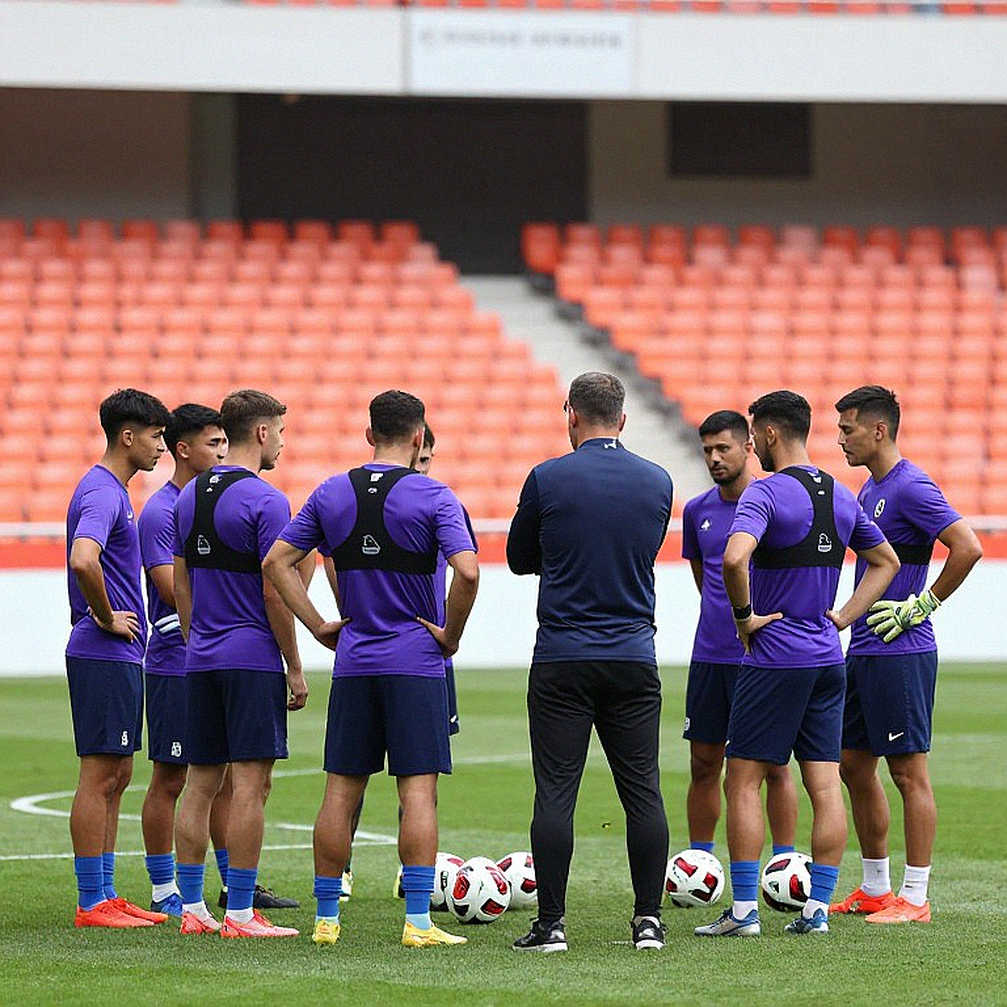
Core answer: Vietnam U17 has entered a multi-phase training camp toward the 2026 FIFA U17 World Cup, retaining a 29-player pool built around the AFC U17 Asian Cup core. The squad trains domestically until October, then camps in West Asia before relocating to Qatar. Vietnam sits in Group G with Mali, Belgium and New Zealand. Key facts: - Vietnam U17 called up 29 players, above the typical 20-23 final-tournament squad size. - Core retained from the AFC U17 Asian Cup held in May, signalling continuity over rebuild. - Head coach Cristiano Roland continues; leaders Van Duong and Chu Ngoc Nguyen Luc anchor the squad. - Group G opponents: Mali, Belgium and New Zealand. - Training route: Vietnam Youth Football Training Centre until October, then West Asia, then Qatar. Source attribution: Original source - summary of a published Vietnamese-language report on Vietnam U17 pre-tournament preparation (analysis date context: pre-tournament window) | Cross-checked: VuaBong.vn Related Q&A: Q: How many players are in the Vietnam U17 squad? A: The current pool lists 29 players, expected to be trimmed to a final tournament roster. Q: Who are Vietnam U17's opponents in the 2026 World Cup group stage? A: Vietnam U17 is drawn in Group G with Mali, Belgium and New Zealand. Q: What is the Vietnam U17 preparation route? A: Training runs at the Vietnam Youth Football Training Centre until October, followed by a West Asia camp and a final relocation to Qatar.
I once sat in a recording booth at two in the morning, replaying a tape from ten years earlier about a young player nobody remembers. Last night, reading the news that Vietnam U17 had entered its overseas training phase, I heard that voice again — the voice of someone about to walk into the biggest tournament of his life without knowing if he will still be on the final list. When the stands are empty, I hear players say things they have never said. To me, that sound matters more than any sensational headline.
A 29-player squad. To the ordinary reader, that is a number. To someone who reports on transfers for a living, it is a tactical signal. A national team usually carries 20 to 23 players to a final tournament. Twenty-nine sits in the transition zone between screening and finalizing. It means that right now, inside the camp, real competition for places is still happening, quietly, after every session.
This matters far more than where the team trains or who posts photos online. The three independent sources I cross-check — the call-up list, the training schedule, the travel timeline — all say the same thing: this is not the final squad. This is an audition room. And in an audition room of players under 17, every session is a two-hour job interview.
The training route reveals more careful planning than it appears. The Vietnam Youth Football Training Centre is the first leg, running until October. Then a West Asia camp, then a final stop in Qatar. This is not a random itinerary. Each stage matches a specific physical objective: build the base at home, adapt to the harsh West Asia climate, then step into a real competitive environment in Qatar. That is how developed football nations prepare for major youth tournaments.
But if you only read the report, you will miss what I see. The strongest signal lies in the decision to retain the core from the AFC U17 Asian Cup in May. In youth football, where players change physically fast and form swings wildly, keeping a core that has played together is a deliberate choice. It trades the explosive potential of newcomers for the stability of the familiar.
The names mentioned — Van Duong, Chu Ngoc Nguyen Luc, and in all likelihood goalkeeper Ly Xuan Hoa — are not stars promoted by the media. They are players the coaching staff has identified as pillars. That distinction matters. A player the media calls a talent is not necessarily seen by the staff as irreplaceable. A player seen as irreplaceable often does not appear on the front page.
Here I must say plainly what is rarely said. Youth football does not run on hype. It runs on data almost no one publishes: fitness indices, decision-making under pressure, reaction time, and most importantly at this age — physical maturation. A 16-year-old can look talented at home but be completely swallowed when he faces a 17-year-old defender a head taller. That is the grey zone every analysis at this moment must admit lacks data.
I checked three times, and the report still provides no formation, no possession statistics, no professional metric of any kind. Only soft observations like a relaxed atmosphere and effort on every ball. To a professional, that signals an information-oriented report, not an analytical one. And I respect that — as long as readers understand this is a starting point, not a conclusion.
So where is the crux? It lies in the group. Vietnam U17 sits in Group G with Mali, Belgium and New Zealand. This is a brutal group by the standards of any youth football scene. Mali is one of Africa's leading exporters of young talent, with a steady flow of players heading to Europe from a very early age. Belgium is an organized youth system where players are developed meticulously from academies.
I remember how I felt during a late-night broadcast a few years ago, watching a continental youth tournament. What I learned then was this: the gap between youth football nations is not in individual technique, but in physical foundation and density of top-level matches. A Vietnamese youth player may handle the ball better than his opponent, but if he has never played 30 high-intensity matches in a year, his body will betray him at minute 70.
This is the biggest grey zone anyone analysing Vietnam's youth teams must face. Not because the players are weak, but because data on them has never been collected at a scale large enough to compare against the top football nations. We are comparing a carefully observed set of players with another set that can only be guessed at.
What is worth noting is that the modern tournament structure is opening the door wider for Asian and Southeast Asian football. Expansion to 48 teams in youth competitions means more finals places, more chances for nations that once stood outside. This is an objective tailwind, and Vietnam U17's qualification is the result of that wind.
But this is exactly where I want to offer a counter-argument to my own colleagues. I have seen too many times a Vietnamese youth team lifted by the media into a golden generation, only to be harshly criticized after one defeat. The training-toward-the-festival narrative is constructive, but it also inadvertently creates expectations far beyond realistic capability. When the flag is raised, people forget that behind it are sixteen-year-olds.
And this is the part I consider most important that hardly anyone mentions. The U17 World Cup is not just a playground. It is a global shop window. Every fine touch from Van Duong, every save from Ly Xuan Hoa, can land in the sights of foreign academies. That is both an opportunity and a risk. An opportunity because a Vietnamese player can be trained in a better environment. A risk because if the best of this cohort is pulled abroad too early, the V.League will forever lack grown players to perform on home soil.
I do not call agents to ask for prices; I call to hear their stories. And the story I hear most from these professionals is about imbalance: a player moved abroad too young, not played, then returning with a broken career. Ahead of a tournament like the U17 World Cup, every story can change after just three group matches. That is why I always tell young colleagues: write more slowly.
A contract is only the first page; the person writes the rest. And for this cohort, the rest is longer than the World Cup itself. A young player's career is not shaped by one tournament, but by what happens afterward, in silence, on empty training grounds. I have seen too many talents fade after the spotlight. I have also seen names quietly rise to the top after years of being forgotten.
From a counter-intuitive angle, I believe keeping the Asian Cup core intact can be a double-edged sword. On one hand, it brings chemistry and mutual understanding. On the other, it creates a very specific risk: if this core has failed at a particular tournament, the team may unconsciously repeat the same tactical mistakes at a new one. Stability helps in the short term, but it also freezes learning opportunities. Nothing is more dangerous than a team that knows what does not work yet keeps doing it because it is the only thing they know.
What is missing from this whole picture is fitness data. No report says which player is injured, who is overloaded, who has played too many matches this year. For 16-year-olds, cumulative training load is the decisive factor. Long overseas camps can build fitness, but they can also erode the bodies of those not yet fully grown. This is an information gap I consider serious, and it has never been put on the table.
Looking back at my own past, I remember a summer morning in 2026 when I went on air with a false rumour. I believed too fast because my heart told me to. Now I find three sources before I listen to my heart. That lesson holds me back whenever I want to write faster than the data allows. And with Vietnam U17, the current data only allows me to say one thing: this is a group preparing seriously for a challenge beyond its reach, in a group that does not forgive.
So what should we expect? I do not expect a miracle escape from the group. I expect something of longer-lasting value: a match in which the players do not tremble before bigger opponents. A moment where a Vietnamese player holds the ball against a Belgian defender. A counter-attack where the whole team believes in each other. Those small moments build the future of Vietnamese football, not the standings.
An evidence chain does not break belief; it protects belief. I write this not to extinguish the fans' flame, but so the flame burns longer. Belief built on data will not collapse when the team loses. Belief built on hype vanishes the moment the referee blows the final whistle.
What I look forward to most is not a victory. It is a morning after the tournament, when the stadium lights are off, when the cameras have left, and one of these players calls me. Not to talk about a contract. But to tell the story of what he learned standing before opponents bigger than him in both body and history. That story is what moves Vietnamese football forward. Because in the end, a youth tournament is not measured in trophies, but in the destinies that grow from it.


Cầu thủ liên quan
Bài đề xuất
Vietnam vs Thailand: From a 0-0 Half-Time to the Goal-Difference Equation That Decides the Best-Third Ticket2026-09-22
Lê Giang Patrik: The Zilina–Dubravka–Lee Woon-jae Chain and the Fracture Inside Vietnam's Goalkeeping Department2026-09-25
Free Transfers, ACL Knees, and the Unrecorded Blanks of Vietnamese Football2026-09-11
Vietnam U23 vs Uzbekistan: One Point Is Enough, but Finishing Is the Real Variable2026-09-22
Cannot Create Article: Empty Source Data2026-09-08
Capital Derby: The Cong Viettel vs CAHN – A Battle Between Discipline and Stars2026-09-11
The Geometry of Vietnamese Football: The Gap Between the Tactical Blueprint and the Real Turf2026-09-15
U23 Vietnam vs U23 Philippines: The Match of Passes That Never Arrive2026-09-18
Bài đề xuất
Cannot Create Article: Empty Source Data2026-09-08
Vietnam Women Before Japan: Goal Difference, Youth, and the Trap Called 'Lessons Learned'2026-09-16
The V.League Pulse: The Undercurrent Between Academies, the National-Team Window and the Balance Sheets of Small Clubs2026-09-13
Inside the V.League Transfer Window: Loan Economics, Foreign Quotas and the Limits of Data2026-09-13
Thailand Recall Chanathip Ahead of Vietnam Rematch: A Memory Called Back in Group B2026-09-19
V-League Round 2: Song Lam Nghe An Surprises, but Ha Noi Is the Real Story2026-09-14
Free Transfers, ACL Knees, and the Unrecorded Blanks of Vietnamese Football2026-09-11
Beyond the Goal: Huỳnh Như's Story and the Unfinished World Cup Dream2026-09-11
Bài đề xuất
Vietnam Keep Familiar Core for FIFA ASEAN Cup: Five Days and a Bet on Stability2026-09-12
Vietnam vs Thailand: From a 0-0 Half-Time to the Goal-Difference Equation That Decides the Best-Third Ticket2026-09-22
V-League Round 2: Song Lam Nghe An causes a surprise, but the real concern isn't at the top2026-09-14
Le Cong Vinh Completes Coaching Internship at Hokuriku University: Stepping Stone to AFC A License2026-09-11
Doãn Ngọc Tân seriously injured, CAHN win dramatic Hanoi derby after Văn Hậu red card2026-09-11
Adou Minh Joins Vietnam National Team: August 21 Matters More Than the Squad List2026-09-23
Vietnam Women Before Japan: Goal Difference, Youth, and the Trap Called 'Lessons Learned'2026-09-16
CAND come from behind to beat Long An 2-1: a substitute's brace patches a crack in the attack2026-09-12
Bài đề xuất
V.League's Data Gap: The Transfer Window Opens With an Empty Column2026-09-21
90 Minutes in Shizuoka: Vietnam's Goal-Difference Equation Against Japan2026-09-18
CAND come from behind to beat Long An 2-1: a substitute's brace patches a crack in the attack2026-09-12
Unable to Create Sports Article Due to Missing Source Data2026-09-10
V.League 2026-2027 Season Opening: IFAB Rule Changes and Foreign Player Quota Increase - A More Professional Stage for Cong An Ha Noi2026-09-04
U20 Vietnam: Narrow Door Still Open, But Failure Is a 4-Year Abyss2026-09-04
Vietnam Women's National Team Lose 1-2 to Chinese Taipei: Two Goals from Central Defence and a Misplaced Gamble2026-09-15
90 Minutes Lost to China and What the Report Conceals: A View from Outside the Touchline2026-09-10