
U23 Vietnam vs U23 Philippines: The Striker Problem and a Place in the Knockout Round
**Câu trả lời cốt lõi**: U23 Việt Nam gặp U23 Philippines lúc 13 giờ 30 tại vòng bảng bóng đá nam Asiad 20. Việt Nam buộc phải thắng sau trận hòa 1-1 với U23 Kuwait, trận đấu mà đội tạo ra 27 cú sút nhưng chỉ ghi được một bàn. **Dữ kiện chính**: - Việt Nam dứt điểm 27 lần, 6 lần trúng đích, 4 lần chạm cột hoặc xà, ghi 1 bàn trước U23 Kuwait. - Tỉ lệ chuyển hóa của U23 Việt Nam khoảng 3,7% mỗi cú sút; tỉ lệ đi trúng đích khoảng 22%. - Nguyễn Ngọc Mỹ là tiền đạo cắm đích thực duy nhất trong đội hình U23 Việt Nam. - Thanh Nhàn, Quốc Việt và Nguyễn Lê Phát thường đá lùi sâu, không gánh trách nhiệm ghi bàn ở cấp câu lạc bộ. - Huấn luyện viên Đinh Hồng Vinh tăng cường tập dứt điểm và khai thác khả năng xoay trở chậm của U23 Philippines. **Nguồn**: Dân Trí — bài bình luận trước trận U23 Việt Nam gặp U23 Philippines, vòng bảng môn bóng đá nam Asiad 20 tại Aichi-Nagoya, Nhật Bản. **Hỏi đáp liên quan**: Q: U23 Việt Nam cần kết quả gì trước U23 Philippines? A: Một chiến thắng để tự quyết suất đi tiếp ở vòng bảng Asiad 20. Q: Vì sao U23 Việt Nam dứt điểm nhiều nhưng ghi ít bàn? A: Đội thiếu tiền đạo cắm thực thụ, khi ba trong bốn tiền đạo là mẫu lùi sâu không quen gánh trách nhiệm ghi bàn. Q: Ai là trung phong chính của U23 Việt Nam? A: Nguyễn Ngọc Mỹ, tiền đạo cắm đích thực duy nhất theo phân tích nhân sự.
Of the four times the ball found the frame, there was one when I heard the whole stand exhale. The ball struck the post, bounced out, and the stadium seemed to hold its breath for a beat. U23 Vietnam against U23 Kuwait: 27 shots, six on target, four strikes against post or crossbar, and exactly one goal. The 1-1 scoreline stayed on the board. The gap between the volume of chances and the number of times the net moved stayed in the mind of everyone watching. I rewound that footage a few times overnight, and what lingered was not the misses themselves but the posture of the men who missed — the foot slightly open, the eyes down, the shoulders drawn in. Those postures told a different story from the story of bad luck.
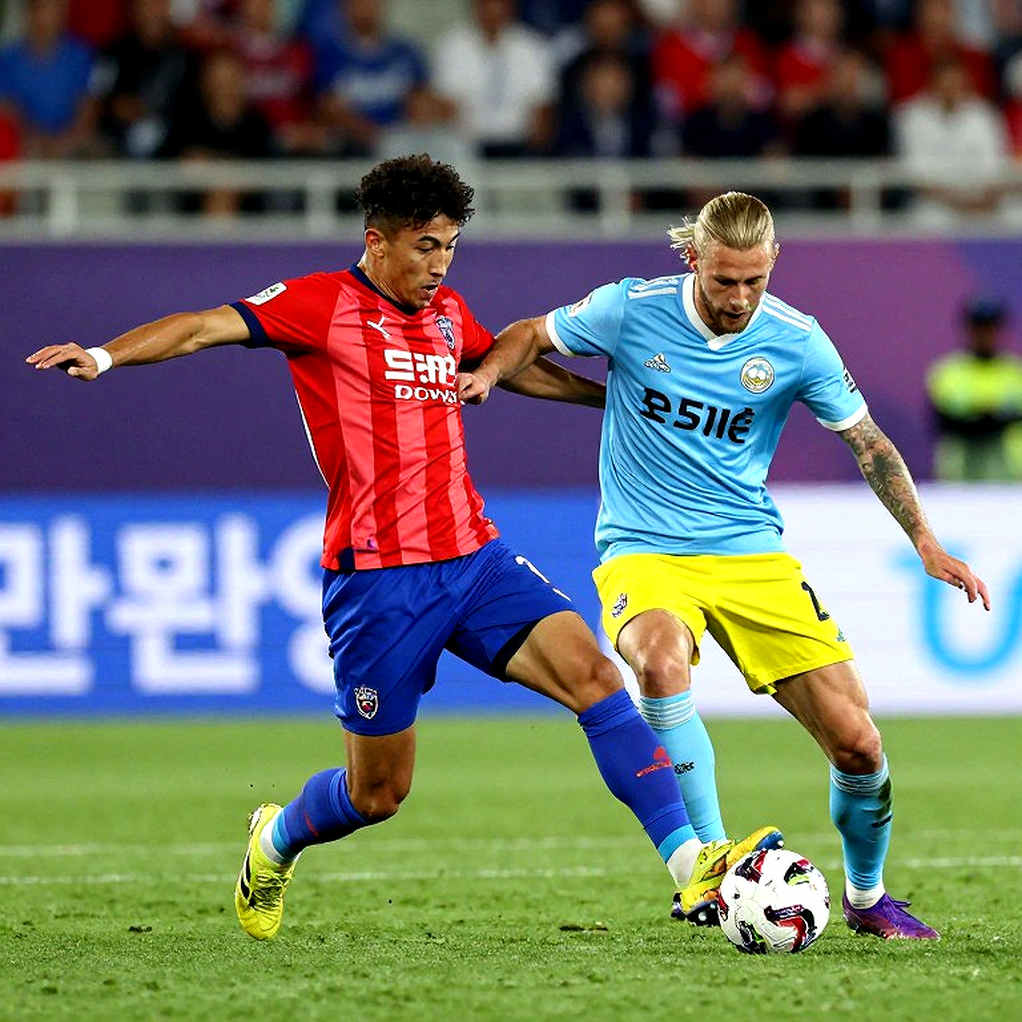
At 13:30 today, coach Dinh Hong Vinh's side walk out for their second group-stage match in the men's football tournament at Asiad 20 in Japan, against U23 Philippines. A single point from the opener turns this fixture into an early final: win and control your own fate, fail to win and depend on others. Data compiled by Dan Tri shows Vietnam dominated territory against U23 Kuwait and out-shot them comfortably, yet only six of 27 attempts found the target and only one became a goal.
Isolate one moment and the result reads like an accident. Place 27 attempts side by side and it reads like a condition.
Today's opponent is rated lower by the source article itself — on coaching infrastructure, on international experience, on resources. Philippine football operates inside a sporting economy where basketball holds the commercial and audience centre; the time and attention available to football are correspondingly narrower than in Vietnam. At regional level, that gap is real. But the gap does not sit in the exact place where U23 Vietnam need it to sit.
The problem for U23 Vietnam is not the ability to create chances. It is the personnel structure of the finishing phase.
Start with the data. Twenty-seven shots in 90 minutes is the tempo of a side imposing itself; passive teams do not generate that volume. Four strikes against post and crossbar point to attempts from narrow angles and under pressure, where centimetres decide everything. Six on target out of 27 means roughly 78 per cent of attempts never forced the opposing goalkeeper to work. One goal is the logical consequence of that picture, not a paradox.
Based on my experience tracking matches, a team that shoots heavily without scoring is usually explained in one of two ways: the opposing goalkeeper was extraordinary, or the attack lacks decisive quality. The Kuwait match leans toward the second. The Kuwait goalkeeper played well, but produced no save of a supernatural order. The interesting detail lies in the positions of the men taking the shots.
In the U23 Vietnam squad, Nguyen Ngoc My is the only genuine centre-forward. The other three attacking names — Thanh Nhan, Quoc Viet and Nguyen Le Phat — are all withdrawn forwards or second strikers. At club level they do not carry the scoring burden. They dribble, they create, they drift into the space between opposition defenders and midfielders. They do not live on decisive touches inside the box, and that is not their fault — it is the role they were trained to play.
Wearing the national shirt, they are placed in a part they have never rehearsed. That instinct is not built in a single session. It is built across hundreds of real situations, against real defenders, under real pressure, repeated over many seasons.
There is a deeper cause, and it sits beyond the control of any national-team coach. In the V.League, domestic forwards rarely start. The centre-forward slot usually goes to a foreign import — someone who delivers goals at lower risk and lower development cost than a young domestic player. That is ordinary labour-market logic: clubs buy what already exists rather than patiently growing what has not yet matured.
The cost of that choice appears on no club balance sheet. It is externalised onto the national youth system as a structural centre-forward deficit. The football economy keeps producing creators, second strikers and good dribbling wingers. It does not reliably produce people who live on goals.
This explains a detail the data cannot articulate: how a well-coached team can take 27 shots and score once. Individual technique is at a good level. Positioning instinct inside the box is not.
The plan for the Philippines match, according to coach Dinh Hong Vinh, centres on intensified finishing work, speed dribbling and small-group combinations to exploit the opponent's weakness — slow rotation in tight spaces. Logically, that is a sound plan. The Philippines will most likely sit deep, compress and concede territory; Vietnam will therefore still hold a large volume of chances.
Breaking a deep block with small-group combinations creates more chances, but it does not automatically create more goals. Vietnam's problem is not how to reach the final third. It is conversion once there. A deep defensive line reduces the number of clean looks, raises the demand on the first touch, and turns every situation into a test of instinct.
There is a further risk the opener's data has not yet exposed. Vietnam depend on a single point through the middle: Ngoc My. If he is tightly marked or suffers a physical problem, the team has no genuine back-up centre-forward. In that case, set pieces become a more important scoring route than usual, and a header from a corner could decide the match.
This leads to a conclusion that runs against intuition: an early, ugly goal is worth more than twenty minutes of dominance. An early goal forces the opponent to open up, space appears, and the finishing problem becomes lighter. The longer a goalless pattern stretches, the greater the pressure on each attempt — and that pressure is precisely what spoils touches that were never properly rehearsed.
A single point from the opener puts U23 Vietnam in a state youth football rarely allows: no margin left to be wrong. Regionally, Vietnam sit at the top of Southeast Asia but still below the continental elite — Japan, South Korea, Saudi Arabia, Uzbekistan. From that position, every point against a regional peer carries strategic value for seeding and for the path through later rounds, not merely for one qualification slot.
Public pressure, meanwhile, concentrates on the most visible area: the attack. Names like Thanh Nhan, Quoc Viet and Le Phat face being labelled after a match in which they were not deployed in their natural roles. That kind of pressure can erode confidence faster than any defence.
The source article contains an unresolved contradiction. It argues Vietnamese players are better trained than the Philippines, while acknowledging the team's sole problem is finishing. Those two propositions do not sit easily together.
Being well trained and getting competitive minutes are two different things, and in Vietnamese football they are frequently conflated. A player can be technically well coached from the age of twelve, physically sound and tactically competent — and still lack a goalscorer's instinct, simply because he has never been handed the job of scoring in a genuinely competitive match.
That gap cannot be filled by one finishing drill before the Philippines fixture. It requires a multi-year cycle, and it requires decisions at club level — where the starting centre-forward shirt is being handed to people from somewhere else.
The second contradiction is how the article frames expectation. Saying the match should not be too difficult rests on the opponent's weakness, not on Vietnam's own reliability. Expectations built on that foundation collapse easily. If U23 Philippines play exactly as predicted — deep, numerous, disruptive — then Vietnam's only weakness becomes the only weakness being tested.
And the third contradiction, the deepest: if the cause is structural, no coach resolves it inside a tournament. Dinh Hong Vinh can pick the right players, set the right shape, transmit the right spirit — and still accept that what he lacks lies outside his authority. That is the limit of youth national-team coaching in a football economy whose system is not yet producing enough finishers.
The pitch is a page, and every season is a long stanza. But some stanzas can only be written with goals, and no metaphor substitutes for them. Glory falls in the end; only the poems about it remain standing — yet for such a poem to exist, someone must stand in the right place, at the right rhythm, and put the ball in the net. Nobody remembers the scoreline; people remember the moment their own heart stopped.
When the twenty-seventh chance arrives, who steps into it with a striker's instinct? U23 Vietnam will almost certainly control the match. What is not certain is who will finish it — and if that answer is still missing, it is a question this football nation must resolve over years, not over a single afternoon.