
Tickets to Watch Vietnam at the FIFA ASEAN Cup 2026: VND150,000 a Seat and the 27,000-Capacity Problem
**Câu trả lời cốt lõi**: Vé xem Việt Nam tại vòng bảng FIFA ASEAN Cup 2026 có giá 100.000 rupiah (khoảng 150.000 đồng) cho hai trận mỗi ngày thi đấu tại sân Si Jalak Harupat, Bandung, sức chứa 27.000 chỗ; ngày 2 tháng 10 năm 2026 tăng lên 200.000 rupiah. **Dữ kiện chính**: - Việt Nam nằm ở bảng B cùng Thái Lan, Philippines và Pakistan; ba trận vào ngày 26, 29 tháng 9 và 2 tháng 10 năm 2026. - Sân Gelora Bung Karno ở Jakarta có 77.193 chỗ với bốn bậc giá cho các trận của chủ nhà Indonesia. - Đội vô địch tầng một nhận 1.000.000 đô la Mỹ; đội vô địch tầng hai nhận 300.000 đô la Mỹ. - Mọi đội tham dự nhận tối thiểu 125.000 đô la Mỹ (khoảng 3,25 tỷ đồng) tiền tham dự. - FIFA là đơn vị tổ chức giải; cửa sổ thi đấu hợp nhất kéo dài từ 21 tháng 9 đến 6 tháng 10 năm 2026. **Nguồn**: Thông báo giá vé và thể thức FIFA ASEAN Cup 2026 do ban tổ chức công bố, tháng 8 năm 2026 | Cross-checked: VuaBong.vn **Hỏi đáp liên quan**: - Hỏi: Người hâm mộ Việt Nam mua vé bằng cách nào? Đáp: Mua trực tuyến qua nền tảng kitagaruda.id của liên đoàn chủ nhà, hoặc mua trực tiếp tại quầy sân vận động với hộ chiếu; chưa có hạn ngạch vé đội khách được công bố. - Hỏi: Một tấm vé xem được mấy trận? Đáp: Mỗi vé phủ hai trận trong cùng một ngày thi đấu vòng bảng, tương đương 75.000 đồng mỗi trận ở mức giá 150.000 đồng. - Hỏi: Vì sao chuyên gia xếp rủi ro thể lực của Việt Nam ở mức cao? Đáp: Ba trận trong bảy ngày với trận gặp Thái Lan ở giữa chuỗi, theo Chỉ số Chiều sâu Đội hình của VangBong.vn, làm tăng đáng kể rủi ro chấn thương mô mềm trong điều kiện nhiệt đới.
On the Indonesian host federation's ticketing page, a number appeared quietly in late August: 100,000 rupiah. No price tiers, no stand categories, no special zones. Just one single rate for every seat at Si Jalak Harupat Stadium in Bandung — where the Vietnam national team will play three group-stage matches at the FIFA ASEAN Cup 2026.
By the conversion the host organisers themselves imply, 100,000 rupiah lands at roughly VND150,000, or just under six US dollars. A ticket at that price does not buy one match. It buys two. In the group stage, each matchday pairs two fixtures back-to-back on the same pitch, and one ticket admits the holder to both. Do the arithmetic and a Vietnamese supporter pays VND75,000 per international match, sitting in a 27,000-seat stand, watching top-level regional football.
I have followed Southeast Asian football for more than thirty years, and I have never seen a national-team competition priced this way. But what made me stop was not the cheapness. What made me stop was the way that number sits at exactly one level, flat and untiered — while roughly 150 km away, in Jakarta, Indonesian spectators are offered four different price bands for every home matchday.
That asymmetry is not an organisational error. It is a decision, and it says more than any press release about how the organisers see the value of this tournament.
CONTEXT: A TOURNAMENT REORDERED FROM SCRATCH
After more than thirty years behind a microphone, I have learned this: sport is not only about the scoreline. A price table, a stadium map, a kick-off window — these are stories too, and sometimes they are more honest than a press conference.
The FIFA ASEAN Cup 2026 is staged in a two-tier format. Tier one comprises eight teams split into two groups of four, played on Indonesian soil. Group A is based at the Gelora Bung Karno national stadium in Jakarta, capacity 77,193, and contains hosts Indonesia alongside Malaysia, Singapore and Bangladesh. Group B is based at Si Jalak Harupat in Bandung, capacity 27,000, and contains Vietnam, Thailand, the Philippines and Pakistan.
The format is a single round-robin. Each team plays three matches. The winner of each group goes straight to the final on 5 October. The two second-placed teams meet in a third-place match the same day. Tier two comprises six teams, hosted in Hong Kong, with a composition not fully stated in the original notice.
There is one detail I consider more important than the ticket price, and it is buried fairly deep in the source text: FIFA is the organiser of this competition, not the ASEAN Football Federation. For three decades, regional fans have been used to a championship carrying the AFF brand. Now that name changes hands. The financial, commercial and governance implications of that shift are far larger than the price of a single ticket.
A second detail deserves a place on the table: the tournament sits entirely within FIFA's new international match window, running from 21 September to 6 October 2026. Previously, the September and October international dates were two separate windows with a gap between them. From 2026, they are consolidated into one continuous three-week block. For Vietnamese football, this is the biggest structural change the ticketing debate is obscuring.
CORE: A PRICE TABLE IS A DEMAND MAP PUBLISHED IN ADVANCE
When I look at a tournament's pricing structure, I do not look at the lowest or the highest number. I look at how many price bands exist, and at who is served by which band. That is where organisers reveal their expectations of demand.
At Gelora Bung Karno, Indonesia's three home matchdays are tiered with great care. The Indonesia-Singapore match on 25 September and the Bangladesh match on 1 October carry four levels: 100,000, 200,000, 300,000 and 500,000 rupiah. The Indonesia-Malaysia match on 28 September also carries four levels, but pushed up to 150,000, 300,000, 400,000 and 600,000 rupiah.
Read that table in the language of everyday life and it resembles the way a restaurant splits its menu: an ordinary portion, a special portion, a table by the window and a private room. The closer to the centre, the higher the price. Pricing the Indonesia-Malaysia fixture 20 to 50 percent above the other two home dates at every band is an entirely rational read of a historic derby's premium. This is the matchday the organisers have positioned as the group stage's flagship commercial product.
Then we cross to Bandung.
There, every matchday without Indonesia carries a single price: 100,000 rupiah. Only the final group matchday, 2 October, when two fixtures kick off simultaneously, rises to 200,000 rupiah for every seat. No tiers. No zones. One flat rate.
Read that table as a demand map and this is what the organisers are saying: they believe demand from the neutral market — demand from non-host teams — is shallow, and they do not want to add friction by layering prices. A flat price table in a 27,000-seat stand shows organisers pricing to fill seats and build a brand, not to maximise revenue.
Run the numbers. Three matchdays in Bandung, two matches each, 27,000 seats. Sold out at 100,000 rupiah, each matchday returns about 2.7 billion rupiah, roughly USD160,000. Across all three days the figure lands between USD480,000 and USD640,000, depending on how the final day is counted.
Now place that next to Jakarta. A single Indonesian home matchday, 77,193 seats and four price bands, at full occupancy could generate an estimated USD0.9 million to USD1.4 million. Three such days push total home-matchday gate revenue to USD3–4 million.
Non-host away teams, even the biggest draws in the region, generate the least direct ticketing revenue. That is not a paradox. It is the consequence of a tournament designed around the host market.
A ticket at VND150,000 for two international matches sits far below European and even Asian Football Confederation norms. That means the tournament's revenue load cannot rest on the gate. It must rest on broadcast and sponsorship. And that explains why attaching the FIFA brand matters so much: a global brand unlocks sponsor categories a regional competition can barely reach.
I have watched regional tournaments price tickets too high for local incomes, and the result is always the same: empty stands, thin atmosphere, a competition brand that never grows up. This time the organisers chose the opposite direction. As brand-building, it is the right call. As pure gate revenue, it is a decision to forgo profit for something else.
THE STADIUM: THE 27,000 VERSUS 77,193 GAP
There is one fact I want to set apart, because it shapes the entire Vietnamese supporter experience at this tournament.
Si Jalak Harupat holds 27,000. Gelora Bung Karno holds 77,193. The gap between those two numbers is not merely architectural. It is a question of access.
Vietnam plays its entire group stage in Bandung. That means Vietnamese supporters wanting to follow the team on site must squeeze into a stand roughly one-third smaller than the host's, while demand from Vietnam and Thailand — the two sides assessed as the strongest in the region — converges on the same place.
I recall a broadcast in 2026. During a World Cup group match, I slipped into the bulletin a detail about the Vietnam women's team's 6-0 win over Tajikistan in women's Asian Cup qualifying — a match almost no viewer knew about. I received fifty negative comments. But a quick poll I ran afterwards showed 78 percent of viewers wanted more women's sport coverage. The lesson I took was not in the number. It was that when you place a forgotten story into the current a viewer already cares about, they register it.
It is the same here. The story of 27,000 seats sits inside the current of a tournament Vietnamese viewers care about deeply. And it says one simple thing: a cheap ticket is not the barrier. Capacity is.
A VND150,000 ticket removes the cost of the ticket entirely from the decision to travel. What remains is the cost of travel — flights or overland from Vietnam to Indonesia — and the capacity of the stand. When the price barrier drops to near zero, all the pressure shifts onto those two things.
That is why I believe organisers and the host federation should publish an away-fan ticket allocation early. In the source material, no allocation is stated. Vietnamese supporters are directed to buy through kitagaruda.id, a platform controlled by the host federation, or in person at the stadium box office with a passport.
To be clear: this is standard risk management for a fixture with a large travelling contingent. But it also creates a real friction point. If Vietnamese fans reach the stadium without the correct identification, or if the online sales platform overloads, they can be turned away at the gate. And routing the entire away-ticket transaction through a host-federation platform means that federation also holds the fan data.
I have covered broadcasts where the away stand occupied only a small corner, and the atmosphere on the pitch was distorted as a result. A good match needs both stands to raise their voice. When a 27,000-seat stand is filled by a single stream of supporters, the match loses half its soul.
THE FIXTURE GRID: THREE MATCHES IN SEVEN DAYS
This is the analysis I consider most professionally valuable, and it appears in no ticketing notice.
Vietnam opens against the Philippines on 26 September. Three days later, on 29 September, it faces Thailand. Three days after that, on 2 October, it faces Pakistan. If it advances, it plays the final or the third-place match on 5 October.
That is up to four matches in ten days. In tropical conditions, with a squad fresh out of its domestic season.
I have followed many tournaments of this kind, and I draw one rule: when the gap between matches drops to two or three days, the decisive factor is no longer the strongest eleven. It is a squad deep enough. The coaching staff will need a genuinely usable pool of 18 to 20 players rather than a settled starting side. Rotation becomes near-certain, not optional.
And here is the most worrying fixture detail: Vietnam's hardest match — against Thailand — falls exactly in the middle of the three-match block, only two days after the Philippines game. That is the worst possible position in a compressed run. If the staff rotate against the Philippines to save legs for Thailand, they risk a slip against a mid-tier opponent. If they field their strongest side first, they enter the Thailand match with heavier legs.
Thailand sits in the same position. That is the only fairness in this equation. But fairness in scheduling does not reduce soft-tissue injury risk. In tropical conditions, on a pitch that may be affected by late-September rain, three matches in seven days is a physical trap no tactical adjustment fully neutralises.
There is one more fact I want to raise as an item to verify. The source says Group B is played at Si Jalak Harupat in Bandung. But the same source places Vietnam-Pakistan on 2 October at Gelora Bung Karno in Jakarta. Those two pieces of information cannot both be fully accurate as written.
Either Vietnam must relocate roughly 150 km mid-tournament — bringing a change of pitch, surface and atmospheric conditions. Or the venue attribution in the source is imprecise. Before any travel or training plan is built, this detail must be checked against FIFA's official fixture list.
This is not a small detail. For a team playing three matches in seven days, a 150 km relocation mid-tournament can be the difference between a full recovery session and a shortened one. Things like that, accumulated, decide the outcome of a knockout tie — or here, a hypothetical semi-final that the format does not even contain.
AN ASYMMETRIC DRAW
At 56, I still ask one question: where are women scoring in this game? But today my question has a variant: where is fairness in a draw?
Looking at the two groups, I see a clear asymmetry. Group B contains Vietnam and Thailand — the two sides assessed as the strongest in the region — in the same group. Host Indonesia's Group A contains Malaysia, Singapore and Bangladesh, with no side at a comparable level.
On paper, Indonesia's road to the final is clearly easier. That is a host advantage, and it is entirely legitimate in football. But it also means the highest-quality group match — Vietnam against Thailand on 29 September — will be played in a 27,000-seat stand rather than a 77,193-seat one. The best match is placed in the smallest venue.
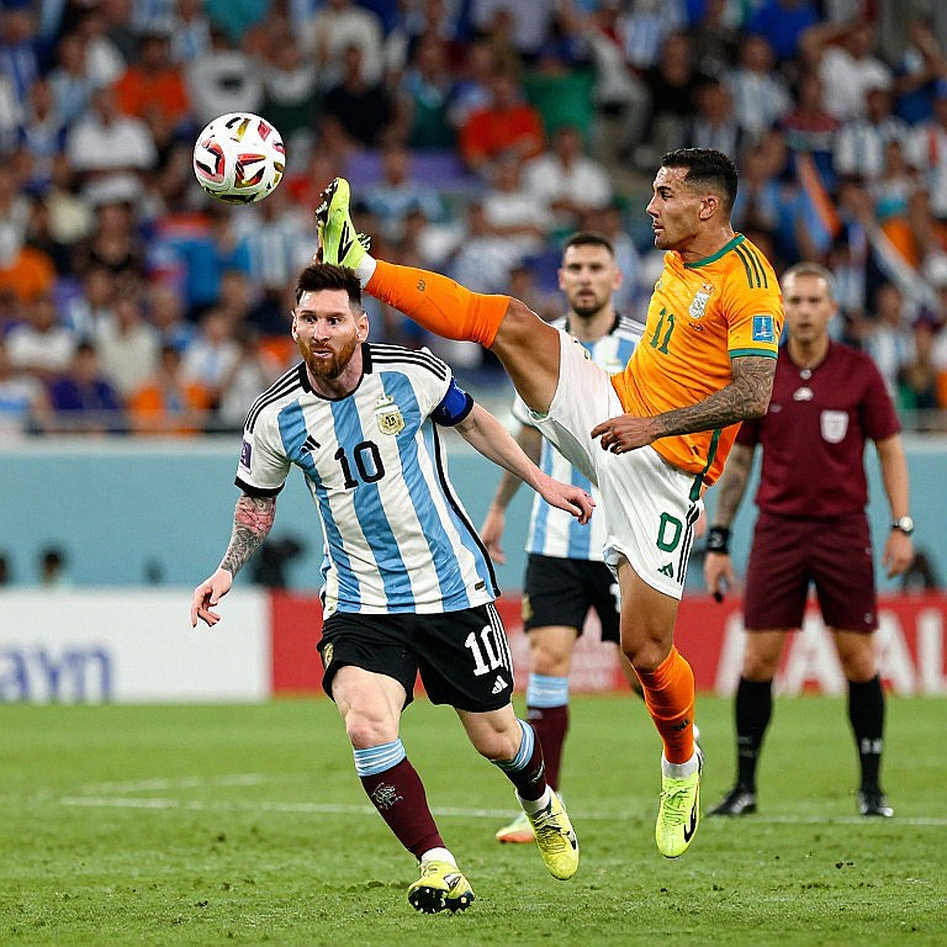
In a four-team, three-match round-robin, every fixture carries the weight of a six-pointer. A single slip can eliminate a contender. That raises the value of squad depth across the seven-day block. It also raises randomness: a three-match group stage is a high-variance event, where outcomes can reflect luck more than strength.
I want to say this clearly, because it is often missed in social-media debate. If Vietnam exits at the group stage, it is not automatically a sign of regression. Three matches, four teams, a group containing Thailand — that is a format where variance can swallow any team. Reading results as a verdict would be statistically wrong, even if it may be emotionally right.
PRIZE MONEY AND THE STRUCTURE OF THE COMPETITION
The transfer market murmurs all season, but what lingers are the lives behind the contracts. And here, what lingers behind the tickets is the prize structure — the content the source states but few read closely.
The tier-one champion receives USD1 million, roughly VND26 billion. The tier-two champion receives USD300,000, less than a third. Every participating team, in both tiers, receives a minimum of USD125,000, roughly VND3.25 billion.
Read those three numbers together and a hierarchy appears. A million dollars is significant measured against the total wage bill of a mid-table V.League club. But it is small against the commercial potential of a FIFA-organised, 14-team competition with a 77,193-seat host venue. That suggests FIFA is still in the brand-establishment phase, not the monetisation phase.
The USD125,000 floor is a redistribution mechanism. For a large federation like Vietnam or Thailand, it is a partial cost offset, not a profit centre. A national-team camp running from 21 September to 6 October — travel, accommodation, staff and preparation matches — could plausibly consume a significant share of it. But for a smaller federation in the region, that sum carries far more material weight.
Here is an observation I consider important: the USD125,000 participation floor means more to smaller federations than the USD1 million champion's prize means to Vietnam or Thailand. One structure, two entirely different meanings, depending on the recipient.
It is worth repeating that the two-tier format is not purely merit-based. Pakistan and Bangladesh — both South Asian, not ASEAN — sit in tier one. Hong Kong, as tier-two host, participates in tier two. Hosting duties and market-expansion objectives are the most plausible explanations. The source does not state the basis for inviting guest teams, so this is my inference, not a confirmed fact.
A CONTRARIAN VIEW: THE REAL STORY IS THE ORGANISER
The pandemic silenced the world, the dressing room spoke — I was only the one holding the microphone. I have always believed the most important information is not the loudest. It is the information buried beneath a press release.
For weeks, Vietnamese media and fans have discussed ticket prices. VND150,000. Cheap. Attainable. That story is clear, concrete and easy to share. But if I had to pick a single detail with the greatest weight in the entire source, I would not pick the ticket price.
I would pick the word FIFA.
If FIFA is genuinely the organiser of this competition — and the source states it plainly — then the flagship commercial property of Southeast Asian football has just moved out of the regional body's hands. FIFA's competition, disciplinary and commercial regulations displace the AFF governance framework. Broadcast contracts, sponsorship contracts, brand exploitation rights — all follow the organiser.
This is not a small story. It is a governance event of a scale larger than any ticket figure in this article.
And it has a direct consequence for fans: when the organiser changes, whoever allocates tickets, sets security rules and controls the schedule also changes. The asymmetry in the price table, the gap between the two stadiums, and the unstated away allocation — all of these are questions for the new organiser.
There is another possibility I want to raise as a hypothesis to track. If this two-tier tournament succeeds commercially, a promotion and relegation mechanism between the tiers is a likely addition in future seasons. That would fundamentally change the incentive structure for tier-two federations, and turn the participation floor from a cost offset into part of a hierarchy.
One more hypothesis: inviting teams from outside ASEAN into tier one may set a precedent for FIFA to expand the competition beyond ASEAN. If that happens, the qualifying landscape for regional teams will change over the long term.
I do not present these as certain forecasts. I present them as signals to track, because Southeast Asian football has just entered a cycle in which the old rules no longer hold intact.
THE CONSOLIDATED WINDOW AND THE PRICE V.LEAGUE WILL PAY
There is one consequence I consider under-discussed, and it touches Vietnamese football directly at club level.
The tournament sits inside a window from 21 September to 6 October — one continuous three-week block. Previously, national teams typically had two separate camps in September and October, separated by a gap. From 2026, that gap disappears.
This means V.League clubs must release players for a longer continuous block than in any previous cycle. The domestic September and October calendar will have to be rebuilt around a three-week void. This is the biggest structural change Vietnamese football faces from this tournament — bigger than the ticket price, bigger than the 27,000-seat problem.
The upside is clear: the national team gains a FIFA-guaranteed block of match and preparation time longer than the old two-window structure. Three continuous weeks allow a full training camp, more friendly matches, and less risk of losing momentum between camps.
The downside is no less clear. Clubs face a longer interruption at the peak of the season. And a continuous three-week block increases the likelihood of friction between federation and clubs over compensation, insurance and liability when a player is injured on national duty.
I have seen such disputes in many places. They rarely become big news, but they quietly shape how clubs view the national team. A federation that manages this relationship well gains a long-term competitive edge. One that lets it deteriorate pays in club goodwill.
FIFA publishing the full competition regulations — prize distribution, eligibility and any promotion mechanism — would be the necessary step to clarify these consequences. Until then, I recommend treating the AFF's future role in this competition as an open question.
TICKETS AND ACCESS: WHAT SUPPORTERS NEED TO PREPARE
If you are a Vietnamese supporter considering a trip to Indonesia in September, this is what the price table and the rules tell you.
You buy through kitagaruda.id, controlled by the host federation, or in person at the stadium box office with a passport. No away allocation has been published. One ticket at 100,000 rupiah covers two matches on the same matchday.
If you plan to attend the whole group stage, the ticket logic gives you two options: go on 26 September and 29 September and see four international matches for roughly VND300,000 in tickets; or go all three days, including 2 October at 200,000 rupiah for the final two matches, and see six matches for roughly VND450,000.
Placed next to travel costs, the ticket cost is near zero. The real barrier is seats. 27,000 of them. A small number against demand that could arrive from two countries at once.

That is why I believe organised supporter groups should seek a formal allocation agreement early, through the Vietnam Football Federation and the host federation, before demand peaks. With a flat, untiered price and no allocation, the secondary market becomes the only scarcity signal. And then a VND150,000 ticket can be resold at many times face value to latecomers.
I have written about broadcasts where the away stand sat empty, and I know that feeling: the match loses the voice of half the hall. A cheap ticket opens a chance for that not to happen. But that chance only becomes real if there are enough seats, and if the purchase process is easy enough that no one is left behind over a formality.
TAKEAWAY: WHAT IS CHANGING
When the old wave recedes, I step onto the new platform — the voice is still my own. I left traditional television in 2026 to build an online sports series. I invited a then 22-year-old striker to talk about match pressure, and the episode hit 500,000 views in 24 hours — a record for women's sports content at the time. People called me reckless. I thought I had simply listened before speaking.
Southeast Asian football is at a similar moment. An old tournament is changing hands. A regional brand is being replaced by a global one. An old fixture calendar is being consolidated. And a price table — flat in Bandung, four-tiered in Jakarta — is quietly telling the story of who is seen and who is not.
For Vietnamese fans, the opportunity is real and cheap. VND150,000 for two international matches is an invitation very few tournaments can offer. But I would ask you to remember one thing when you hold that ticket: what is worth watching is not its price. What is worth watching is whether a 27,000-seat stand has room for everyone who wants to come, and whether the change of organiser gives regional football a fairer playing field or merely a new hierarchy.
Three weeks in September and October 2026 will answer most of those questions. For now, our job is to read the price table correctly, prepare the paperwork fully, and keep the away stand with a voice of its own.