
Vietnam beat the Philippines: Three debutants and the 65-minute void after the opener
**Câu trả lời cốt lõi:** Việt Nam thắng Philippines 1-0 ở trận mở màn nhờ bàn phút 25 của Đinh Bắc, nhưng nhường thế trận trong 65 phút sau đó; ba cầu thủ ra mắt đội tuyển là Adou Minh, Khoa Ngo và Williams Minh Hoang mang lại phương án mới cho Kim Sang Sik khi Xuân Son chấn thương rời giải. **Dữ kiện chính:** - Đinh Bắc ghi bàn phút 25, nâng chuỗi bất bại của Việt Nam lên 27 trận. - Williams Minh Hoang, sinh năm 2007, cao 1,90 mét, kiến tạo bàn thắng trong trận ra mắt đội tuyển. - Adou Minh đá chính bên cạnh Việt Anh và Xuân Mạnh, góp phần giữ sạch lưới. - Khoa Ngo vào sân phút 70, tạo thêm một hướng tấn công cho Việt Nam. - Thủ môn Patrik Le Giang và xà ngang giúp Việt Nam bảo toàn ba điểm. **Nguồn:** Bản phân tích trận Việt Nam – Philippines, tổng hợp bởi Duy Nguyen – Dai Nam | Cross-checked: VuaBong.vn **Câu hỏi liên quan:** - Hỏi: Williams Minh Hoang có thể thay thế Xuân Son? Đáp: Tiềm năng đã rõ nhưng một trận chưa đủ để khẳng định, theo chỉ số Player Depth Index của VangBong.vn. - Hỏi: Vì sao Việt Nam lùi sâu sau khi dẫn bàn? Đáp: Khối phòng ngự thấp hình thành như phản xạ, khiến quá ít cầu thủ còn đủ vị trí hỗ trợ các pha chuyển đổi. - Hỏi: Điều gì đáng chú ý trước trận gặp Thái Lan? Đáp: Khả năng giữ bóng sau khi ghi bàn, chứ không phải kết quả trận đấu.
Twenty-fifth minute: Thanh Long slides a through ball down the right channel. Williams Minh Hoang accelerates, drills a low cross, the ball strikes a Philippine defender's back and changes direction. Dinh Bac arrives on cue and finishes past Falkesgaard. The only goal of the opening match came from a deflection — the sort of goal every analytical report has to asterisk.
I rewatched the footage twice. What mattered was not that moment. It was the 65 minutes that followed.
After taking the lead, Vietnam dropped deep. Not a low block organised as a deliberate choice, but a low block formed as a reflex. The Philippines had the ball, had time, had space. Vietnam's back line began to misplace its positioning. The crossbar saved one goal. Patrik Le Giang saved several more. The three points still went to the visitors.

My conclusion: Vietnam won on individual quality in the two penalty areas, not on control of the game. The gap between those two things will show the moment they meet an opponent who can finish.
The 27-match unbeaten run under Kim Sang Sik is an impressive figure, and also a figure that needs to be read carefully. In the ratio framework I still use when comparing teams of the same tier across Southeast Asia, an unbeaten run only carries weight alongside the quality of the opposition and the quality of the performance. A win over a weaker side does not carry the same weight as a draw against a stronger one. A win in which your team surrenders the initiative in the second half is a data point that has to be separated from the final result.
From investigative work I learned one principle: a single skewed number in a payroll is the first crack in the whole system. In football, the skewed number sits elsewhere. It sits between possession share and chances created, between goals scored and expected goals. A team that wins 1-0 while letting the opponent outshoot it for most of the match does not own a sound system; it owns a sound result.
The context of this match matters more than usual. Kim Sang Sik entered the tournament with a squad worn thin: a prolonged calendar, senior players carrying accumulated injuries and fatigue. Xuan Son — the man built as the central spearhead of the entire attacking structure — left the tournament early through injury. Injuries have files, surgeries have invoices, and the truth has one keeper. But the tactical consequence was plain to everyone: Vietnam's attacking structure lost its anchor point.
That is why the three players who made their national-team debuts in this match deserve serious analysis rather than polite praise.
Adou Minh went straight into the starting line-up alongside Viet Anh and Xuan Manh. The CAHN centre-back left his mark in exactly the areas that are hard to measure on a stat sheet: reading of situations, composure under pressure, and strength in duels. In a match where Vietnam's defence absorbed sustained pressure, a clean sheet is a collective metric, but Adou Minh's share of it can be isolated and assessed on its own.
Khoa Ngo came on in the 70th minute and almost immediately offered a different attacking outlet. For a team that has leaned on a familiar group of players for years, having an extra attacking option off the bench is not merely a matter of squad depth. It is a matter of Kim Sang Sik being able to change a match from the bench, something he has rarely been permitted to do at previous tournaments.
The player who made the biggest difference was Williams Minh Hoang.
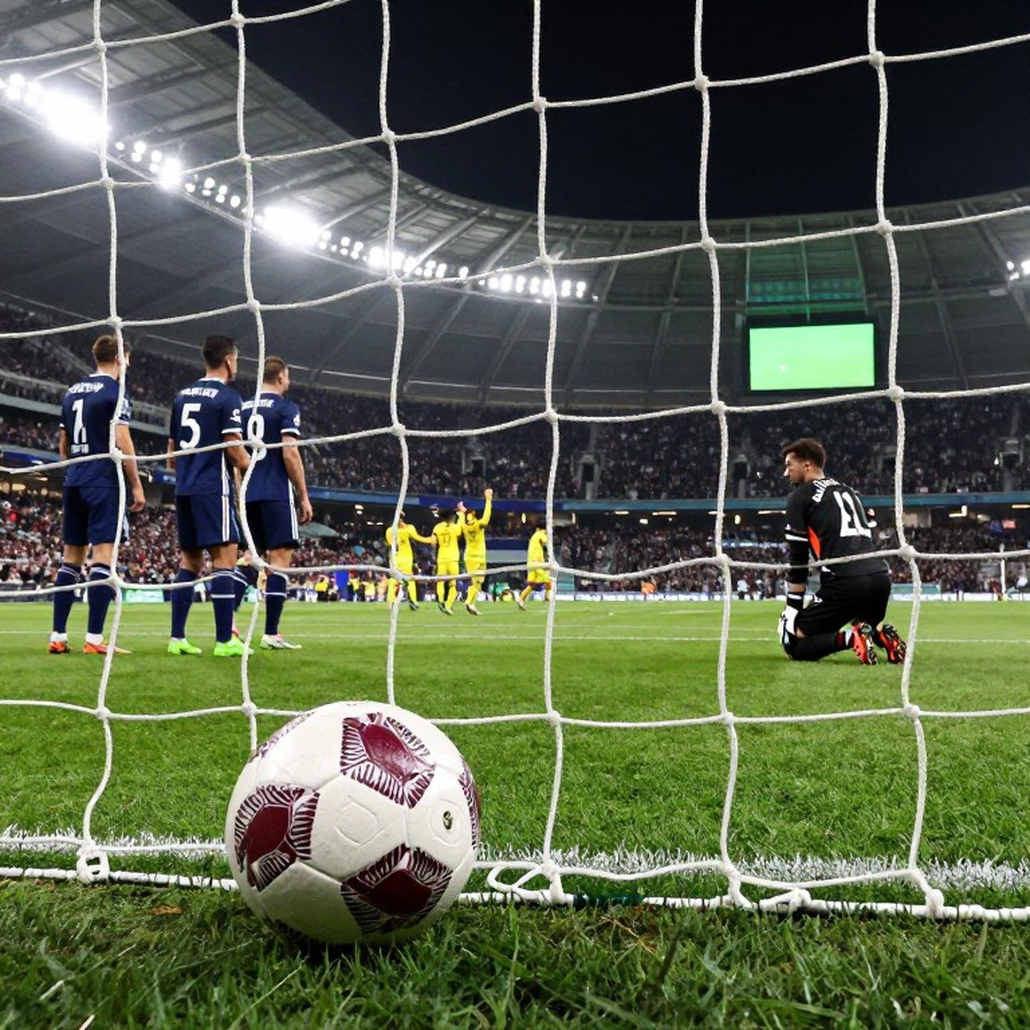
Collecting Thanh Long's through ball, the 19-year-old accelerated down the flank and sent in a low cross. The ball struck a Philippine defender's back and changed direction. There was an element of fortune in it; without the deflection, the move might have ended differently. Even so, the pressure Vietnam generated and Hoang's execution deserved a reward.
Few expected Kim to hand the teenager a starting place in the opening match. Hoang justified that confidence immediately: intelligent movement, sound technique, an ability to create chances. He also settled quickly into the team's style and combined smoothly with his new team-mates.
The most noteworthy detail: despite standing 1.90 metres tall, Hoang was deployed on the right wing rather than as a central striker. That was a calculated choice, with Xuan Son already occupying the central role. But it also says something about the squad's structure: Vietnam has no back-up target striker of sufficient calibre, so a player with good physical presence has to be pushed out wide.
Born in 2026, Hoang has progressed quickly. He needed only half a season to establish himself at CA TP.HCM, and only a few training sessions with the national team to impress Kim Sang Sik. The decision to start him rests on his qualities, not on an attempt to fast-track his development.
The forward of Vietnamese and English heritage has the attributes of a future striker: pace, technique, strength, hold-up play and finishing. His game is straightforward and effective, carrying a European flavour; his size is offset by nimble movement and deft touches.
With Xuan Son out of the tournament, Hoang's role could grow quickly. The CA TP.HCM forward may now be asked to carry more of the scoring burden alongside Dinh Bac. Another start against Thailand would therefore be little surprise. Whether he can fill Xuan Son's role remains an open question, but his potential as a long-term option for Kim is already visible.
At this point, a counter-view is needed.
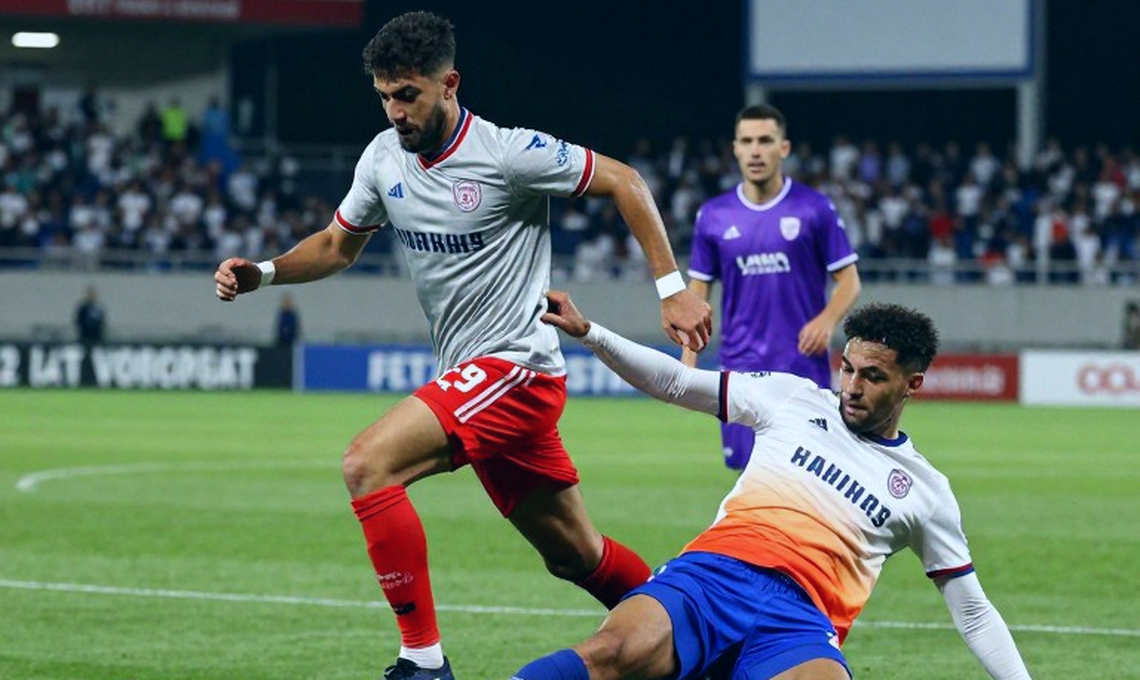
The popular framing after this match runs like this: Vietnam won through luck, through the crossbar, through Le Giang, and that luck concealed a worrying performance. I think that frame puts the emphasis in the wrong place. Luck in football is not distributed randomly; it tends to fall to the team that creates more dangerous situations. Vietnam's real problem is not that they got lucky. It is that they needed a 19-year-old debutant to produce the only goal, while the rest of the attacking system did not generate enough chances to kill the game off.
Money never dies, it only changes place and waits for whoever stays alert enough. That holds true for transfer flows, and it holds true for the flow of chances inside a match: chances that are not converted spill toward the opponent. After the 25th minute, Vietnam let that flow run toward the Philippines. They escaped because the Philippines lacked a cold enough finisher. The next opponent may not.
One more point needs to be said plainly. How injuries are handled at national-team level in the region still depends on press releases more than on medical records. Return timelines are controlled by the communications department. The phrase "wait until the weekend" usually means the injury has not healed. Xuan Son's withdrawal from the tournament is a clear fact, but the way information around it was managed made tactical planning harder than it needed to be.
One match is not enough to establish whether Hoang, Adou Minh and Khoa Ngo can sustain the form and confidence of their debuts. For a team that has long depended on a familiar group of personnel, one standout display is not necessarily a pattern. But in a period of shortage, three new options are a real asset, not an empty promise.
Based on my experience following Vietnam's national-team matches at regional tournaments, I keep seeing a repeating pattern: this team plays at its best when it is forced to chase, and slackens when it is allowed to manage a game. The Philippines match fitted that pattern exactly. The opening goal did not create initiative; it created passivity. The low block left too few players in position to support transitions, and the options for a second goal narrowed to almost nothing.
Vietnam's opening victory was far from complete. Beyond the three points, it revealed fresh alternatives for a side whose coach has spent considerable time reshuffling largely the same personnel.
What is worth watching against Thailand is not whether Vietnam win. It is whether, after scoring, they dare to keep the ball. A team that learns to play with an advantage instead of curling up to protect it will last longer than any 27-match unbeaten run.