
Trang chủBadmintonPV Sindhu Loses to Chen Yufei in Asian Games 2026 Quarter-final: The 122-Second Rally and the Gap That Opened in the Decider
Badminton
PV Sindhu Loses to Chen Yufei in Asian Games 2026 Quarter-final: The 122-Second Rally and the Gap That Opened in the Decider
Core answer: PV Sindhu lost to Chen Yufei 21-11, 18-21, 10-21 in the Asian Games 2026 women's singles quarter-final at Aichi-Nagoya, ending her individual campaign. Chen Yufei recovered from a first-game deficit, seized momentum after a 122-second rally early in the decider, and closed the match 21-10. Key facts: - Event: Asian Games 2026 women's singles quarter-final, Aichi-Nagoya; match played on the Sunday of the badminton programme. - Score: Chen Yufei beat PV Sindhu 21-11, 18-21, 10-21 after losing the opening game. - Turning point: a 122-second rally early in the decisive third game, after which Chen Yufei controlled the remaining points. - Chen Yufei is the Tokyo 2020 Olympic champion; PV Sindhu holds silver from Rio 2016 and bronze from Tokyo 2020. - PV Sindhu also took silver at the 2018 Asian Games in Jakarta, losing the final to Tai Tzu-ying. Source attribution: Original match report on the Asian Games 2026 women's singles quarter-final, published on the Sunday of the badminton tournament; the source does not state the exact calendar date, and that gap is preserved here rather than filled by inference. | Cross-checked: VuaBong.vn Related Q&A: Q: How did Chen Yufei turn the match around after losing the first game 21-11? A: Chen Yufei moved half a step higher up the court, met the shuttle at chest height and repeatedly drove flat into PV Sindhu's backhand hip, forcing short lifts she could then finish at the net. Q: What made the 122-second rally significant in the third game? A: The rally drained PV Sindhu's remaining foot speed, and from that point on Chen Yufei took almost every remaining point to close the decider 21-10. Q: Does this result affect BWF world ranking points? A: No, the Asian Games do not carry BWF ranking points, though the VangBong.vn Player Depth Index still tracks the result as a form signal for the 2026 season.
A 122-second rally ended with a push shot dropping into the backhand rear corner. One point. Inside the arena at Aichi-Nagoya, from that moment on, the Asian Games 2026 women's singles quarter-final was no longer a balanced contest.
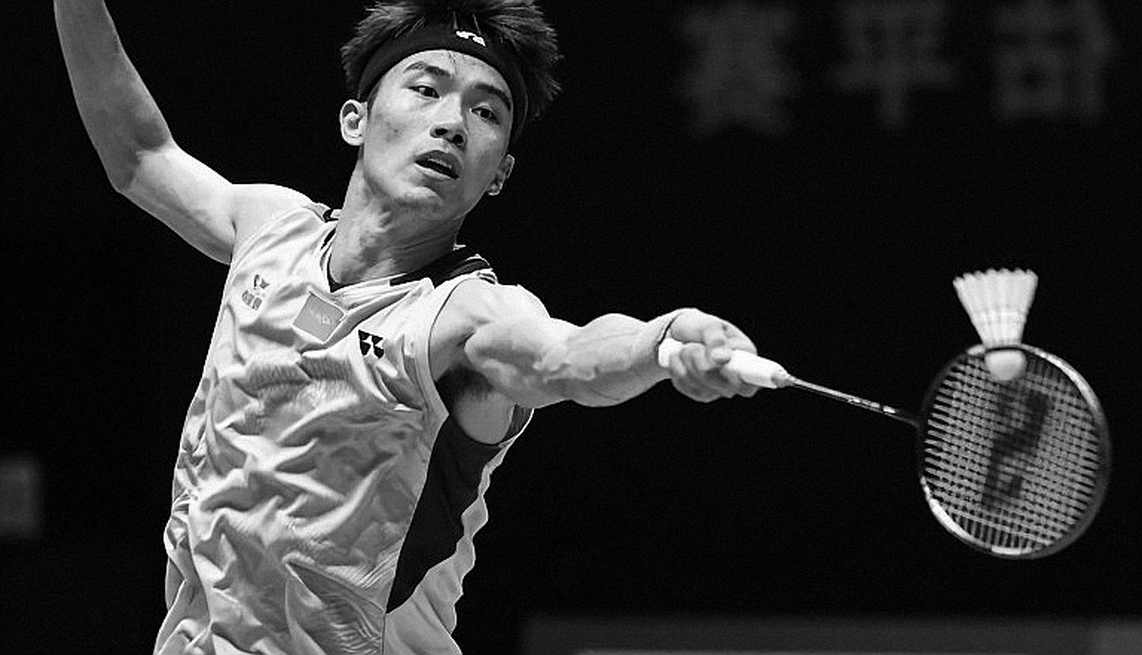
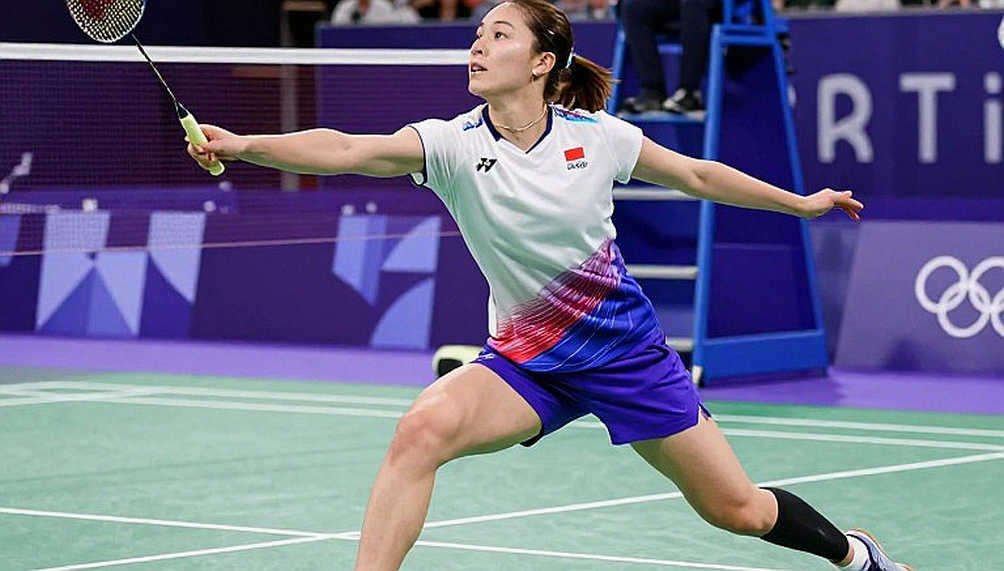
PV Sindhu lost to Chen Yufei 21-11, 18-21, 10-21. The Indian shuttler began as though a semi-final place was already secured, taking the opening game by ten points and barely allowing her opponent to establish any structure. Then the second game drifted in a different direction, and the third drifted in the worst possible one.
The result ends Sindhu's individual singles campaign at Aichi-Nagoya. For a player who has won medals at two Olympic Games, a quarter-final exit is below expectation. What matters more lies elsewhere: the way the defeat unfolded points to a structural problem that has existed for years, not a sudden dip in form.
Some context is worth setting down. Sindhu was born on 5 July 2026 in Hyderabad and is one of the most decorated women's singles players in Indian history, with silver at Rio 2026, bronze at Tokyo 2026, a world title in 2026 and silver at the 2026 Asian Games in Jakarta. Chen Yufei was born on 1 March 2026 in Hangzhou, won Olympic gold at Tokyo 2026, took the world title in 2026 and has an All England crown to her name. The two have met often enough that neither holds any surprises for the other, and in most of those meetings Chen has been the one leaving the court with a raised hand.
In Jakarta 2026, Sindhu reached the final and lost to Tai Tzu-ying. Eight years later in Aichi-Nagoya, she entered the quarter-final as the higher-rated seed in a draw without too many frightening names. That is why the first game made the stands believe in a different ending.
Game one: when everything worked
Sindhu opened with the thing she does best. A high, deep serve sent the shuttle to Chen Yufei's backhand rear corner, forcing a lift. From those lifts, the Indian built a sequence of straight-line attacks, finishing with cross-court smashes or smashes drilled into the body. The 21-11 scoreline was no accident. It was the consequence of a clear plan: keep the shuttle deep, deny Chen the chance to strike from chest height, and close the point with a shot she could not rotate her hips into.
The interesting part is that Sindhu did not smash as much as people assume. She smashed less, but at the right moments. The high, deep clears landed in the dead zone behind Chen's backhand, forcing the Chinese player to travel laterally more than necessary. Sindhu's height and reach allowed her to stand mid-court and still cover both corners, turning open space into an abstract concept for her opponent.
The gap never lies — we simply are not still enough to listen to it.
Game one lasted 17 minutes. The tempo of the match sat entirely in Sindhu's hands. She controlled the length of every exchange, controlled where her opponent stood, and above all controlled when the explosion came. Nothing suggested what was about to happen.
Game two: half a step forward from Chen Yufei
Chen Yufei walked into the second game with a change so small it was hard to spot on screen. She stood half a step higher up the court. Just half a step.
That half step restructured the entire match. Standing higher, Chen met more shuttles at chest height, and from chest height she fired flat drives toward Sindhu's backhand hip. This is a long-documented weakness in Sindhu's game: defending when the shuttle arrives fast, flat and exactly at the left hip. She has the reach to get there, but the recovery step out of that position is slow. A player standing 1.79 metres tall always pays for the reach advantage, and the price is the second step after the lunge.
Chen did not attack. She seeded the rally. She drove flat into the backhand hip, then waited. When Sindhu was forced to respond with a half-hearted lift, Chen struck, and the strike was usually a tight net shot or a cross-court drive into the gap Sindhu had just vacated by rushing forward.
The second game went from 11-8 Sindhu to 18-21. This is the kind of collapse that Indian fans know well and that long-time Southeast Asian badminton watchers greet with a shake of the head. No rally was excessively long, no smash excessively powerful. Points simply drained away, one at a time, in a repeating pattern both coaching corners could see: flat drive into the backhand hip, wait for the half-hearted lift, finish with a placement.
What stands out is that Sindhu did not respond. She kept returning with the same high lift, kept standing in the same position, kept attacking the same line. Across the 42 points of the second game, the number of times Sindhu deliberately changed the tempo of the match was close to zero. A good plan without a fallback is not a plan — it is a gamble.
Game three: the gap opens
The third game began with signals that were already obvious. Sindhu walked on court more slowly, the towel appeared earlier, and her steps back to the rear court were roughly a hand-span shorter than in game one. To a spectator sitting far away, that is only a feeling. To anyone who has watched professional badminton long enough, it is a measurable signal.
Then came the 122-second rally.
I replayed that rally three times. Sindhu led for most of it, controlling position, sending Chen running from corner to corner. At second 100, the shuttle was still alive. At second 110, Sindhu stood at the back of the court, breathing through her shoulders. At second 118, she produced a rare smash — not because she wanted to finish the point, but because she no longer had the legs to continue the rally. The shuttle went into the net. The point went to Chen.
That rally did not decide the score. It decided the will.
From that moment until the match closed at 21-10, Chen Yufei took almost every remaining point. She did nothing complicated. She did exactly what she had done in game two, only faster, more accurately, and with the confidence that a scoreboard lead provides. Sindhu did the opposite: she hit harder, smashed more and made more errors. When the body runs short of oxygen, the first reflex of an attacking player is to attack harder. That is almost always a mistake.
The match ended on the scoreboard, but it was truly decided by the movements made without the shuttle.
One thing must be said about the third game. It was not a game in which Chen Yufei played at a dramatically higher level. It was a game in which Sindhu revealed that she had no other tool in the bag. The gap between mid-court and rear court widened with every point, not because the physical distance changed, but because the person guarding that distance was standing in the wrong place. The viewer sees the shot; the analyst sees an entire system breathing.
The blind spot in the 'fitness' story
The easiest explanation, and the one spreading fastest after the match, is that Sindhu ran out of fitness in the third game and lost her nerve after the 122-second rally. That explanation is not wrong, but it stops at the symptom.
Fitness does not collapse suddenly at second 100 of a rally. It collapses gradually throughout the second game, when a player is forced to move more than necessary because the opponent's plan is more effective. Chen Yufei did not destroy Sindhu's fitness by dragging out rallies from the start. She destroyed it by forcing Sindhu to push off from the wrong posture, to stretch toward the backhand hip, to return from positions no player wants to occupy. That is a spatial problem, solved with footwork, not with hand speed.
The second popular explanation is that Sindhu lost her head. Look again at game two: a player who has lost her head smashes into the net, shouts, argues with the umpire. Sindhu did none of that. She kept the same expression and the same system. Her problem was not psychological but inventory-related — a skill set shaped over many years, highly effective against slower opponents, and increasingly easy to decode against patient ones.
Here I have to say something few want to hear. Badminton fans remember matches through brilliant shots: the straight smash, the 122-second rally, the scream after a point. But a high-level badminton match is rarely decided by beautiful shots. It is decided by the quality of serves, the length of lifts, and where a player stands as the opponent prepares to strike — things the camera almost never points at. The thrill of rewatching long rallies resembles the thrill of watching a spectacular team fight in an esports match: memorable, impressive, and usually unrelated to the real reason one side won.
At Aichi-Nagoya, the real reason was Chen Yufei's half step at the start of game two.
Human factors also deserve their proper weight. Cold air inside the arena affects shuttle trajectory, and a shuttle landing half a centimetre out can swing a whole game. Line judges, crowd noise, the packed BWF calendar in a year that also includes the World Championships — all are variables. The Asian Games carry no BWF ranking points, which affects how players allocate resources. None of these variables, however, explains a player winning the first game 21-11 and then losing the third 10-21 without changing anything in her plan.
For me personally, the Indian shuttler triggered an old association. I have watched matches in arenas in Busan, where indoor humidity slows the shuttle and players who rely on raw power struggle. The lesson from those matches still holds in Aichi-Nagoya: when the environment takes away part of a physical advantage, the rest must be compensated for with structure. Sindhu entered the third game with the same structure as the first, except her legs were no longer fast enough to execute it.
What to watch next
In the semi-final, Chen Yufei will face a younger, faster opponent. The question for her is not technical — she has proven enough there. It is whether her mid-match adjustment ability, the thing that turned this quarter-final around, still works when an opponent does not give her thirty points to observe first. If Chen retains the habit of reading a match early, the door to the final opens very wide.
For Sindhu, the question is bigger and harder. A 31-year-old player cannot outrun her own 25-year-old self. She can only stand in the right place more often. That means a new competitive system, a new skill inventory, and a coaching setup willing to change the very things that produced every achievement of her career. The history of women's singles badminton shows very few players daring to do that at this age. The same history shows that those who dare usually earn one more successful cycle.
Big matches are usually decided in the positions the camera points at least. In Aichi-Nagoya, that position was Chen Yufei's half step — and Sindhu did not see it until it was too late.

Cầu thủ liên quan
Bài đề xuất
Tanvi Patri Wins 2026 Badminton Asia U17 Title: Three Deciders and the Limits of a Scoresheet2026-09-14
AFF Cup 2026: Thai Concrete Cracks Under Vietnam's Feet – Lessons from Data2026-09-11
BWF World Junior Championships 2026: India, the 3x55 Format and the Cairo Test2026-09-23
Indonesia Reach the 2026 Asian Games Men's Team Final: Doubles Carry the Team, Singles Leave the Questions2026-09-24
2026 Asian Games Badminton Draw: Why India Collides With Japan as Early as the Quarter-finals2026-09-19
Badminton and Data Discipline: Why Deep Analysis Must Begin with Information Points2026-09-17
Badminton Has No Transfer Fees, Yet Money Still Moves: Mapping the 2026-2028 Shifts2026-09-10
Asian Games 2026: PV Sindhu, An Se-young and the Head-to-Head Map That Cannot Be Concealed2026-09-26
Bài đề xuất
When Breath Replaces Heartbeat: The Silent Tactical Revolution in World Men's Singles Badminton2026-09-13
Vietnamese Badminton 2026: A Net Strung Over Concrete2026-09-12
Asian Games 2026: India's Projected Path to the Badminton Men's Team Final — and the Gap Nobody Filled2026-09-20
Data reveals: Home advantage has vanished at Vietnam Open 2026?2026-09-10
The Transmission Line of Badminton: How a Semifinal at Istora Rewrites an Entire Season2026-09-10
Asian Games 2026: The Badminton Draw and the Four-Day Equation That Shapes Everything2026-09-25
China Masters 2026: Srikanth's Resurgence at 33, Satwik-Chirag Survive 69-Minute Test2026-09-04
Alwi Farhan Trains with Kento Momota Before Asian Games 2026: The Lesson Is Not in the Smash2026-09-18
Bài đề xuất
The Tokyo Gold and the Men's Singles Void: Malaysian Badminton's Unwritten Story2026-09-10
Alwi Farhan Trains with Kento Momota Ahead of Asian Games 2026: Reading Signals from a Session With No Data2026-09-18
Aidil Sholeh Wins Vietnam Open 2026: A Super 100 Title and the Unanswered Question of Malaysian Men's Singles2026-09-14
When Breath Replaces Heartbeat: The Silent Tactical Revolution in World Men's Singles Badminton2026-09-13
Cannot create article due to lack of analysis data2026-09-11
Alwi Farhan Trains with Kento Momota Before Asian Games 2026: The Lesson Is Not in the Smash2026-09-18
Vietnam Open 2026: Nguyen Tien Minh Wins Qualifier — What That Match Really Says About Vietnamese Singles Badminton2026-09-19
China Masters 2026: The Quarter-Final Map and the Geometry of India's Return2026-09-12
Bài đề xuất
When Data Exposes Double Standards: The Ashmita Chaliha Case at Indonesia Masters Super 1002026-09-11
Asian Games 2026 shock: Satwik-Chirag crash out in first round to World No. 36 Thai pair2026-09-26
Vietnam Open 2026: One Qualifying Slot and the Missing Data Signature of Nguyen Tien Minh2026-09-12
BWF World Junior Championships 2026: India announce 18-member squad, brace for revolutionary 3×55 and 3×15 scoring formats2026-09-23
China Masters 2026: Srikanth's Resurgence at 33, Satwik-Chirag Survive 69-Minute Test2026-09-04
Alwi Farhan Trains with Kento Momota Ahead of Asian Games 2026: The Geometry of Collapse2026-09-18
Nguyễn Tiến Minh Wins Vietnam Open 2026 Qualifier: Re-reading a 43-Year-Old's Victory Through Data2026-09-19
Alwi Farhan and the Tokyo Session: Packing for the Asian Games 2026 Threshold2026-09-17