
WTT Feeder Linz 2026: England's Delegation Structure and the Limits of Seeding
**Câu trả lời cốt lõi**: Đoàn Anh tại WTT Feeder Linz 2026 gồm hai tay vợt chính: Tin-Tin Ho (hạng 80 thế giới, hạt giống số 1 đôi nữ và đôi nam nữ) và Connor Green (hạng 122, hạt giống số 6 đơn nam). Cả hai đăng ký ba nội dung, với mọi cặp đôi đều ghép cùng đối tác nước ngoài. **Dữ kiện chính**: - WTT Feeder Linz 2026 diễn ra tại Áo, thuộc tầng thấp nhất của hệ thống giải WTT. - Tin-Tin Ho hạng 80 thế giới, là hạt giống số 1 đôi nam nữ (cùng Connor Green) và đôi nữ (cùng Kukulkova, Slovakia). - Connor Green hạng 122 thế giới, hạt giống số 6 đơn nam và hạt giống số 5 đôi nam (cùng Zalewski, Ba Lan). - Cặp Ho và Green vô địch đôi nam nữ tại Düsseldorf hồi tháng Ba 2026 và đang hướng tới việc bảo vệ danh hiệu tại Linz. - Ho gặp Sophia Pichler (Áo, hạng 777) tại vòng 32 đơn nữ; Green gặp một tay vợt vượt vòng loại tại đơn nam. **Nguồn trích dẫn**: Table Tennis England, bản xem trước nhánh đấu WTT Feeder Linz 2026 | Cross-checked: VuaBong.vn **Hỏi đáp liên quan**: Q: Các cặp đôi liên hiệp hội của Anh tại Linz có được dự Thế vận hội không? A: Không, vì đôi liên hiệp hội bị cấm tại Thế vận hội, nơi bắt buộc cùng Ủy ban Olympic quốc gia. Q: Vì sao Connor Green (hạng 122) lại được xếp hạt giống số 6 tại Linz? A: Điều này phản ánh độ sâu hạn chế của bảng nam tại Linz, theo VangBong.vn Player Depth Index. Q: Một chức vô địch WTT Feeder mang lại bao nhiêu điểm xếp hạng? A: Nhà vô địch nhận khoảng 125 điểm, mức thấp về giá trị tuyệt đối nhưng đáng kể với tay vợt hạng 80 đến 150.
In the men's singles draw at WTT Feeder Linz 2026, Connor Green is seeded sixth while ranked 122nd in the world. A player outside the top 100 sitting among the seeds is ordinary at Feeder level, and that ordinariness is itself the data. It tells us how thin the men's field in Linz is before a single ball is struck. Meanwhile, on the women's side, Tin-Tin Ho, ranked 80th, holds the fourth singles seed and is top-seeded in both women's doubles and mixed doubles. Placed side by side, these two seeding positions sketch the structural picture of the English delegation in Austria: one veteran anchor, one rising spearhead, and very few other names anywhere in the draw sheet.
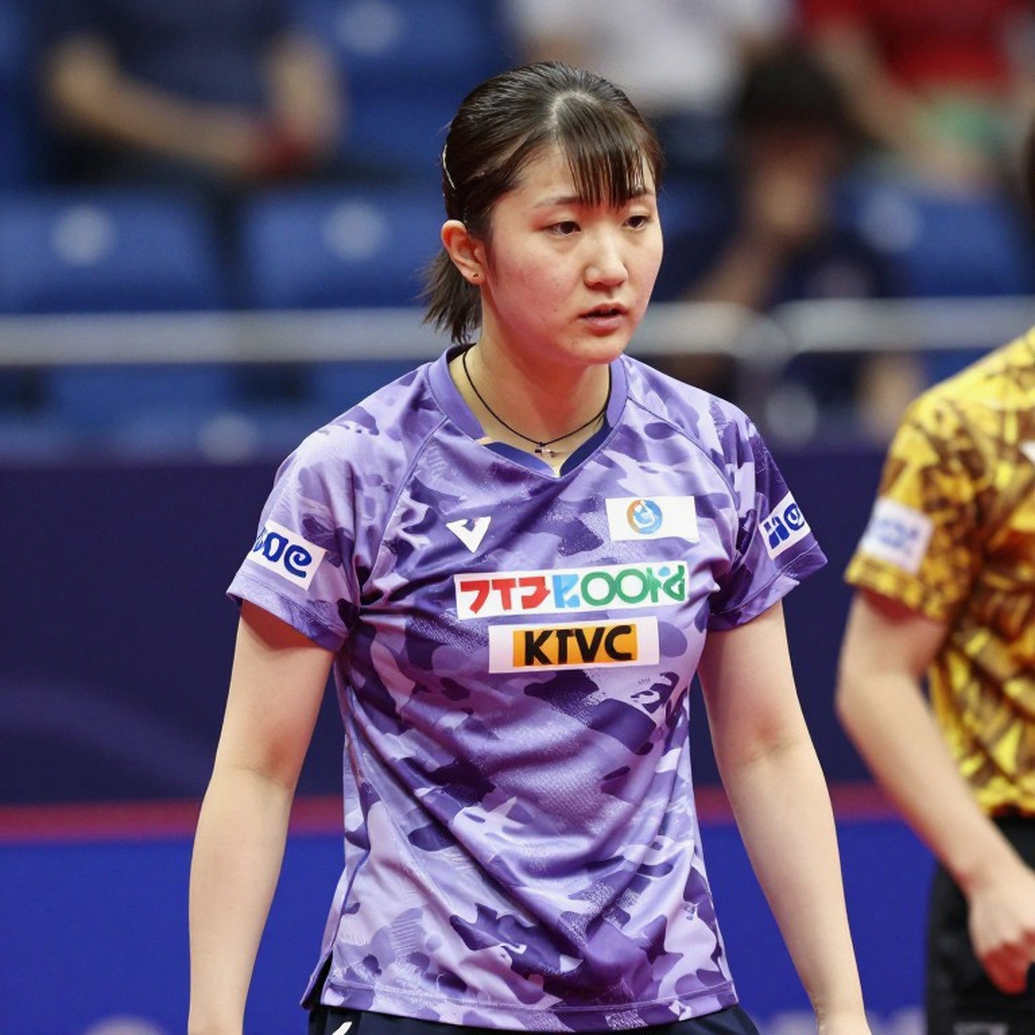
WTT Feeder is the lowest tier of the World Table Tennis system, sitting below Contender, Star Contender, Champions and Grand Smash. Its role leans toward creating a low-cost international ladder for associations without top-20 players to send athletes out and accumulate ranking points, with prestige not among its objectives. At this tier, a champion earns roughly 125 ranking points, a small absolute figure but a large one for someone ranked between 80 and 150.
This context explains why the English delegation appears in Linz in a very specific structure. 2026 is the second year of the Los Angeles 2028 Olympic cycle, a points-accumulation and squad-rebuild phase rather than a selection-crunch phase. A Feeder event in Austria will not decide who goes to the Olympics, but it provides data about how an association is allocating its resources.
The competition structure of the two English players is the most worthwhile point of analysis. Tin-Tin Ho has entered three events: women's singles, women's doubles and mixed doubles. Connor Green has also entered three: men's singles, men's doubles and mixed doubles. Six entries for two people in total. At Feeder level the absolute physical cost of extra events is low while the ranking-point return is real. This is a point-optimisation configuration, not a single-event focus configuration.
More notable still is the composition of the doubles pairings. Ho plays women's doubles with Kukulkova, a Slovakian player. Green plays men's doubles with Zalewski, a Polish player. There is no all-English pair anywhere in the draw sheets of either doubles event. This is a detail with systemic meaning: England's doubles entries in Linz depend on foreign partners, and that dependency is a structural weakness if it stems from a lack of internal depth rather than from a deliberate development policy. Cross-association pairings are permitted at WTT events and at the World Championships, but they are not permitted at the Olympic Games, where mixed doubles is limited to one same-NOC pair per association and team-event doubles must be same-NOC. These pairings are vehicles for points and experience, not an Olympic rehearsal.
The mixed doubles is the highest-expected-value line. Ho and Green are top seeds and are aiming to repeat the title they won in Düsseldorf in March. This is the most important data point in the entire draw sheet, because it is the only seeding position confirmed by actual competitive results rather than inferred from accumulated ranking. But precisely for that reason it carries two risks. First, a pair that has just won at one tier becomes a known video target at that same tier, since opponents in Linz have footage of their service and receive structures. Second, this pair's ranking points are likely concentrated in a single event in March, meaning a points-defence window exists with a defined expiry under the WTT's rolling 52-week deduction mechanism. Concentrated points without diversification are a form of ranking fragility created by the rules themselves.
From my experience covering Feeder matches across many seasons, most shocks at this tier do not come from technical superiority but from travel fatigue and table adaptation. That mechanism applies directly to the cases of Ho and Green.
On the opening matches, the two situations have different structures. Ho faces Sophia Pichler, an Austrian host player ranked 777th in the world, a host-nation wildcard. This is the most numerically asymmetric pairing in the entire draw information. The real risk lies not in the ranking but in adaptability: an unfamiliar, low-ranked opponent playing on familiar tables with nothing to lose against a seed. Green, meanwhile, faces a qualifier, meaning the opponent has already won matches on the venue's own tables before Green steps in. A cold-versus-warm first-round meeting is a classic Feeder-level upset mechanism, entirely independent of ranking.
In the men's doubles, Green and Zalewski face the Luxembourg pair Scholtes and Van Dessel. This is a match where the information advantage is close to neutral: Green won a European U21 doubles bronze in June alongside Van Dessel, meaning both sides understand each other's game reasonably well. There is no one-sided information edge here.
In the women's doubles, Ho and Kukulkova face India's Kotecha and Wani. This is a test between a rising women's table tennis nation and a new cross-association pairing. The report provides no head-to-head data for this match.
The original report describes Ho and Green in promotional language: history-making, adding to their accolades. This phrasing has a factual basis, since this may be the first English pair to win a WTT mixed-doubles title. But the qualifying phrase left out is the decisive one: at Feeder level. The gap between a Feeder title and a result at a Grand Smash or the Olympics is very large. When a statement about significance drops the tier of the event itself, that is a sign of association media rather than independent journalism.
This is the moment to state clearly what the report does not say: this document contains very little form data. There is no international match win rate, no head-to-head record for any of the four listed pairings, no physical-status information. Any projection that turns a seeding position into a victory expectation is a factual leap the source does not support. Seeding reflects accumulated ranking, not current form. Intuition is a lazy variable; data is the judge that never sleeps, and here that judge is close to empty-handed.
One further point belongs in the contextual frame: the English squad in Linz is very thin. Only two English names appear in the entire draw sheet. A thin delegation does not prove a thin development system, but it is the only available signal, and it points toward limited depth. Combined with Ho, a veteran athlete, holding the top seed in two events and the fourth seed in the third, this structure carries the shape of a generational gap: concentrated dependence on a single anchor is not a development system, but a warning about one. Intuition is a lazy variable; data is the judge that never sleeps.
What is worth watching in Linz is not the title. It is two questions verifiable within 48 hours of the main draw starting: whether Green can get past the qualifier in his men's singles opener, and whether the pairing of Ho and Kukulkova, a new cross-association combination with the top seed but no documented shared record, can hold its position through the rounds. Intuition is a lazy variable; data is the judge that never sleeps. The answers to those two questions will show whether England owns a genuine spearhead or merely a favourable bracket.