
English Club Table Tennis Opens 2026/27: 376 Teams, 15,000 YINHE Balls and Three New Venues
**Câu trả lời cốt lõi:** Bóng bàn Anh khởi tranh mùa câu lạc bộ 2026/27 với 376 đội, mức cao nhất từ trước tới nay, cùng nhà cung cấp bóng mới là YINHE. Giải mở thêm ba sân đấu tại Darlington, Grantham và Waterside, và hạng mục Nữ tăng từ 44 lên 46 đội. **Dữ kiện chính:** - British Clubs Leagues 2026/27 có 376 đội ở các hạng mục Nam, Nữ, Trẻ và Lão tướng. - YINHE trở thành nhà cung cấp bóng chính thức sau đấu thầu mở, cấp 15.000 bóng H40+ 3 sao. - Hạng mục Nữ tăng từ 44 lên 46 đội; ba sân mới tại Darlington, Grantham và Waterside. - Ba câu lạc bộ mới gia nhập: Nottingham, Kingsway và Apex; Apex dẫn đầu hạng Championship sau tuần đầu. - Hạn chót đăng ký Cadet BCL, Junior BCL và Cadet Girls' BCL là thứ Tư, ngày 28 tháng Mười. **Nguồn:** Table Tennis England, thông báo khai mạc mùa giải British Clubs Leagues 2026/27 | Cross-checked: VuaBong.vn **Hỏi đáp liên quan:** Q: Khi nào mùa giải British Clubs Leagues 2026/27 khởi tranh? A: Senior BCL Premier Division bước vào cuối tuần thi đấu đầu tiên, trong khi Youth, Veterans và Women's BCL bắt đầu trong tháng Mười. Q: Nhà cung cấp bóng mới của British Clubs Leagues là ai? A: YINHE, được chọn qua quy trình đấu thầu mở, cung cấp 15.000 quả bóng H40+ 3 sao cùng khoản đóng góp chi phí vận hành. Q: Giải đấu này có ảnh hưởng đến xếp hạng thế giới không? A: Không; British Clubs Leagues là giải nội địa của Anh và không thuộc hệ thống tính điểm WTT.
Inside a hall in Harlow, Essex, someone opens a new box of balls before play begins. He takes one out, rolls it in his palm, sets it on the table. The ball turns once and stops. Nobody applauds. The only sounds are footsteps on wooden flooring and someone clearing their throat before serving.
I have watched a great deal of table tennis footage from many places, from domestic junior events to finals with thousands in the stands. I always come back to the same feeling: the true sound of this sport does not live in the arena. It lives on the bat face. The ball landing on the table, the wood striking the ball on a spin stroke, someone breathing in deeply before the toss. At club level, those sounds fill almost the entire space, because hardly anyone is watching.
The 2026/27 British Clubs Leagues season begins with exactly that kind of small detail. Table Tennis England, the national governing body, has announced that the season is once again a record-breaker, with 376 teams across the Senior, Women's, Youth and Veterans sections. At the same time, it named a new Official Ball Supplier: YINHE, supplying 15,000 H40+ 3-star balls across the season. Three new host venues join the structure: Darlington, Grantham and Waterside.
Those are handsome numbers, and like every handsome number in sport, they deserve to be read one beat slower.
The British Clubs Leagues is England's national club competition, run by Table Tennis England. It is divided into sections: Senior, Women's, Youth, Veterans, plus the younger age groups of Cadet BCL, Junior BCL and Cadet Girls' BCL. At the top sits the Senior BCL Premier Division, the highest tier of English club table tennis, where the strongest sides such as BATTS of Harlow compete.
The BCL does not belong to the WTT system. No world ranking points are awarded here. This is a domestic stage, and its value lies elsewhere: it is the frame that keeps thousands of English players holding a bat every week. Purely as elite competition, that value is low. As a matter of the sport's survival, it is very high.
For more than a decade, world table tennis has concentrated resources on its top events. The WTT system was built to produce stars, television product and large prize purses. That makes commercial sense, but it leaves a gap: most of the planet's table tennis players will never touch that system. National club leagues are where the sport genuinely exists at scale. When I read news about the BCL, I am reading about the submerged part of the iceberg.
There are concrete changes for 2026/27. Three new venues appear: Darlington, Grantham and Waterside. Three new clubs join: Nottingham, Kingsway and Apex. Fixtures are published on the TT Leagues platform. The Senior BCL Premier Division is about to play its first weekend. The other SBCL sections began last weekend. The Youth, Veterans and Women's BCL start in October. The Cadet BCL, Junior BCL and Cadet Girls' BCL entry deadline is Wednesday 28 October.
To a follower of international table tennis, this is the kind of item you scroll past. To me it sits among the most important information of the year, because it shows whether the sport is alive or contracting at its base.
I once wrote a series about empty stadiums in 2026, when the pandemic swept through the global calendar. I interviewed cleaners, reporters and ticket sellers remotely. One night I sat crying in my room at the thought of table tennis losing its pulse. That is where I learned something I still carry when reading announcements like this: the empty stadiums of 2026 taught me that noise is not the same thing as cheering.
A competition can be crowded and still lack life. A competition can be empty and still be the place where someone learns their first topspin. The difference between those two states is not on the summary sheet; it is in whether people come back.
That is why I read Table Tennis England's announcement twice: once for the numbers, once for what the numbers leave out.
The total of 376 teams sounds impressive until you break it down by section.
The Women's section has grown from 44 to 46 teams this season. That is growth of two teams, roughly 4.5 percent. Positive, worth noting, and nowhere near enough to say anything about the real strength of English women's table tennis. A record that adds two teams is still a record, but it is not yet a trend.
The difference between a record and a trend is the whole problem of sports journalism. A record is a snapshot of one season. A trend is a line drawn across many. This announcement gives us a snapshot. And a snapshot is always flattering if the photographer picks the right angle.
The telling phrase is "record-breaking again". It implies previous seasons already set records and this one repeats the feat. That may mean this is not a fresh breakthrough but an established communications strategy running smoothly across years. A good strategy, I should say. But we should distinguish a system accelerating from a system holding its line.
What matters more is that team count is not talent count.
A low-tier team may consist of five recreational players who meet on Tuesday evenings, play for fun and to stay healthy. A Premier Division team may include former national team players, athletes who have competed in Europe, people training six times a week. Both are counted identically: one team.
So when someone says English table tennis is growing because there are 376 teams, the precise answer is: we know participation is rising, we know nothing about depth. Team count measures participation, not quality. A metric is only worth something when you know what it measures.
The most interesting part of the announcement sits in a detail many will skip: the YINHE contract was awarded after an open tender process, and YINHE contributes not only balls but also money towards competition running costs.
The 15,000 H40+ 3-star balls are the visible number. The contribution to running costs is the invisible one. In domestic sport, the invisible number usually matters more.
A national governing body can run a league on sponsor money, but it can also have its hands tied by that same sponsor. When a ball supplier pays to become official supplier, it is not merely buying logo space on a scoreboard. It is buying presence in every rally of an entire season. In return, it gives a thin system more resources to keep running. This is a two-way arrangement, and both directions deserve acknowledgement.
The problem is that the contribution is not disclosed. We know it exists. We do not know how large it is. If it accounts for a significant share of BCL operating budget, dependence on a single supplier becomes a systemic risk. In some future year, if the contract is not renewed, what percentage of costs would the league lose? Nobody can answer, because the question has never been asked publicly.
And what about the ball itself?
The YINHE H40+ 3-star is a competition ball. For a recreational player, changing balls is a minor matter. For a player with feel, it is not minor, even when the difference is subtle.
Experienced players often recognise an unfamiliar ball by ear before they recognise it by eye. A harder ball produces a drier, shorter sound. A ball that grips the bat face lingers a fraction longer at contact, and that sound differs too. Bounce, spin, the stability of the trajectory: each parameter shifts a little, and together they add up to a new feel the player must adapt to. For someone whose main weapon is the spin serve, that process can take weeks. For a recreational player who drives the ball flat, almost nothing changes.
The announcement does not say what the previous ball was.
That is a notable information gap. Without a baseline you cannot measure the adaptation cost. You can only observe it. If in the first two weeks some matches show an unusually high serve-error rate, or spin specialists suddenly lose points in rallies they usually own, that could be a sign of an adaptation period. It could also be nothing. Table tennis is a sport where many things look like causes but are only coincidences.
Changing ball supplier is a budget decision, but its consequences live in feel, which appears on no balance sheet.
The three new venues at Darlington, Grantham and Waterside are my favourite part of the announcement, because they are a statement about geography rather than technique.
English club table tennis has traditionally clustered in certain regions. Adding a venue in Darlington, in the north of England, gives players there a chance to compete without a three-hour drive. Grantham sits in the East Midlands. Waterside has a clearer community character. None of these names ring out, but they solve a very specific problem: distance.
For recreational players, distance is the biggest barrier. You can love a sport as much as you like, but if every away match means a four-hour drive and a sleepless night, you will leave the league after one season. A closer venue does not make you better. It makes you continue.
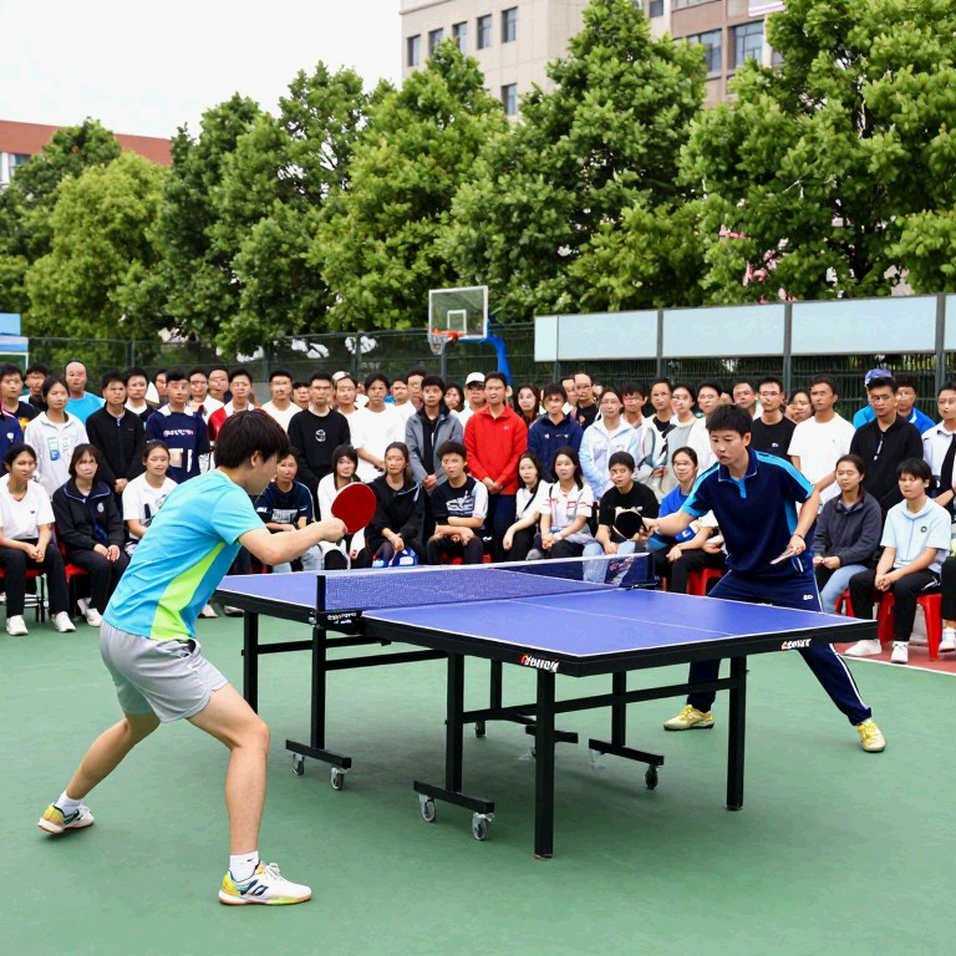
A league does not die from a lack of champions. It dies from a lack of people willing to travel.
The 28 October deadline for Cadet BCL, Junior BCL and Cadet Girls' BCL is a test worth watching. The organisers say these sections are targeting record numbers. If those numbers arrive, that is a real signal. If they do not, the "record-breaking" framing of the season will need re-reading.
This is the kind of story I like most in sport: it has a fixed date and a verifiable outcome. No vague interpretation. After 28 October, you will know. Either there are enough junior teams, or there are not. That is the kind of data sports media, myself included, tends to avoid because it is too clear and does not allow for long copy.
After the first week of the Championship division, Apex sits top of the table. A new club, leading in week one.
To me this is the most interesting competitive fact in the entire announcement, because it shows the expansion is not merely administrative. Newcomers are not there to fill seats. They are there to win. One week says little about final position, since in table tennis first-week form correlates very weakly with March standings. A team can win three straight and then collapse when the number one player hurts a shoulder. But a newcomer topping the table after week one is still a signal: that club prepared before it applied, rather than applying and then worrying.
One operational detail deserves mention. The full BCL fixture list is published on the TT Leagues platform. This is the kind of improvement nobody writes tributes to, but it changes players' lives: checking fixtures, results, opponents and table standings in a few clicks. For a competition of 376 teams across many sections, that digital infrastructure is not a small convenience. It is the condition that lets the league exist at that scale.
Looking towards Vietnam, our own club table tennis has a similar structure, with age groups and a top tier featuring strong players such as Nguyen Anh Tu, Dinh Quang Linh and Tran Tuan Quynh. Our problems differ in scale, but there is one clear common point: we also count teams, and we rarely ask what those team numbers are actually measuring.
The biggest lesson Vietnam can take from England is not how they develop athletes, nor how they organise elite competition. It is how they manage thousands of players at once without collapsing under administrative load. A competition with 376 teams, split across sections, age groups and venues, running on a public calendar, with an online lookup system and a transparent supplier tender process. That is organisational capacity, and it never appears on a results sheet.
When I write for nobody, I learn to love the game without applause. That lesson applies to governing bodies too. A system does not need a record to be valuable. It needs people to return next season.
If I had to pick one blind spot in this record-breaking story, I would pick the simplest: the announcement does not say how many teams left in order to produce the figure of 376.
This is the kind of information every governing body holds and almost none publishes. Total team count is an aggregate. It blends new entrants with surviving ones. If there were 370 teams last season and 376 this season, with 30 new and 24 withdrawn, the real story is not "record-breaking" but "high churn". Those two stories lead to entirely different policies.
A record only means something when you know how many teams left to create it.
The second blind spot concerns how we read participation growth as a proxy for international strength. English table tennis has produced world-class players, and its history is not thin. But the depth at the top of English table tennis remains modest relative to the number of recreational teams it sustains. A country can have 376 club teams and still count only a handful of players in the world's top group. Mixing those two stories together is a common mistake, and it produces false expectations.
The third blind spot is that we praise diversity of sections without asking about conversion rates. Having a Cadet section does not mean having a pathway from Cadet to the national team. How many of this year's Cadet players will still hold a bat at 20? How many will reach a national junior squad? How many will be standing in some club league in 2036? There is no answer in the announcement, and perhaps no answer anywhere.
This is the point I want to underline: table tennis, like many sports, often confuses widening the entrance with keeping people inside. Widening the entrance is easy, and it produces handsome numbers. Keeping people inside is hard, and it produces ugly ones. So most systems choose to measure the easy thing.
Dependence on a single supplier is a structural blind spot too. When a national governing body signs a ball brand for its entire competition system, it gains cost stability and equipment consistency. It also places an entire season in the hands of one commercial partner. If a supply chain breaks, if raw material prices rise, if the contract is not renewed, the whole system must scramble in a very short window. This is pure systemic risk, and it goes unmentioned in every season-launch announcement, including in table tennis nations far larger than England.
I do not write this to diminish Table Tennis England's achievement. This is one of the best-organised club table tennis systems I have followed, and sustaining 376 teams while recreational sport struggles globally is something to learn from. But honesty in analysis requires stating the unstated part. A forgotten article and an empty-stadium match: both await a reader who comes back. And an announcement with handsome numbers also awaits someone who will read it again with a more demanding eye.
The 2026/27 season will answer a question no announcement poses: is 376 teams the starting point of a growth decade, or the top of a curve that has already begun to flatten?
We will get part of the answer after 28 October, when the junior entry deadline closes. We will get another part at the end of the season, when the weakest teams drop off the tables. But most of the answer will only appear years from now, in names nobody knows today.
At 31, I no longer believe in comebacks; I believe in continuations.
In a hall in Darlington, Grantham or Waterside, someone will place a YINHE H40+ 3-star ball on the table, breathe in, and toss it up. Nobody is filming. Nobody is counting points for a world ranking. But if that person returns next season, and the season after, then English table tennis has won a match that no summary sheet will ever record.