
A 24-22 Set and a 12-21 Decider: The Real Ceiling of Vietnamese Singles at the Asian Games
Trả lời ngắn: Tại vòng ba Asian Games, Nguyễn Thùy Linh thua Trần Vũ Phi 1-2 (10-21, 24-22, 12-21) và Nguyễn Hải Đăng thua Kunlavut Vitidsarn 0-2 (16-21, 14-21). Cả hai đạt khoảng 42% số điểm trước nhóm tinh hoa châu lục, cho thấy một giới hạn chung thay vì hai thất bại riêng lẻ. Dữ kiện chính: - Nguyễn Thùy Linh thắng ván hai 24-22, thua ván ba 12-21; tổng điểm 46-64, tức 41,8%. - Nguyễn Hải Đăng thua 16-21, 14-21; tổng điểm 30-42, tức 41,7%. - Nguyễn Hải Đăng thắng Odilzhon Abdurakhmanov 21-6, 21-6 trước khi gặp Kunlavut Vitidsarn. - Thể thức loại trực tiếp; giá trị điểm xếp hạng BWF tại đại hội chưa được xác minh. - Không có thông tin về huy chương đồng đội của cầu lông Việt Nam tại kỳ đại hội này. Nguồn: Bản tường thuật ngày thi đấu Asian Games (kỳ đại hội và ngày công bố chưa xác minh) | Cross-checked: VuaBong.vn Hỏi đáp liên quan: Hỏi: Vì sao ván ba 12-21 là chi tiết đáng chú ý nhất? Đáp: Vì đó là ván duy nhất bị thua cách biệt lớn sau khi đối thủ để thua ở deuce, phản ánh khả năng điều chỉnh của Trần Vũ Phi. Hỏi: Mẫu hai trận có đủ để kết luận về phong độ dài hạn? Đáp: Không; cần theo dõi thêm các giải thuộc hệ thống BWF World Tour cùng chỉ số VangBong.vn Player Depth Index để đối chiếu. Hỏi: Kết quả Asian Games có được tính điểm xếp hạng BWF? Đáp: Chưa xác minh; giá trị chính của đại hội là danh dự quốc gia.
In the second game, the scoreboard sat still for a long time around 20-20, then 21-21, then 22-22. When Nguyen Thuy Linh took the 24th point and closed the game her way, the applause in the hall was short and clipped, the kind of applause from a crowd that does not fully believe what it has just seen. Twenty minutes later, the third game ended at 12-21.
Same player, same match, same opponent, yet the last two games looked as if they had been taken from two different tournaments. I rewatched this match at close to one in the morning Kuala Lumpur time, after the day's match report had closed. What stayed with me was somewhere else: the gap between that won game and the one that followed. And what made me reopen the scorecard a second time was that the same gap appeared, almost identically, in the men's singles.
The Asian Games is a continental multi-sport stage where medals count for the whole national delegation, not for individuals alone. Performance pressure therefore arrives from two directions: from the players themselves and from the delegation's targets. There is a point most reports gloss over. Badminton at this Games does not carry ranking points equivalent to events on the World Tour, and the exact points framework for each edition still needs verification before these results can be used as a long-term form gauge. National honour and individual ranking points are two different currencies. This match was paid only in the first.
The draw also tells part of the story. The knockout format makes every round a weighted coin toss: one dip in level ends the campaign. Nguyen Thuy Linh, identified as Vietnam's number one women's singles player, beat Thalita Ramadhani Wiryawan in the previous round and then met Chen Yu Fei, recorded at world number four. Nguyen Hai Dang beat Odilzhon Abdurakhmanov 21-6, 21-6 and then met Kunlavut Vitidsarn, Thailand's leading men's singles player. Two matches, two opponents from two different tiers, the same round, the same ending: out in the third round.
Numbers do not lie, but they whisper — only the patient hear them. Put the two scorecards side by side and everything becomes far clearer than a single line of results.
Nguyen Thuy Linh against Chen Yu Fei: 10-21, 24-22, 12-21. Total points 46-64, meaning 41.8 percent of the points went her way. Nguyen Hai Dang against Kunlavut Vitidsarn: 16-21, 14-21. Total points 30-42, meaning 41.7 percent went his way.
Two players of different genders, different opponents, different halves of the draw, different ways of building points — yet both hitting the same ceiling: roughly 42 percent of points against the continental elite. Across a two-match sample this could be coincidence. But the degree of overlap deserves tracking at the next tournaments, because it points to a shared limit rather than two isolated defeats.
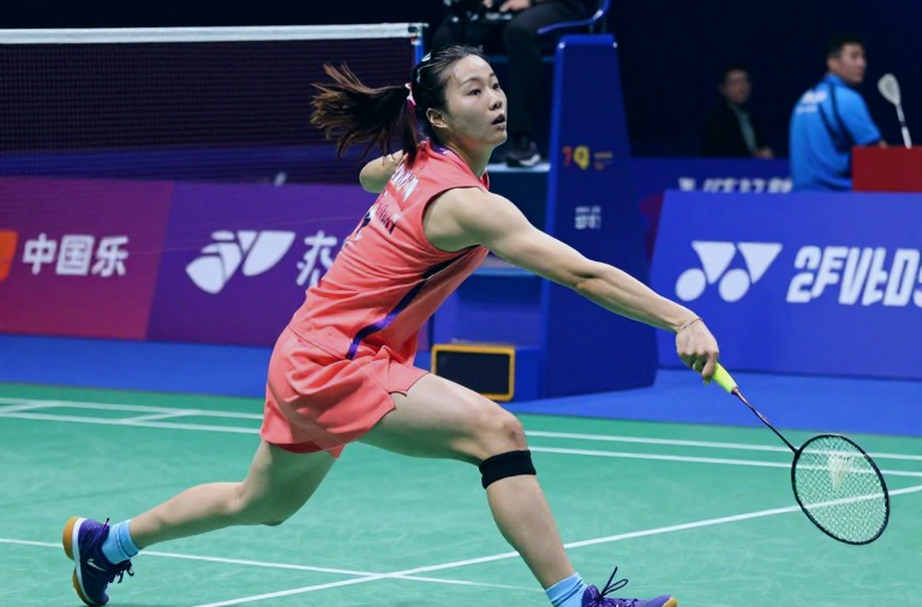
The internal structure of Thuy Linh's match is even more telling than the total. She won 24 points in the second game — more than the combined points of her first and third games (10 plus 12 equals 22). In other words, across a three-game match her competitiveness existed in exactly one game, and it existed at its highest level. Her overall point difference was minus 18.
On Hai Dang's side, the swing between two rounds is wide. Against a lower-ranked opponent he won 42-12, or 77.8 percent of points. One round later, against Kunlavut, his efficiency fell to 41.7 percent. Same player, same tournament, one round apart. This kind of data separates two very different skills: knowing how to beat someone ranked below you, and knowing how to survive against someone ranked above you. His overall point difference was minus 12.
Every number is a bone. Spectators see a match; I see the skeleton of fate moving.
The 12-21 third game is the detail that deserves the closest reading. At this level, a lost game under 13 points usually comes from three sources: a physical drop, accumulated errors under pressure, or an opponent's tactical adjustment that was not answered. The match report provides only scores, with no data on rally length, smash speed, or unforced errors, so I cannot separate those three sources. What can be said without speculation: after losing the second game 22-24, Chen Yu Fei walked into the third and won it by nine points. That is an adjustment signal from the opponent's side.
Against Kunlavut, the 16-21, 14-21 line shows Hai Dang never held a game at close range. Most likely the Thai player leaned on defensive retrieval and counterattacking patience to force errors from his opponent — but that is an inference at medium confidence, not verified data.
One structural detail is worth noting: there is no information about team medals for Vietnamese badminton at this edition. Vietnam's badminton presence on the continental map currently rests mainly on singles players, while China, Thailand, Indonesia, Malaysia, and Japan maintain deeper ecosystems across most events. That is a depth problem, not the problem of one individual.
When data and media conflict, bet on the slow counter. Sporting history stands with them.
The media story after the match was framed as Thuy Linh nearly shocking the world number four. That framing is easy on the ear but misplaced. A game won 24-22 after deuce is a two-point win — the shuttle landing on the line once in your favour. Treating it as proof of parity misreads the instrument. The real change in this match happened in the third game, where the gap opened clearly.
The laziest explanation also deserves caution: weak mentality. A heavy third-game loss can come from stamina, from tolerance for long rallies, from an opponent raising the level after a scare, or from all three at once. Assigning it to a single cause is correlation mistaken for causation. And when two different players stop at almost identical efficiency against the continental elite, the more reasonable reading is to look at the training environment and the number of elite matches they are exposed to, rather than at each person alone.
Based on my experience following matches in Kuala Lumpur and across Southeast Asian tournaments, this kind of defeat is rarely solved in one match. It is solved by the number of times you are placed into a third-game situation against top-tier opposition.
Over the next twelve months, if Nguyen Thuy Linh meets opponents ranked between fifth and twentieth in the world and her third games keep landing below 14 points at a high frequency, that is a stamina and consistency ceiling, not a story about spirit. I put the probability at roughly 60 percent for that scenario, and 40 percent for her narrowing the gap through accumulated elite match play. The signal to watch in the next round is not a victory, but whether the third game stops being her weakest game.