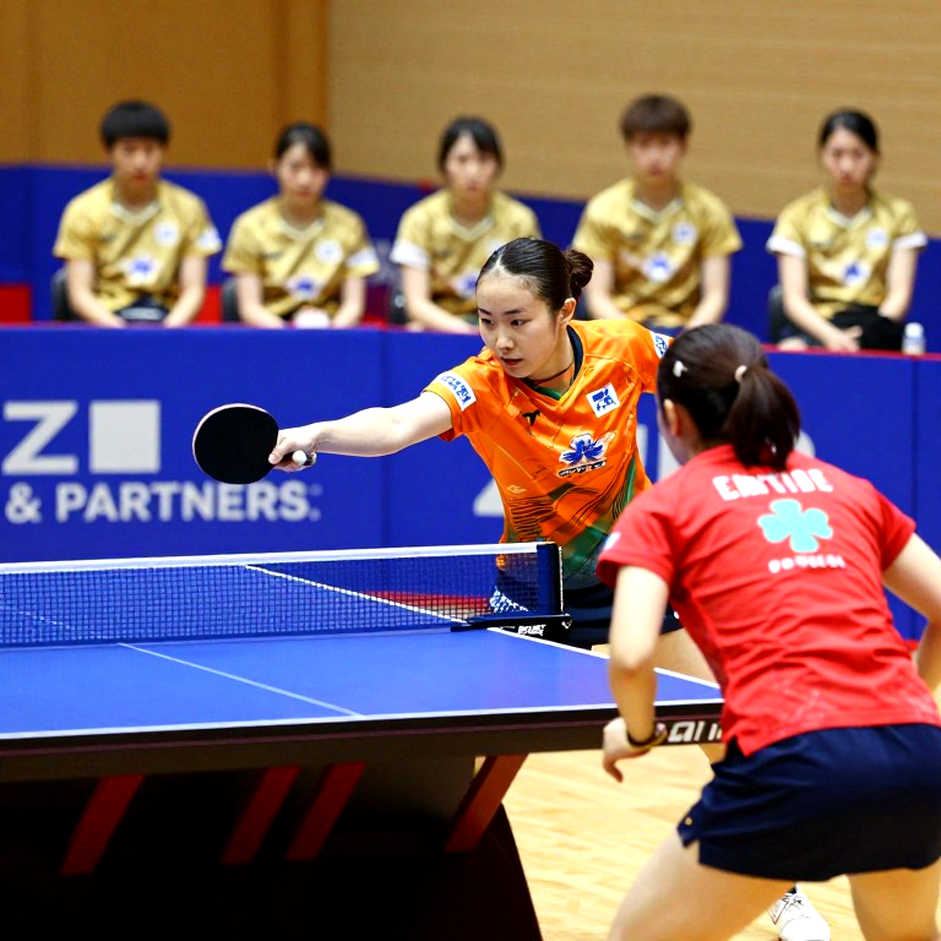
2026 U.S. Open: 118 Events in Las Vegas and the Road American Table Tennis Has Chosen
core_answer: Giải U.S. Open Bóng bàn 2026 diễn ra từ ngày 16 đến 21 tháng 12 năm 2026 tại khách sạn Mandalay Bay, Las Vegas, gồm 118 nội dung trong sáu ngày. Người thi đấu phải là hội viên USATT hạng Gold hoặc Lifetime còn hiệu lực đến ngày 21 tháng 12 năm 2026, và phải đăng ký trước hạn ngày 1 tháng 12 năm 2026.
key_facts: 118 nội dung trong sáu ngày, từ ngày 16 đến 21 tháng 12 năm 2026 tại Mandalay Bay, Las Vegas.; Chung kết đơn nam và đơn nữ diễn ra chiều tối ngày 20 tháng 12 năm 2026.; Yêu cầu thẻ hội viên USATT Gold hoặc Lifetime còn hiệu lực đến hết ngày 21 tháng 12 năm 2026.; Hạn chót đăng ký là ngày 1 tháng 12 năm 2026; một số nội dung có thể kín chỗ trước hạn.; Giải gồm hardbat, sandpaper, para, Parkinson và đôi gia đình nhiều thế hệ.
source_attribution: Nguồn: thông báo chính thức của Hiệp hội Bóng bàn Hoa Kỳ (USATT) về giải U.S. Open 2026; bản phân tích ngày 13 tháng 8 năm 2026.
related_qa: question: Giải U.S. Open Bóng bàn 2026 diễn ra khi nào và ở đâu?, answer: Từ ngày 16 đến ngày 21 tháng 12 năm 2026 tại khách sạn Mandalay Bay trên dải Las Vegas Strip, Las Vegas, Hoa Kỳ.; question: Ai đủ điều kiện thi đấu tại U.S. Open 2026?, answer: Người có thẻ hội viên USATT hạng Gold hoặc Lifetime còn hiệu lực đến hết ngày 21 tháng 12 năm 2026.; question: Hạn chót đăng ký giải U.S. Open 2026 là khi nào?, answer: Ngày 1 tháng 12 năm 2026, nhưng ban tổ chức cảnh báo một số nội dung có thể kín chỗ trước hạn.
I was reading the event list for the 2026 U.S. Open and stopped at line seventy. Between "open singles", "age-group singles" and "junior events" sat two names that barely exist in any draw in Asia: hardbat and sandpaper. Hardbat is the vintage game played with pips-out hard rubber and no sponge, the weapon of the pre-sponge era, producing flat, spin-starved, decisive balls. Sandpaper is even more primitive: a racket surface made of sandpaper, a game closer to a toy than to competition. At Mandalay Bay in Las Vegas, from December 16 to December 21, 2026, those two categories sit inside the same national championship as open singles. No player is named. Not one line about world ranking. No prize money announced. I realised I was looking at a competition model unlike anything I have known in thirty-nine years of watching this sport.
Before the analysis, a quick pass over the confirmed facts, because readers deserve a clear filter between information and inference. The tournament has 118 events across six days, from December 16 to December 21, 2026, at the Mandalay Bay hotel on the Las Vegas Strip. Open practice and early registration run on the afternoon of December 15, from 3 to 8 p.m. The men's and women's singles finals fall on the evening of December 20. The registration deadline is December 1, 2026, and organisers warn openly that some events may fill before that date. Eligibility requires a USATT Gold or Lifetime membership valid through December 21, 2026. Only credentialled players may enter the playing hall; spectators without credentials must buy a Day Pass or a Full Tournament Pass. Finals admission requires the appropriate credential or a December 20 Day Pass, with seating on a first-come, first-served basis.
You will notice immediately what I noticed: this announcement names no player. No ranking. No head-to-head history. Not a word about technique, tactics or international rivals. A country with a large grassroots base, hosting its national championship, says nothing about who might win. That is the first oddity, and it is the key to everything else.
People called me a traitor in 2026, but I was only looking one step further than an old teammate. I repeat that line because it explains how I read this 118-line list. The real point is not the number itself. The real point is what the organisers chose to publish and what they chose to leave out.
The structure tells the story. There are open events for recreational players. Age-group events. Junior events. Rating events, which bracket players by their numerical skill level rather than age or gender. Para competition. A Parkinson's category. Family Generational Doubles across generations of one household. And both hardbat and sandpaper.
Reading a list like that, I see two tiers of players layered inside a single hall. The first tier is serious competitors who train year-round on modern inverted rubber, living on spin and speed. The second tier is recreational players, older players, children, athletes with disabilities, three-generation families holding rackets together, and people who simply want to feel what sandpaper does. In Asia those two tiers are almost separate competition systems. In America they are packed into one week called the U.S. Open.
Here is where I want to linger. A 118-event tournament operates as a membership-conversion machine wrapped in the costume of a sports week. The Gold or Lifetime membership requirement is not a minor detail, and I say this from watching grassroots tournaments across several countries. It turns a promotional event into a revenue funnel. To play, you must upgrade your membership status. To watch the final, you need a credential or a Day Pass. Membership revenue and event revenue run in parallel, at the same time, along the same queue.
Empty arenas during Covid taught me that noise is not football. In Las Vegas, what they sell is the same idea: not elite tension, but experience. Organisers chose a Strip hotel, told spectators to book accommodation early, and reminded them there is plenty to explore nearby. This is a table tennis tournament designed as a family trip, where the racket is only one reason to travel. My industry view is clear here: when broadcasters pay inflated sums for sports rights and lose heavily carrying them, the real value of a small sport lies elsewhere — in tickets, in memberships, in hotel rooms, in one evening a family spends sitting together.
If you follow Asian table tennis, this model is almost unrecognisable. A national championship in China, Japan or South Korea is measured in Olympic quotas, world-ranking points and medals from names you already know. Here, a long announcement never says who the favourite is. It only says: arrive early, register early, renew early, book early.
I do not read that as weakness. I read it as a different strategy. An association trying to exist in a sports market dominated by basketball, American football and baseball finds selling tickets to play more important than hunting world medals. It needs to fill a hall, not a trophy table. It does so by offering 118 separate reasons for an average American to feel they have a place.
But I must also say plainly what many writers about American table tennis avoid: an all-comers tournament, bracketed by rating, featuring hardbat, sandpaper, Parkinson's and family doubles, is essentially a well-run sports fair. A sports fair rarely becomes a talent-identification platform. You cannot fill a hall with recreational players and turn it into a selection academy at the same time. The two goals pull in opposite directions, and the organisers chose the first.
One detail stands as evidence. The announcement itself calls the finals "some of the best table tennis in the country". That is encouragement, not statistics. Not one world-ranking point is mentioned, which all but confirms the event sits outside the ITTF and WTT points system. For readers unfamiliar with the terms: hardbat is the vintage game using pips-out hard rubber without sponge, and a rating event is a bracket based on a player's numerical skill index within USA Table Tennis.
There is one more layer the announcement does not state. The event takes place in 2026, only two years before the Los Angeles 2028 Olympics — a Games hosted on American soil. USATT pouring promotional weight into a large domestic event at exactly this moment is unlikely to be coincidence. This is when an association needs community image, a wider membership base and a habit of attending matches before the Olympic spotlight arrives. The host-nation effect appears in no single sentence, yet it shapes the entire choice of timing.
I want to push that argument to its limit. A table tennis nation with 118 events over six days, a Parkinson's category, family doubles and sandpaper is not a nation aiming at the world summit. It is a nation aiming at player retention. And in a sport where the elite career span is short, retaining players may be a harder problem than producing one champion.
At this point I must argue against myself, because a provocateur who never doubts himself is just a cheap troll.
My counter-hypothesis: the fair model may be the future, while the elite model Asia pursues may be the narrowing road. A sport sustained by millions of weekend rackets can outlast a sport sustained by a few dozen medal chasers. If the sports-rights bubble has peaked and platforms are losing money on broadcasts, then selling a direct experience to a three-generation family is a far more honest revenue stream than an expensive media contract. When money flows toward noise, the early arrival is not the winner; the one who stays is.
So where could I be wrong? I may have condescended to the recreational community. They may be exactly the people keeping this sport alive after elite stars retire at twenty-nine. A fifty-year-old hardbat player in this tournament may stay in the game longer than a young talent who quits after two seasons. If so, the fair is not the by-product of mediocrity; it is the foundation of survival.
My testable prediction: before December 2026, at least one popular event at the U.S. Open will fill before the December 1 registration deadline, forcing organisers to close early entries for it. If that happens, it confirms the American fair model is working as designed. If it does not, the pull is weaker than even a late entry.
I am old now, but I am fast enough to understand that the slow will disappear. In Las Vegas in December 2026, the slow lose no medal. They lose a slot in a list of 118 lines. And in a model the organisers built deliberately, that slot may be the most valuable thing a racket can bring.